









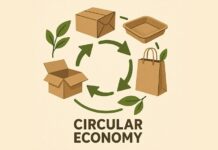




For decades, the global food industry has relied on the convenience of single-use packaging to move products from production facilities to the consumer. While this model enabled rapid growth and widespread availability, it has come at a massive environmental cost, contributing to a global waste crisis and a high carbon footprint. Today, a fundamental transformation is taking place as the industry rediscovers the power of durability. Reusable packaging systems for food distribution are emerging as a cornerstone of the circular economy, offering a restorative alternative to the traditional “take-make-dispose” paradigm. By treating packaging as a high-value asset that is returned, cleaned, and refilled, the industry is creating a more efficient, resilient, and sustainable logistics network that aligns with both environmental goals and economic realities.
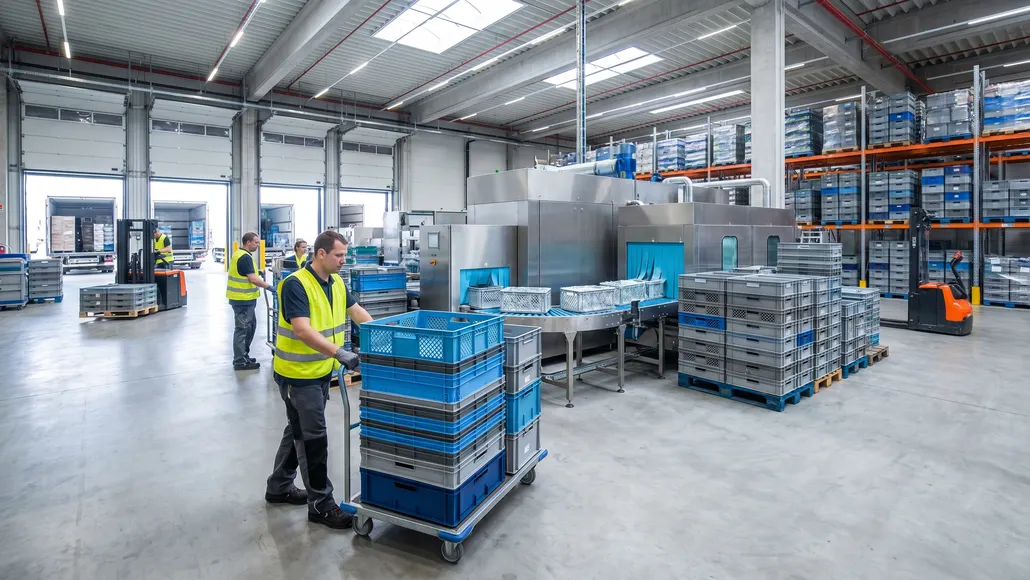
The transition to reusable packaging systems for food distribution represents a move toward sophisticated, closed-loop logistics. Unlike single-use items, which are essentially a sunk cost for a company, reusable containers are an investment in a durable infrastructure. These systems involve the use of heavy-duty plastic crates, glass bottles, or stainless steel bins that are designed to withstand dozens, if not hundreds, of trips through the supply chain. This shift requires a reimagining of the distribution network, with a greater emphasis on “reverse logistics” the process of moving used packaging back to a central facility for sanitization and reuse. While the initial setup of these systems is more complex than a linear model, the long-term benefits in terms of waste reduction and resource efficiency are profound.
Driving this transformation are several converging factors: stricter environmental regulations, increasing costs of raw materials, and a shift in consumer sentiment toward zero-waste living. Governments around the world are increasingly targeting single-use plastics through bans and taxes, making reusable alternatives more financially attractive. Furthermore, as the world moves toward a low-carbon economy, the life-cycle benefits of reusables which often have a significantly lower carbon footprint over their total lifespan compared to single-use options are becoming a key metric for corporate sustainability reporting. Reusable packaging systems for food distribution are not just a return to the past; they are a high-tech, data-driven evolution of how we manage the flow of resources in our society.
The Operational Framework of Reusable Systems
To understand how reusable packaging systems for food distribution function at scale, one must look at the different “loops” of reuse. These systems can range from business-to-business (B2B) applications in wholesale distribution to consumer-facing refill models in retail environments.
B2B Logistics and Transport Packaging
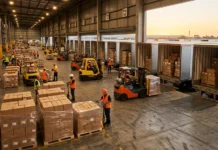
The most established area for reusables is in the B2B sector, where standardized plastic crates and pallets have been used for years to transport fresh produce, bakery items, and dairy products. These “pooling” systems allow multiple companies to share a fleet of durable containers managed by a third-party provider. This eliminates the need for each company to manage its own inventory of packaging and ensures a high rate of asset utilization. Reusable transport packaging is designed for maximum space efficiency and durability, reducing the risk of product damage during transit. When these containers reach the end of their long life, they are typically ground down and recycled into new crates, ensuring that the material remains within a circular loop.
Consumer-Facing Refill and Return Models
The frontier of the movement is in the B2C (business-to-consumer) space, where companies are experimenting with models that allow consumers to return packaging after use. This includes “milkman-style” home delivery systems for a wide range of household staples, as well as in-store refill stations where consumers use their own durable containers. The success of these models depends on convenience and a seamless return process. Many companies are now using “smart” reusable packaging containers equipped with QR codes or RFID tags to track the movement of the assets and offer incentives to consumers for returning them. This digital integration helps overcome one of the primary hurdles of reuse: ensuring that the packaging actually finds its way back into the system.
The Environmental and Economic Logic of Reuse
The core argument for reusable packaging systems for food distribution lies in their superior environmental performance and the potential for long-term cost savings. While the production of a durable, reusable container requires more energy and material than a single-use alternative, its environmental impact is “diluted” over every subsequent use.
Life Cycle Analysis (LCA) Perspective
Life Cycle Analysis (LCA) studies consistently show that after a certain number of reuses often as few as 10 to 20 cycles reusable systems begin to outperform single-use options across multiple environmental indicators, including carbon emissions, water consumption, and solid waste generation. For example, a heavy-duty reusable crate can replace hundreds of cardboard boxes over its lifetime. By reducing the demand for virgin paper and plastic, the food industry can significantly lower its contribution to deforestation and fossil fuel extraction. Furthermore, because reusables are typically more robust, they provide better protection for the product, leading to a secondary environmental benefit: a reduction in food waste caused by damage during distribution.
From Operational Expense to Capital Investment
From a financial perspective, switching to reusable packaging systems for food distribution shifts packaging from an operational expense (OPEX) to a capital investment (CAPEX). While the upfront cost of a fleet of reusable containers is higher, the “cost per trip” often becomes much lower than the price of buying new single-use packaging for every shipment. As the price of virgin materials continues to rise due to resource scarcity and environmental taxes, the economic advantage of reusables will only grow. Additionally, the standardization that often accompanies reusable systems can lead to further efficiencies in warehouse automation and transport loading, streamlining the entire logistics process.
Overcoming the Challenges of Scalability
Despite the clear benefits, the widespread adoption of reusable packaging systems for food distribution faces several significant challenges. Overcoming these hurdles requires innovation in logistics, material science, and consumer behavior.
Logistics, Cleaning, and Hygiene
The most significant challenge is the infrastructure for reverse logistics and sanitization. In a linear system, packaging simply moves forward. In a reusable system, a “backward” flow must be managed with the same level of precision. Packaging must be collected from thousands of locations, transported to a cleaning facility, sanitized to meet strict food safety standards, and then redistributed. This process requires energy and water, which must be managed efficiently to maintain the environmental benefits of the system. We are seeing the rise of specialized “service hubs” that provide industrial-scale cleaning and sanitization for multiple brands, creating a shared infrastructure that makes reuse more viable for smaller players in the market.
Standardization and Interoperability
For reusable systems to be truly efficient, a high degree of standardization is required. If every brand has its own unique bottle or crate, the complexity of sorting and returning them becomes unmanageable. The industry is moving toward “open-loop” systems where standardized containers can be used across different brands and retailers. This requires a level of collaboration that is historically rare in the competitive food industry. However, the benefits of interoperability such as being able to return a bottle to any grocery store regardless of where it was purchased are essential for the consumer convenience needed to make reuse the new standard.
The Role of Digital Technology in Reuse
Digital technology is the “glue” that holds modern reusable packaging systems for food distribution together. By providing real-time visibility into the location and status of every asset, technology helps companies manage their fleets efficiently and reduce the rate of lost or stolen packaging.
Asset Tracking and Inventory Management
IoT (Internet of Things) sensors and digital IDs allow companies to track the “velocity” of their reusable assets how quickly they move through the cycle and where they are being held up. This data is critical for optimizing the size of the fleet and ensuring that there are always enough containers available to meet demand. Furthermore, tracking systems can provide data on the number of times a specific container has been reused, allowing for predictive maintenance and ensuring that assets are retired and recycled at the optimal time.
Consumer Engagement and Behavior Change
For consumer-facing systems, digital platforms are used to gamify the return process and provide transparency. Apps can track a consumer’s “waste footprint” reduction and offer rewards for returning containers on time. By making the return process as easy as a single scan, technology removes the friction that often prevents people from participating in circular models. This digital connection also allows brands to communicate the environmental impact of their reusable system directly to the consumer, strengthening the brand’s sustainability credentials and building a loyal community of “circular” customers.