























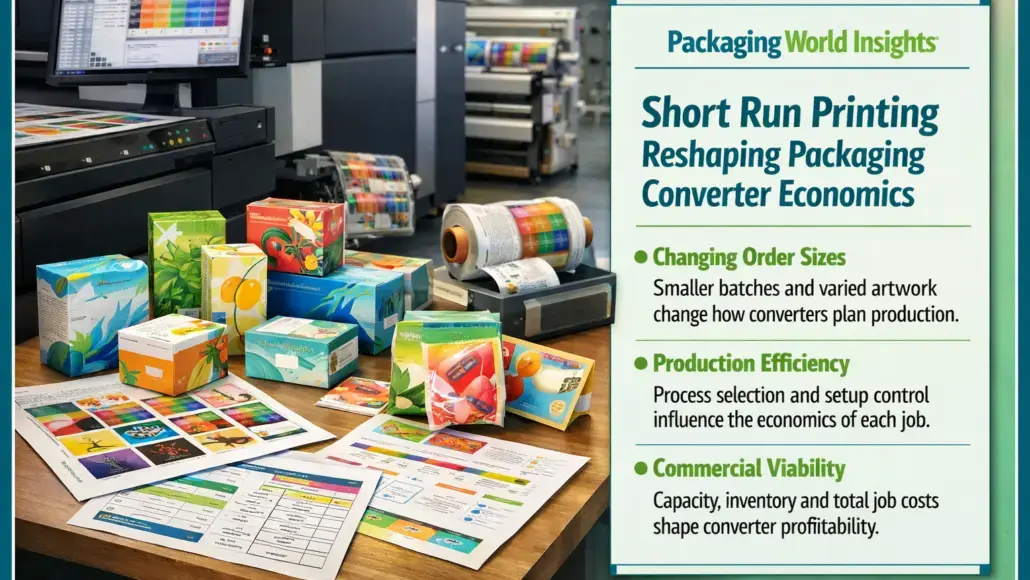

Short run printing is changing how packaging converters manage setup costs, production capacity and job profitability. Brands may require smaller batches, more product variations and frequent artwork changes, creating additional demands on production planning. These orders can offer greater flexibility, but their commercial viability depends on the cost of preparing each job, producing acceptable output and completing finishing requirements. Converters must therefore evaluate more than the cost per printed unit. They need to understand how order quantities, changeovers, equipment utilisation and inventory exposure affect the overall economics of each job.
Shorter Runs Change the Cost Structure of Packaging Production
Digital and conventional printing processes have different cost structures. Conventional methods can spread preparation costs across larger volumes, while digital printing can reduce certain setup requirements for suitable shorter jobs. However, the most economical process depends on the equipment, substrate, finishing requirements and order profile. Smithers’ research on changing packaging print run lengths provides context for these shifts. For converters, evaluating measuring technology investment returns is also important when considering changes to equipment, capacity and production workflows.
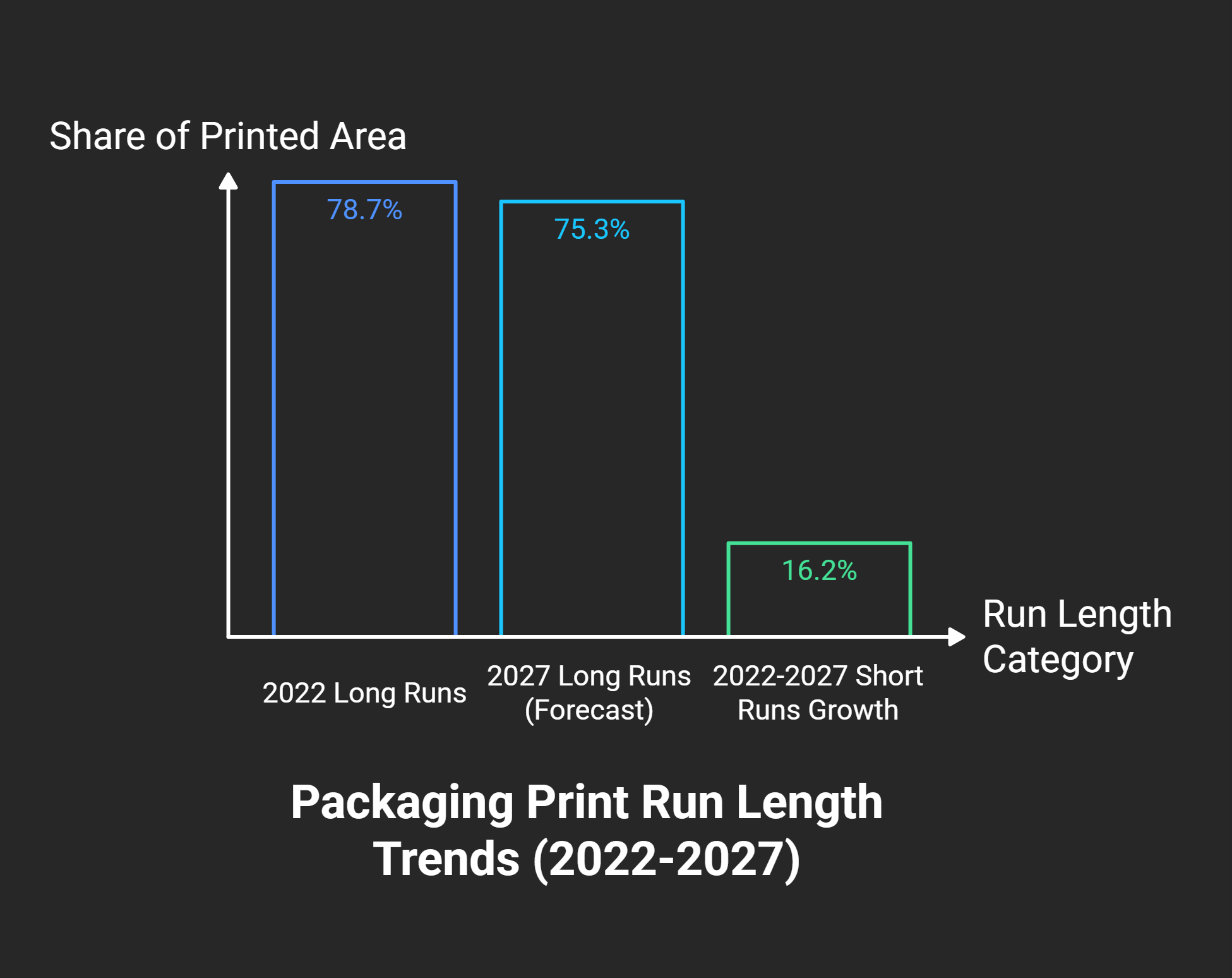
The findings illustrate the projected expansion of shorter runs while showing that longer runs were expected to remain dominant by printed area.
Economic Factors Shaping Shorter Runs
- Setup costs: Assess plate preparation, makeready, changeovers and the materials consumed before production begins.
- Production economics: Compare variable printing costs, consumables and finishing requirements across suitable processes.
- Equipment utilisation: Evaluate how a greater number of smaller jobs affects scheduling and productive capacity.
- Inventory exposure: Consider whether smaller batches can reduce excess stock or obsolete packaging under the actual demand pattern.
Printing Technology Must Match the Job Profile
Choosing a production process for short run printing requires converters to evaluate the complete job rather than order quantity alone. Digital printing can reduce certain preparation requirements for jobs involving multiple artwork versions or frequent design changes, while flexographic and other conventional methods can remain competitive when production volumes justify their setup costs.
Hybrid approaches may also suit specific requirements, depending on equipment capabilities and workflow integration. The commercial comparison should account for print quality, substrate compatibility, finishing, consumables and throughput alongside setup time. A process that reduces preparation costs may still be less economical if its variable production costs or finishing requirements are higher. The appropriate choice depends on the actual specifications and cost structure of each job.
Matching Processes to Run Length
- Setup requirements: Evaluate plate preparation, makeready and changeover time against the expected production volume.
- Variable costs: Compare ink, substrates, consumables and finishing costs across suitable printing processes.
- Job complexity: Consider the number of artwork versions, repeat orders and specification changes.
- Quality requirements: Confirm that the selected process can meet the required print characteristics and production standards.
Workflow Efficiency Shapes Converter Profitability
For converters, short run printing also changes the operational challenge of managing more distinct jobs through available production capacity. Frequent changeovers can increase preparation time, while complex scheduling may create gaps between jobs or disrupt planned production. Prepress automation, coordinated job scheduling and standardised preparation procedures can help address these pressures, although their value depends on the existing workflow and equipment.
Inventory also matters: smaller batches may reduce exposure to obsolete printed packaging when designs or demand change, but the actual benefit depends on ordering patterns, storage costs and customer requirements. Converters need to evaluate these effects together rather than assuming that smaller orders automatically improve profitability.
Managing the Economics of More Jobs
- Workflow coordination: Organise artwork, approvals, production planning and finishing to reduce avoidable delays.
- Changeover efficiency: Review recurring preparation tasks and identify opportunities to improve consistency.
- Capacity planning: Assess how the mix of short and long jobs affects productive equipment time.
- Inventory management: Balance batch sizes against storage costs, demand uncertainty and the risk of obsolete packaging.
The commercial case for short run printing ultimately depends on matching production methods and workflow practices to the order mix. Lower setup requirements can provide an advantage, but profitable execution still requires control over total job costs, scheduling and capacity.
Building a Sustainable Short Run Production Model
Converter profitability depends on matching production methods to order volumes, job specifications and available capacity. short run printing can offer flexibility when brands require multiple design variations or smaller batches, but commercial success depends on controlling setup, consumables, finishing, scheduling and inventory costs. Digital, conventional and hybrid processes should therefore be evaluated against the requirements of each job rather than treated as universally interchangeable options.
Commercial Priorities
- Process selection: Match printing technology to job volume, specifications and quality requirements.
- Setup control: Reduce avoidable preparation time and material waste.
- Capacity utilisation: Balance smaller orders against available production time and longer jobs.
- Inventory management: Align batch sizes with demand while considering storage and obsolete packaging risks.
Ultimately, shorter production runs require converters to balance flexibility with cost discipline. Understanding the complete economics of each job helps businesses select suitable processes, allocate capacity and respond to changing customer requirements without assuming that smaller batches automatically improve profitability.
References
- Smithers – The Impact of Changing Run Lengths on Packaging and Labels to 2027 – 2023.
- Packaging Insights – Experts Highlight Digital Printing’s Transformation of Packaging Cost Strategies – 2026.