






















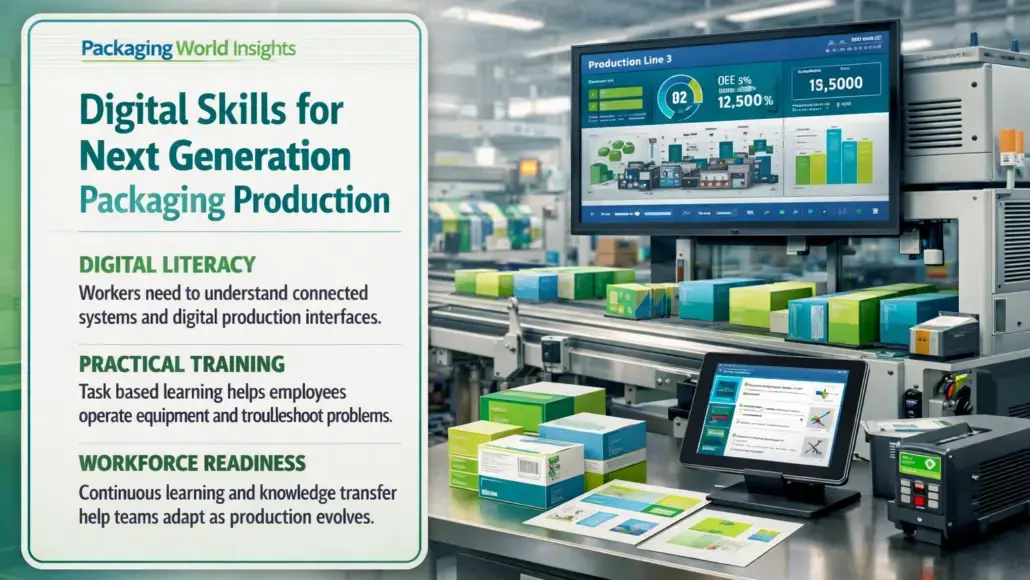

Digital technologies are changing how packaging teams operate machinery, monitor production and maintain quality. Connected equipment, automated processes and production data increasingly require employees to combine practical manufacturing knowledge with digital literacy and problem solving. Digital skills are therefore becoming an important part of production readiness, particularly as workers interact with software, machine interfaces and automated workflows. However, introducing new technology does not automatically improve operational performance. Employees must understand how systems work, interpret the information they provide and recognise when human intervention is necessary.
Production Technology is Changing Workforce Requirements
The World Economic Forum’s The Future of Jobs Report 2025 identifies technological literacy, artificial intelligence (AI) and data related capabilities among the skills gaining importance across industries. Packaging specific research from the Association for Packaging and Processing Technologies (PMMI) also highlights operator training, knowledge retention and accessible digital learning as important workforce concerns. Developing digital skills requires more than familiarising employees with new interfaces. It involves preparing them to respond to equipment alerts, interpret production information and troubleshoot problems while maintaining established quality requirements. Collaboration across the value chain also matters, as converter input during packaging development, can connect workforce preparation with practical production requirements.
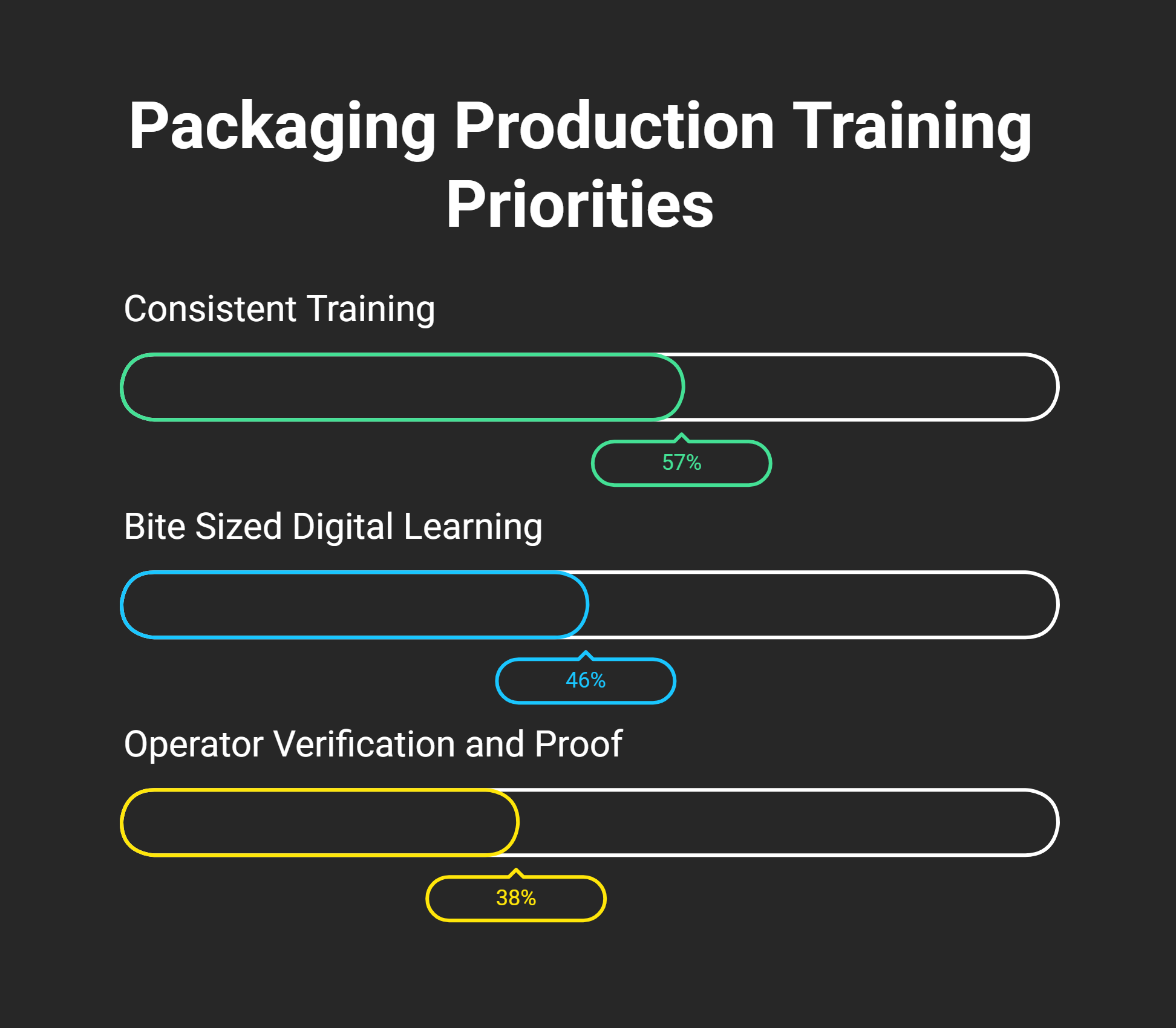
The findings show that consistent instruction, accessible digital learning and verification of competence featured among the training priorities identified by packaging industry participants.
Capabilities Packaging Teams Need to Develop
-
Digital literacy: Using production interfaces, connected systems and digital operating instructions.
-
Data interpretation: Understanding machine alerts, performance indicators and production trends.
-
Troubleshooting: Identifying operational problems and recognising when specialist intervention is necessary.
-
Knowledge retention: Documenting procedures and transferring practical experience across teams and shifts.
Developing digital skills around these capabilities can help packaging businesses prepare employees for changing production responsibilities while retaining the practical knowledge needed to operate equipment reliably.
Training Must Reflect Real Production Tasks
Developing digital skills requires training that reflects the equipment, systems and responsibilities employees encounter during actual packaging production. Digital interfaces, automated changeovers, machine alerts and production monitoring systems can introduce new demands, but familiarity with a screen does not necessarily demonstrate operational competence. Training should connect digital learning with practical exercises so employees can interpret information, recognise faults and respond appropriately. Research from the Association for Packaging and Processing Technologies (PMMI) highlights consistent instruction, accessible digital learning materials and verification of operator competence as important training priorities. These approaches can help businesses make training more consistent across teams while preserving the practical experience needed to maintain production quality.
Training Methods
-
Task based learning: Connect digital instructions with specific operating procedures, equipment setup and quality checks.
-
Practical assessment: Verify that employees can complete tasks safely and respond appropriately to common operating problems.
-
Accessible learning materials: Use concise digital resources that operators can consult when they need guidance.
-
Consistent instruction: Align training materials and procedures across shifts, facilities and relevant equipment.
Continuous Learning Supports Operational Readiness
Digital skills must evolve alongside changes in packaging machinery, production software and operating procedures. A training programme that prepares employees for commissioning may not address every challenge that emerges during routine production. Businesses also need to retain knowledge when experienced employees leave, equipment changes or responsibilities shift between teams.
Documented procedures, structured handovers and refresher training can help reduce dependence on individual employees. Digital resources may support this process, but their effectiveness depends on whether the information is accurate, accessible and relevant to the work being performed. Training requirements should therefore be reviewed when new technologies are introduced and when recurring operational issues reveal gaps in workforce readiness.
Maintaining Workforce Readiness
-
Skills assessments: Identify gaps between required responsibilities and demonstrated employee competence.
-
Knowledge transfer: Document troubleshooting procedures and capture practical experience from experienced operators.
-
Refresher training: Update learning materials when systems, specifications or production processes change.
-
Performance feedback: Use recurring faults, downtime patterns and quality issues to identify where additional training may be necessary.
Building digital skills is an ongoing operational responsibility rather than a one time onboarding exercise. Packaging businesses need to combine appropriate learning resources with practical experience, competency checks and continuous improvement to help employees adapt as production environments evolve.
Building Skills Around the Production Systems
Packaging businesses need to align workforce development with the technologies, equipment and responsibilities present in their production environments. Effective training combines practical manufacturing knowledge with digital learning, troubleshooting and the ability to interpret production information. Findings from the Association for Packaging and Processing Technologies (PMMI) and the World Economic Forum highlight the importance of training, knowledge retention and workforce adaptation as operational requirements evolve.
Workforce Development Priorities
-
Role specific training: Match learning materials to the tasks and systems employees use.
-
Practical assessment: Verify competence through demonstrated performance, not attendance alone.
-
Knowledge continuity: Document procedures and preserve experienced workers’ operational knowledge.
-
Continuous learning: Update training as equipment, software and production requirements change.
Developing digital skills is an ongoing operational responsibility rather than a one time onboarding exercise. Packaging businesses that connect training with practical work, competency assessments and continuous improvement can better prepare employees for changing production environments while retaining the human judgement necessary to maintain quality and respond to problems.
References
- Association for Packaging and Processing Technologies (PMMI) – 2025 Performance Optimization: Insights for Packaging Line Readiness – 2025.
- Association for Packaging and Processing Technologies (PMMI) – 2025 Inside the Workforce Gap – 2025.
- World Economic Forum – The Future of Jobs Report 2025 – 2025.