





















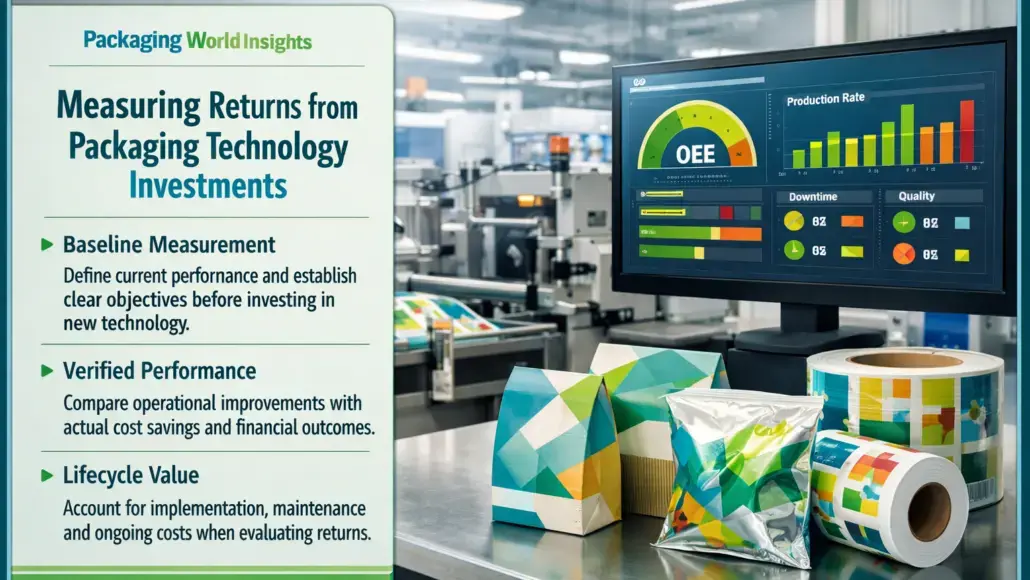

Packaging businesses are investing in machinery, inspection systems, automation and digital workflows to improve production performance and manage increasingly complex operations. However, acquiring new equipment or software does not automatically translate into financial gains. Packaging technology investments need to address a defined business problem, with measurable objectives that reflect operational requirements.
For packaging manufacturers and converters, this means assessing how an investment affects downtime, changeover time, material waste, rework and production capacity, while accounting for the costs of implementation and ongoing operation. The central challenge is to determine whether the benefits achieved justify the full cost of adopting and maintaining the technology.
Investment Decisions Require Measurable Business Outcomes
A credible investment case begins with a baseline against which subsequent performance can be assessed. The National Institute of Standards and Technology (NIST) provides guidance on evaluating manufacturing investments through structured economic analysis, while the Association for Packaging and Processing Technologies (PMMI) examines operational performance measurement in packaging and processing environments. Together, these sources support the distinction between a technology’s capabilities and its demonstrated business value.
Packaging technology investments should therefore be evaluated against clearly defined targets, appropriate performance indicators and realistic cost assumptions. A monitoring system may improve visibility into downtime, for example, but the financial benefit depends on whether that information enables effective action and produces measurable operational improvements.
Defining the Investment Case
- Business problem: Identify the constraint the investment is expected to address, such as recurring downtime, excessive rework, manual processing or limited production visibility.
- Performance baseline: Record existing results using consistent measures before implementation, so subsequent changes can be evaluated meaningfully.
- Expected outcomes: Define measurable objectives, such as reducing changeover time, improving equipment availability or lowering material waste, where relevant to the proposed investment.
- Total costs: Account for acquisition, installation, integration, employee training, maintenance, software and other ongoing expenses when assessing packaging technology investments.
Operational Indicators Show what Technology Changes
Evaluating packaging technology requires businesses to measure operational performance against a defined baseline. The Association for Packaging and Processing Technologies (PMMI) reported in its Overall Equipment Effectiveness QS 2026 survey that downtime was the most commonly tracked indicator among respondents’ existing Overall Equipment Effectiveness (OEE) offerings, at 93.8%. However, tracking downtime does not establish that an investment has delivered a financial return. Packaging businesses must connect measured changes in equipment availability, throughput, waste or rework with their actual operational and financial consequences.
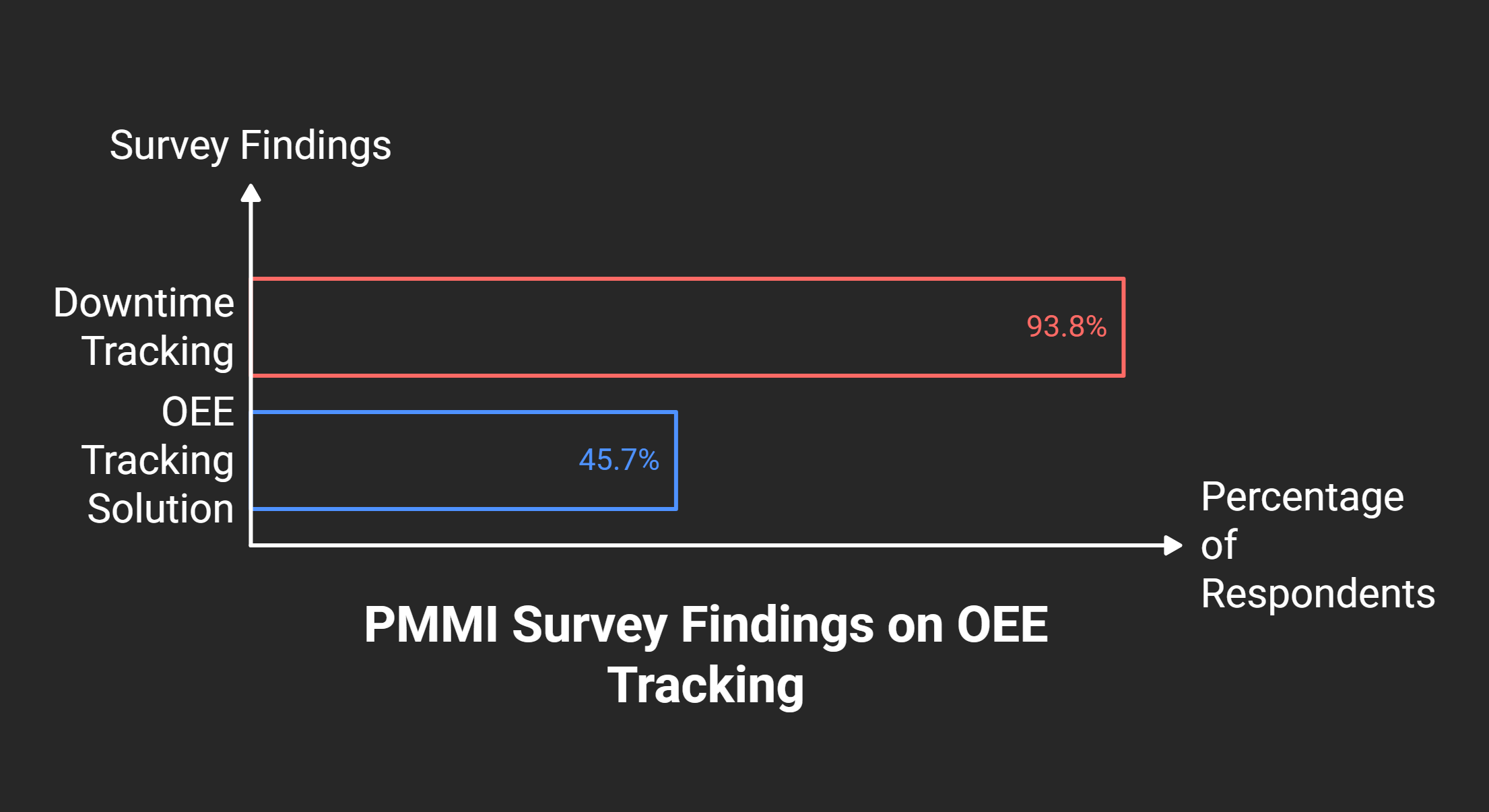
The findings illustrate the role of operational measurement in investment evaluation, while financial returns require separate assessment of costs and realised benefits.
Operational Measures that Support Investment Evaluation
- Equipment performance: Measure downtime, output and changeover time against a consistent baseline.
- Quality and materials: Track waste, defects and rework where these indicators relate to the investment.
- Workflow performance: Assess whether approval cycles, manual processing or other targeted tasks have measurably improved.
Financial Returns Depend on Total Cost and Verified Benefits
The value of packaging technology depends on whether operational improvements justify the full cost of implementation and ongoing use. Businesses should consider acquisition, integration, training, software, maintenance and replacement costs alongside verified savings or additional saleable output. Financial methods such as return on investment (ROI), payback period and Net Present Value (NPV) answer different questions and rely on clearly defined assumptions. Investment assessments should also consider usability where equipment or packaging changes affect consumers, making accessible packaging design relevant to the wider evaluation of packaging decisions.
Translating Performance into Financial Value
- Total cost of ownership: Account for implementation, operating expenses, maintenance and lifecycle costs.
- Verified benefits: Link measured operational improvements to actual cost reductions or additional revenue.
- Financial evaluation: Compare realised benefits against total investment costs and review the assumptions behind projected returns.
Ultimately, packaging technology investment decisions require evidence that connects operational change with financial outcomes rather than relying solely on projected savings or supplier claims.
Proving Value Beyond Technology Acquisition
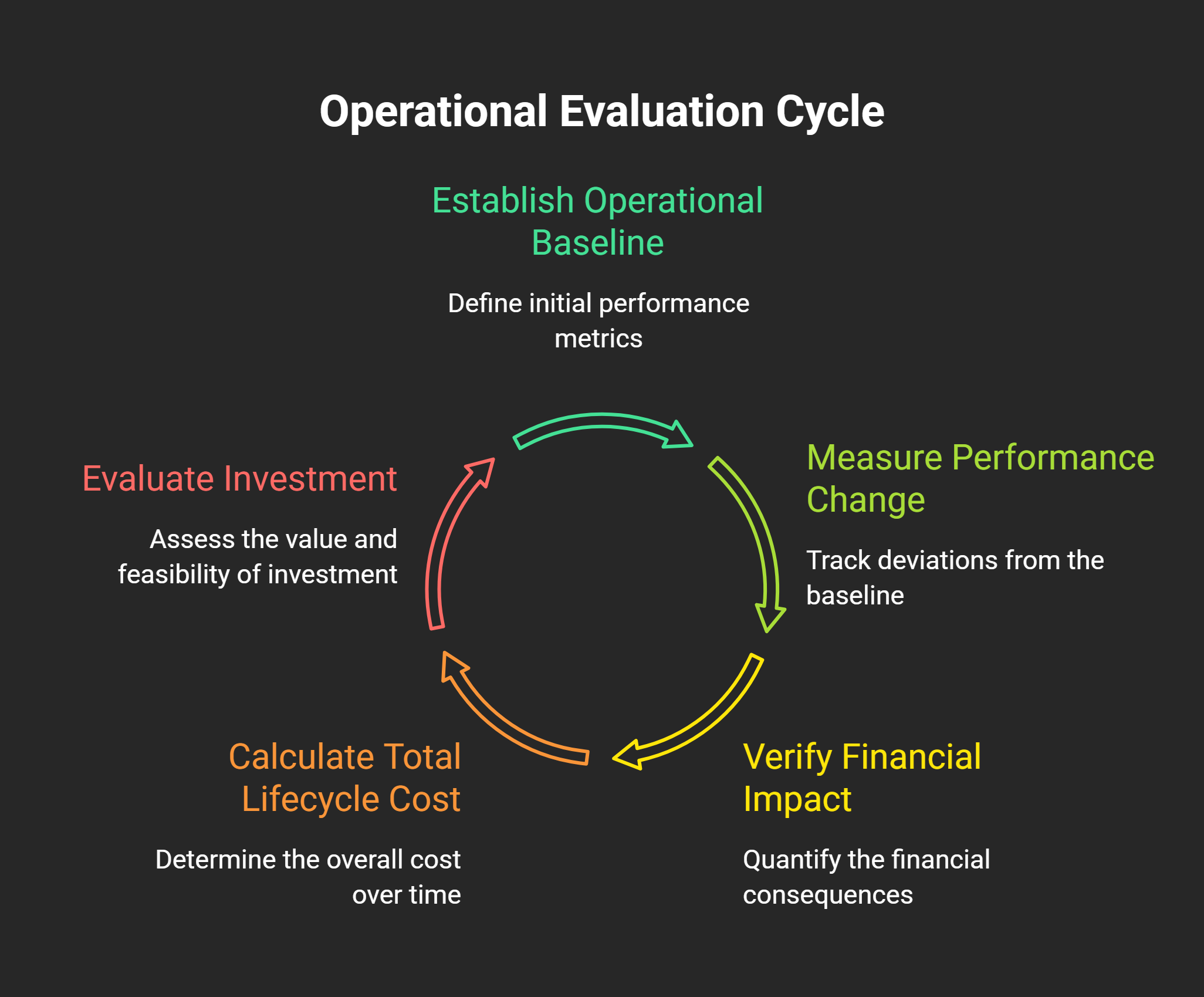
Packaging businesses need to evaluate packaging technology investments beyond their initial performance targets. A credible assessment connects measured operational improvements with actual financial outcomes while accounting for acquisition, implementation, training, maintenance and lifecycle costs. Comparing results against a reliable baseline helps decision makers distinguish realised benefits from projections and identify whether the investment continues to meet its intended objectives. Ongoing evaluation also helps reveal unexpected expenses, implementation limitations and changing operational requirements.
Investment Evaluation Priorities
- Baseline measurement: Compare performance before and after implementation using consistent indicators.
- Verified outcomes: Connect improvements in downtime, waste, rework or throughput with demonstrable financial effects.
- Verified outcomes: Connect improvements in downtime, waste, rework or throughput with demonstrable financial effects.
- Lifecycle costs: Include maintenance, upgrades, recurring expenses and potential replacement requirements.
- Continuous review: Reassess actual returns as operating conditions and business needs change.
Technology delivers commercial value when it addresses a defined business problem and produces measurable benefits relative to its full cost. By combining operational evidence with financial analysis, packaging businesses can make more informed investment decisions without relying solely on supplier projections or assuming that improved equipment performance automatically increases profitability.
References
- The Association for Packaging and Processing Technologies (PMMI) – Overall Equipment Effectiveness QS 2026 – 2026.
- National Institute of Standards and Technology – Investment Analysis Methods: A Practitioner’s Guide to Understanding the Basic Principles for Investment Decisions in Manufacturing – 2017.