


















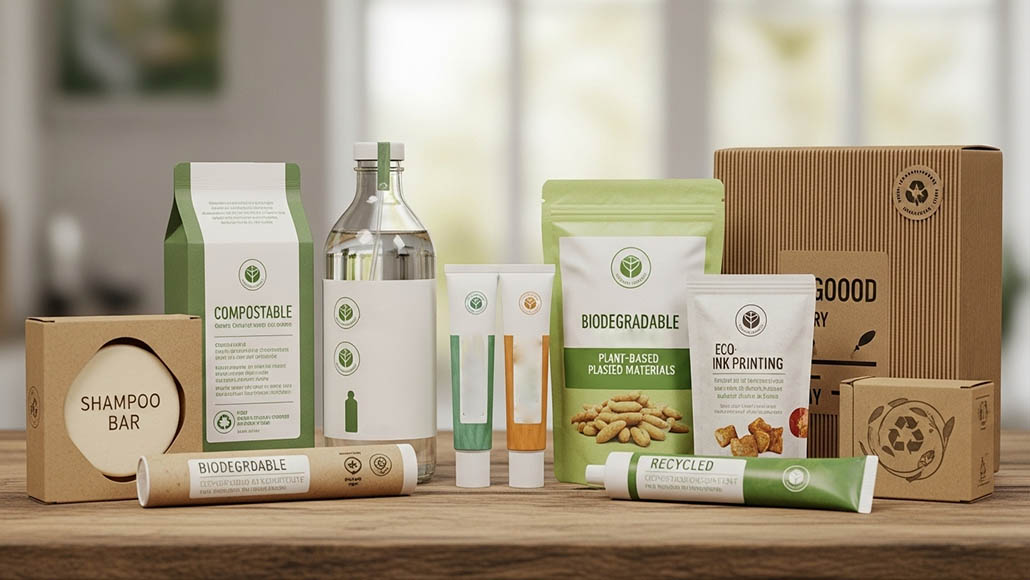

Initially, packaging’s function was just to contain products. It existed to keep goods secure and transportable. But those days are gone. In today’s FMCG markets, packaging has taken on an identity, one bound up with the values of its maker and the expectations of its consumer.
The shift isn’t abstract. People are looking closely at what materials are used, how much is used, and what happens after disposal. For many, the impression a product makes starts not with the item itself but with the way it’s wrapped. Sustainable FMCG packaging, once niche, is now being treated as a litmus test for corporate responsibility. It signals intent.
It also frames trust. Buyers, particularly in urban markets, are starting to question not just the environmental claims printed on packs but the logic behind them. If packaging looks over-engineered or makes disposal complicated, that scepticism grows. On the other hand, when the form is thoughtful, lean, well-labelled, and minimal, it tells a story buyers want to believe.
Design, Texture, and Symbols
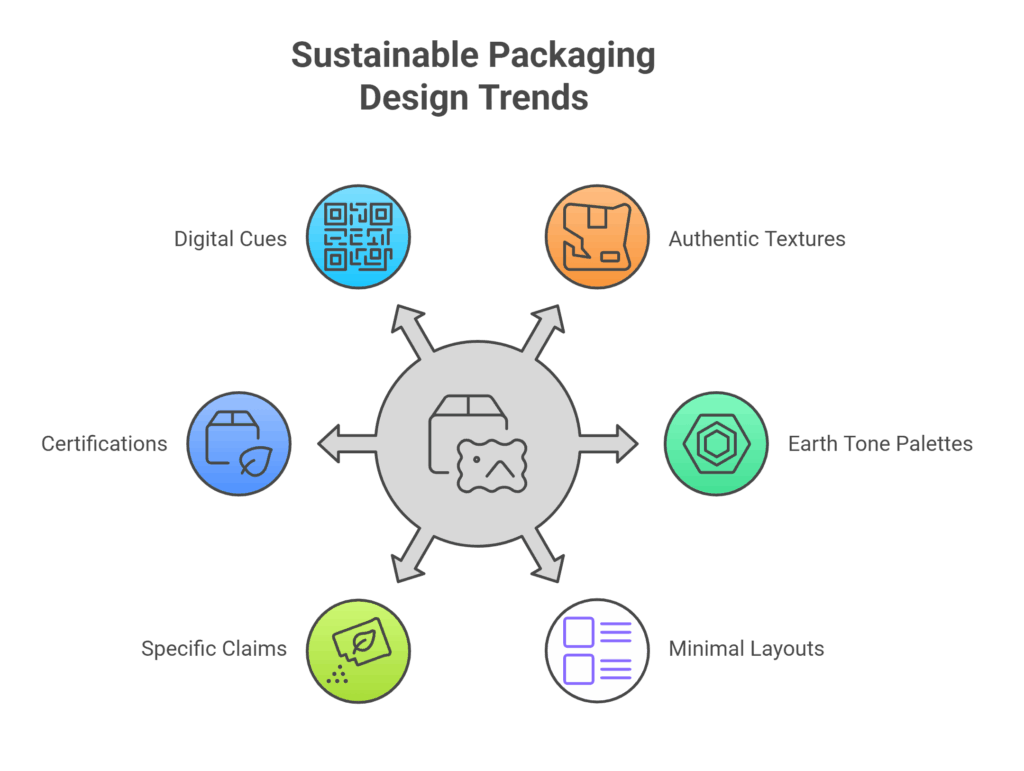
There’s a language to packaging, and consumers are reading it more fluently than ever. No longer just graphics and logos, design choices now convey ethics. Brands know this, and they’re responding. Packaging has become a medium through which sustainability is both signalled and performed.
- Rougher textures, like kraft paper and uncoated board are often seen as more authentic
- Colour palettes tend toward earth tones: olive, slate, sand
- Minimal layouts suggest restraint and signal lower material use
- Phrases like “plant-based wrap” or “made from 100% recycled fibre” carry more weight than generic green claims
- Certifications such as FSC, OK Compost, or How2Recycle are closely examined
- Digital cues like QR codes linking to end-of-life instructions add credibility and ease
The alignment of texture, typeface, and wording creates a kind of visual honesty. Consumers may not always understand the chemistry of biodegradable films or mono-material laminates, but they know when something feels like it’s been made with purpose. Packaging, in this sense, becomes an expression of values, not just function.
The Utility Test
A sustainable solution, no matter how well-intentioned, still has to function. Consumers have little patience for packaging that leaks, rips, or complicates their routine. While environmental values matter, they often compete with convenience, and in that contest, the latter still wins far too often.
This is the tightrope brands must walk. If a compostable tray can’t hold its structure under mild moisture, or if a recyclable wrapper requires scissors to open, frustration outweighs ethics. Consumers won’t hesitate to abandon an otherwise responsible product for one that simply works better, even if it’s made from plastic.
For packaging to succeed in this new context, it must resolve the tension between responsibility and reliability. In practice, that means experimenting with barrier coatings that don’t compromise recyclability or mono-material laminates that offer both clarity and integrity. The most effective formats are the ones that fade into the background, doing their job without calling attention to themselves.
Cultural and Regional Expectations
Sustainability doesn’t mean the same thing everywhere. In some parts of the world, people associate it with less packaging; in others, with recyclable materials or biodegradable alternatives. Local infrastructure plays a significant role. So does habit.
In cities with robust recycling programmes, a polyethylene pouch labelled “widely recyclable” carries weight. But in areas with limited collection systems, a compostable film may be useless or, worse, misleading. People are often left unsure what to do with it, and confusion leads to contamination or apathy.
In certain markets, the term “sustainable” itself is viewed with suspicion as too vague and too easily co-opted. Here, direct language resonates more with the customers. “Plastic-free”, “refillable”, or “home compostable” perform better because they say what they mean. Global brands must adapt not just their formats but also their language to reflect local understanding while navigating this terrain.
Labelling and Credibility
Consumers are increasingly sceptical of brands that make sustainability claims without offering genuine proof. And with growing scrutiny, packaging that overstates its environmental virtue can do more harm than good. The days of vague declarations like “eco-friendly”, “green”, and “planet-safe” are numbered.
What consumers are looking for now is specificity. Not just what the material is, but where it comes from, how it should be disposed of, and what happens afterward. A simple sentence like “Recyclable where facilities exist” communicates more integrity than a dozen generic green icons.
Third-party validation has become essential. A compostability claim without an OK Compost logo becomes questionable. Recycled content without a percentage or certification looks weak. Consumers want proof: concise, visible, and easy to verify. Anything less risks being seen as cosmetic compliance rather than meaningful commitment.
Price Perception and Justifying the Cost
Most consumers support sustainability in principle. In practice, they operate within budgets. When a product wrapped in sustainable FMCG packaging is more expensive than its conventional counterpart, the justification must be immediate and visible.
That justification doesn’t always have to come through price-to-performance ratios. It can come from form. Packaging that feels premium, rigid, smooth, and well-finished can help offset cost concerns. So can subtle cues that suggest quality and restraint: well-spaced typography, low-ink printing, or reusable closures.
Interestingly, many consumers are not paying for the material itself, they’re paying for the message it conveys. When packaging helps them feel aligned with environmental values, they’re often willing to spend more. But the emotional payoff must be real. It can’t be faked or overstated. That’s the fine line brands must walk: between inspiration and integrity.
Educating the Market, Quietly and Consistently
One of the most overlooked components of sustainable FMCG packaging is consumer education. What’s compostable in theory often isn’t in practice. What’s recyclable depends heavily on local systems. People often don’t know what to do with complex laminates or degradable plastics.
This is where clarity matters. Not long-winded instructions, but direct, confident statements. Brands that use their packaging to teach, without preaching, build trust. A recycling symbol paired with a short URL to a disposal map does more than any generic sustainability slogan ever could.
The learning curve doesn’t have to be steep, but it must be addressed. Consumers are open to guidance, particularly if it’s integrated into their interaction with the product. That might be as simple as colour-coded labels, disposal diagrams, or tactile cues that indicate material differences. Each small nudge helps.
Sustainability as a Strategic Lever
Packaging has always been a branding tool. What’s changed is the kind of message it needs to send. In this environment, packaging that reflects environmental responsibility isn’t just helpful; it’s strategic. It tells customers that the company is forward-looking, informed, and willing to invest in what matters.
For brands operating in saturated FMCG markets, sustainable FMCG packaging is increasingly being treated as a competitive edge. It sets products apart on crowded shelves. It appeals to both the conscience and the eye. And it gives companies a way to signal relevance in a market that now expects more than price and function.
The smart brands are the ones seeing packaging not as cost but as communication. They’re redesigning not only materials but also language. They’re simplifying, informing, and aligning using each surface of the pack as a place to prove they’re paying attention.
Conclusion
Consumer expectations are evolving, but they’re not extreme. Most people aren’t demanding perfection; they’re looking for signs of effort. They want packaging that reflects thought, that acknowledges the stakes, and that helps them do the right thing without struggle.
Sustainable FMCG packaging is at the crossroads of ethics and action. It allows brands to turn values into form and form into trust. But it’s only effective when handled with care, when decisions are backed by understanding, not trend-chasing. In the years ahead, it’s not the design-heavy formats that will win favour. It’s the ones that are honest, functional, and built with the end in mind. Brands that treat packaging not as a finishing touch but as a moral starting point will be the ones remembered, for all the right reasons.