

















In an increasingly globalized and digital marketplace, the threat of counterfeiting has evolved from a nuisance into a multi-billion dollar crisis. No industry is immune, with everything from high-end luxury fashion and electronics to life-saving pharmaceuticals and everyday consumer goods falling victim to sophisticated forgery. For manufacturers, the challenge is twofold: they must protect their brand equity and revenue while simultaneously ensuring the safety and trust of their customers. The front line in this battle is anti counterfeit packaging printing, an umbrella term for a diverse array of advanced technologies designed to make packaging nearly impossible to replicate and easy to verify.
The Multi-Layered Strategy of Modern Security Printing
Effective brand protection is never about a single silver bullet solution rather, it involves a multi-layered approach that combines overt, covert, and forensic features. Overt features are those visible to the naked eye, designed to help the average consumer or retailer quickly identify a genuine product. These might include complex holograms, color-shifting inks that change hue when tilted, or intricate guilloche patterns that are extremely difficult to scan and print with standard commercial equipment. While these features provide a first line of defense, their visibility also makes them a target for determined counterfeiters to imitate.
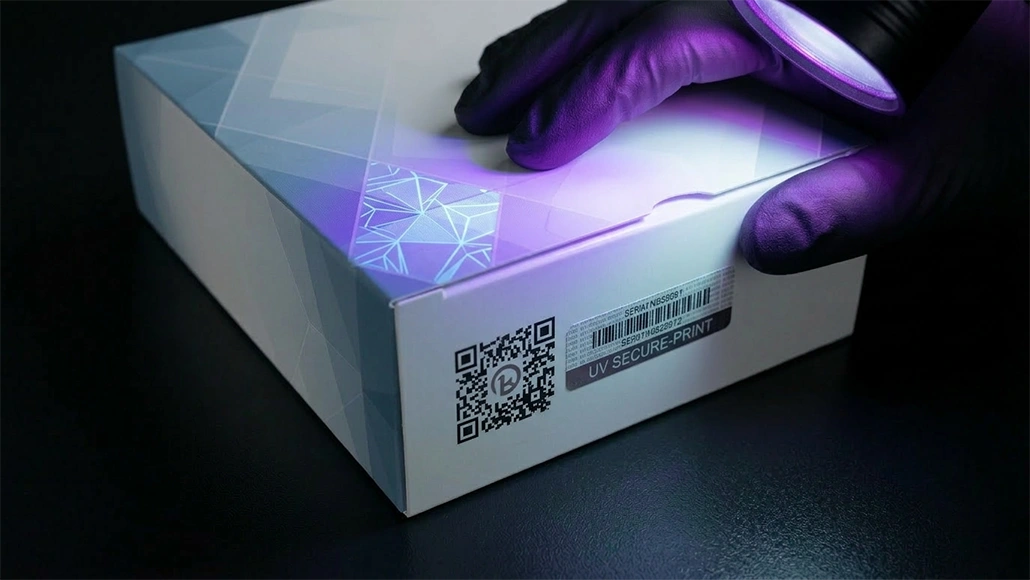
This is why covert features are essential. These are invisible under normal conditions and require specialized tools to detect. Examples include microtext that is only legible under high magnification, UV-fluorescent inks that glow only under specific wavelengths of light, and taggants microscopic chemical markers embedded in the ink or substrate that act as a digital fingerprint. Because these features are hidden, a counterfeiter may not even know they exist, making it much harder for them to create a convincing replica. When a suspect product is found, a brand owner can use a simple hand-held scanner to instantly confirm whether the secret markers are present.
Safeguarding the Global Pharmaceutical Supply Chain
Nowhere is the importance of anti counterfeit packaging printing more critical than in the pharmaceutical industry. Counterfeit medicines are a direct threat to public health, often containing the wrong dosage, no active ingredients, or even toxic substances. In response, governments around the world have introduced strict track and trace regulations, such as the Drug Supply Chain Security Act DSCSA in the United States and the Falsified Medicines Directive FMD in Europe.
These regulations require every individual pack of medicine to carry a unique, serialized identifier, typically in the form of a 2D DataMatrix code. This code allows the product to be tracked as it moves through the supply chain, from the manufacturer to the distributor and finally to the pharmacist. If a pack appears in two places at once, or if the code does not exist in the manufacturer’s database, the system flags it as suspicious. The printing of these codes must be incredibly precise and durable, as any degradation of the mark could lead to a legitimate life-saving drug being rejected at the point of sale.
The Role of Digital Innovation in Brand Authentication
The digital revolution has brought new tools to the fight against forgery. One of the most promising developments in anti counterfeit packaging printing is the use of digital watermarking. This technology embeds encrypted data into the actual artwork of the package, invisible to the human eye but easily read by a smartphone app. Unlike a QR code, which occupies physical space on the label, a digital watermark can be spread across the entire design, making it virtually impossible to remove or alter without destroying the integrity of the image.
Consumers can scan the package with their phones to receive instant confirmation of authenticity, along with additional information about the product’s origin and usage instructions. This turns the customer into an active participant in the brand protection process. Furthermore, the data generated by these scans provides the brand owner with real-time threat intelligence. If an unusual number of scans occur in a region where the product was never officially distributed, it could indicate a breach in the supply chain or a localized outbreak of counterfeit activity.
Protecting Brand Integrity through Tamper-Evident Solutions
While the printing itself provides authentication, it must often be paired with physical tamper-evident features to ensure that the contents have not been replaced or altered. Security labels and tapes are designed to leave a permanent mark such as the word VOID if they are peeled back, or to disintegrate into tiny pieces if an attempt is made to remove them. When integrated into the overall packaging design, these features provide a clear visual signal to the consumer that the product is untouched and safe.
Advanced anti counterfeit packaging printing also includes the use of forensic features, which are the most secure of all. These are molecular-level markers that can only be identified in a laboratory. While not practical for everyday field checks, they are invaluable in legal proceedings. If a brand takes a counterfeiter to court, the ability to prove with scientific certainty that a product did not come from their factory is a powerful weapon. These forensic markers are often added to the inks or coatings in such minute quantities that they do not affect the color or performance of the packaging.
Navigating the Economic Realities of Security Implementation
One of the primary hurdles to the widespread adoption of high-level security features is cost. Every layer of protection adds to the unit price of the package, which can be difficult for manufacturers to justify on low-margin consumer goods. However, the calculation is changing. As the technology matures and scales, the cost of features like 2D serialization and microtext has dropped significantly. Furthermore, brands are increasingly looking at the total cost of counterfeiting, which includes lost sales, legal fees, damage to brand reputation, and the potential for massive liability lawsuits if a consumer is harmed.
When viewed through this lens, the investment in anti counterfeit packaging printing is not just a defensive cost it is a vital part of risk management and corporate social responsibility. In some cases, the security features can even be leveraged to provide additional value. For example, a serialized QR code used for authentication can also be used for a loyalty program or to provide digital coupons, turning a security expense into a marketing opportunity. This dual-use strategy makes it much easier for brand managers to secure the budget for advanced protection measures.
The Future: Blockchain and Beyond
Looking to the horizon, the integration of blockchain technology with security printing promises to create an even more secure and transparent supply chain. By recording every event in a product’s life from raw material sourcing to final sale on an immutable digital ledger, brands can create a chain of custody that is impossible to forge. The link between the physical package and the digital blockchain is provided by the smart labels and serialized codes discussed earlier.
As artificial intelligence continues to advance, we will also see the development of smart inspection systems that can detect counterfeit products with unprecedented speed and accuracy. These systems can analyze the microscopic variations in print patterns that are unique to a specific press, allowing for the identification of fakes even if they have perfect copies of all the overt and covert features. The battle between brands and counterfeiters is an ongoing arms race, but with the continued evolution of anti counterfeit packaging printing, manufacturers have more powerful tools than ever to protect their products and their people.