












Shipping rolled materials across Europe often means keeping costs low while ensuring adequate protection. However, many packaging strategies often involve using unnecessary materials due to poor design or management, which can impact expenses and sustainability. With added regulatory pressure in the region, more companies are turning to smarter packaging solutions.
This article contains:
- The Modern Packaging Dilemma in Europe
- Methodology for Selecting Top Packaging Providers
- Best Value Packaging Solutions for Rolled Shipping Materials in Europe
- FAQs
The Modern Packaging Dilemma in Europe
European businesses are facing increasing pressure to reduce packaging waste. Across the region, there is a clear push toward reducing waste and improving recyclability. This push is especially clear in laws like the Packaging and Packaging Waste Regulation (PPWR), which aims to boost commerce while protecting people and the environment.
At the same time, customers and partners expect goods to arrive in perfect condition, especially for high-value or sensitive materials. Entities must therefore handle a challenging balancing act between adopting minimalist packaging and ensuring their products can withstand long-distance transport and different environmental conditions.
For industries dealing with rolls like textiles, roofing membranes, paper and varying sheets, the challenge is even more specific. These products are naturally vulnerable to edge damage and shifting during transit. For this reason, they should invest in smarter packaging solutions instead of just cutting materials.
Ideally, they should invest in solutions that maintain structural integrity with minimal material inputs and reduce waste while still protecting critical or fragile points. These efforts all support compliance with European sustainability standards.
Methodology for Selecting Top Packaging Providers
To help you identify the most practical partners, this list focuses on brands that deliver both cost efficiency and protective performance. The team evaluated each provider based on these factors:
- Specialisation in cylindrical or rolled material applications: Experience handling rolls, coils and other nonstandard shapes
- Strong European presence: Ability to support operations across multiple countries and logistics networks
- Balance between material efficiency and protection: Solutions designed to minimise waste while maintaining product integrity
- Total cost impact: Consideration of packaging, labour, storage and transportation costs
- Ease of implementation: Systems that are simple to use and scalable across operations
Best Value Packaging Solutions for Rolled Shipping Materials in Europe
If you’re looking for a partner that balances sustainability and efficiency, consider these providers of rolled material packaging in Europe.
1. Rollguard
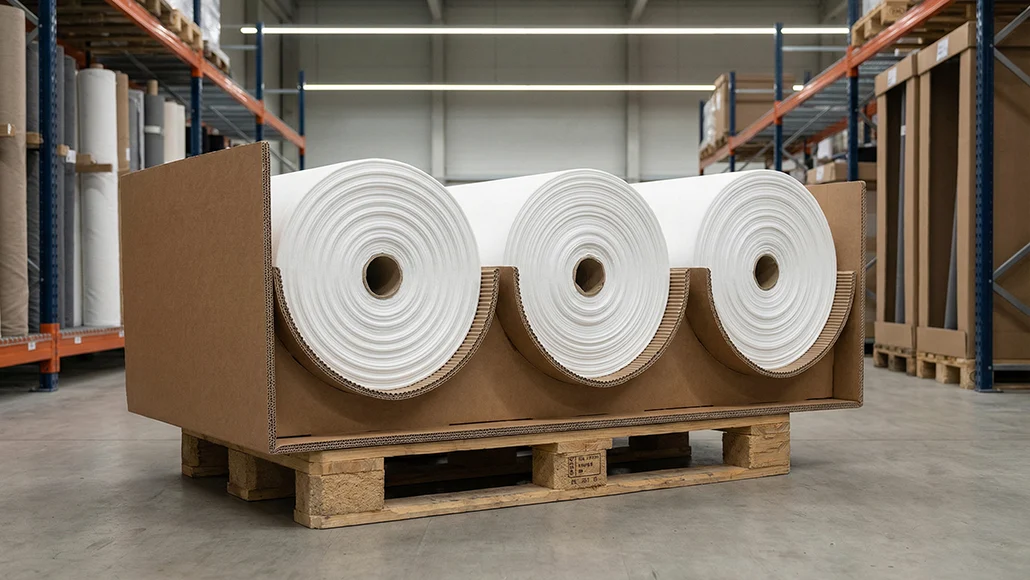
Rollguard is specifically designed for protecting rolled materials during transport, which is one of the toughest packaging needs. Its system uses durable fibre cradles to hold cylindrical products in place, helping prevent movement and deformation.
Made in Germany, this option fits well with European standards for quality and sustainability. Instead of using layers of bulky materials, it focuses on a simple, efficient design that still delivers strong protection, making it easier to reduce waste and risk at the same time.
Rollguards main product’s simplicity is ideal for everyday operations. Its cost-effective cylindrical packaging is quick to apply, which helps reduce packing time and labour costs. It also takes up less space, which improves warehouse space efficiency, especially for enterprises handling high order volumes.
2. Sonoco
Sonoco is a well-known provider of metal and fibre-based packaging, especially tubes and cores used in industries like food, beverage, pet care, construction and household items.
Its experience with cylindrical products makes it a good fit for businesses shipping rolled materials or other irregular shapes. The company offers a wide range of options so you can adjust packaging based on size, weight, environment and other handling needs.
Sustainability is also a key focus, as Sonoco continues its research and development of recycled materials and circular design. It is a reliable choice for those seeking flexible, proven solutions with strong coverage across Europe.
3. Nefab Group
Nefab Group focuses on improving packaging at a systemic level. While it has ready-made products, it often designs customised solutions based on how an entity prefers to store and handle its goods. The brand can accommodate rolled products, combining different materials like wood and fibre to provide the right level of protection.
By improving how companies pack and ship their goods, Nefab helps reduce waste and lower transportation costs while improving protection and handling. This approach works best for enterprises that are open to investing in custom design to achieve savings, sustainability and peak protection over time.
4. Smurfit Westrock
Smurfit Westrock is one of Europe’s largest packaging businesses, known for its paper-based and corrugated solutions. Its solutions can accommodate various products and product shapes, including cylindrical materials.
This makes the company a flexible option for those with mixed packaging needs. Smurfit Westrock also puts a strong emphasis on sustainability, using recyclable materials and supporting circular packaging strategies.
Its research and development services help companies find the best solution for their needs and ensure packaging performs well in real shipping conditions. The enterprise is a good fit for businesses that want scalable, sustainable solutions from an established provider.
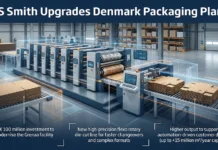
5. DS Smith
DS Smith is another major packaging provider with a strong focus on sustainability and circular design. Its goal is to reduce material use while still protecting products effectively. This approach aligns well with the shift toward minimalist packaging in Europe.
For rolled materials, DS Smith creates custom designs that improve stacking and handling processes. Its integrated design, collaboration and production services also make it easier to find the best fit for items requiring specialised strategies. DS Smith offers solid value for brands looking to improve efficiency and embrace a sustainable, circular approach to packaging and transportation.
Frequently Asked Questions (FAQs) on Best-Value Packaging Solutions
What is minimalist packaging?
Minimalist packaging means using only the minimum amount of material necessary to ship a product safely. It focuses on reducing waste and improving efficiency without compromising protection. Instead of adding layers, it relies on smarter design to secure products while lowering environmental impact.
How can the right packaging reduce my overall shipping costs?
Packaging affects material costs and your entire operation. The right solution can help you:
- Lower freight costs by reducing weight
- Save warehouse space with more compact packaging
- Cut labour time with faster and easier packing processes
- Prevent damage, reducing returns and replacement costs
Why is packaging for rolled material different?
Rolled materials require a different approach because of their shape and structure. They are more likely to suffer edge damage and are sensitive to pressure, which can lead to shifting or unspooling during transport. For these reasons, they need packaging that supports their cylindrical form and protects their more fragile areas.
Efficiency Meets Protection
In the modern European market and regulatory environment, packaging needs to both protect products and support sustainability and efficiency at the same time. With more pressure to reduce waste and control costs, many businesses may need to rethink their packaging approach and embrace smarter solutions that give them the best of both worlds.