
















Key Takeaways
- Aesthetic Sophistication Through Technology: Advanced surface finishing techniques like smooth-wall processing and hot-pressing have elevated moulded fibre from a functional, industrial material to a premium, retail-ready solution. This allows brands to maintain a high-end visual and tactile identity while simultaneously meeting their sustainability goals.
- Integrated Branding and Eco-Aesthetics: By using moulded-in logos and direct-to-shape printing, brands can eliminate the need for secondary labels and adhesives, which simplifies the recycling process. The ability to use natural pigments and bio-coatings further ensures that the packaging remains fully compostable and aligned with the brand’s environmental story.
In the competitive landscape of modern retail, the package is the first “touchpoint” a consumer has with a brand. Historically, moulded fibre was seen as a purely functional, “back-of-house” material the rough, grey egg carton or the industrial shock-absorber for heavy machinery. However, the rise of conscious consumerism has sparked a revolution in the industry. Today, branding and surface finishing in moulded fibre packaging have evolved to the point where they can rival the aesthetics of high-end plastics and laminated boards. Brands are no longer forced to choose between being sustainable and being stylish; they can now achieve both through advanced finishing techniques that turn raw pulp into a sophisticated, brand-aligned canvas.
The Evolution from Rough to Smooth Wall
The foundation of modern branding and surface finishing in moulded fibre packaging is the “Smooth-Wall” or “Type 3” process. Unlike traditional “Transfer Moulding” which results in one smooth and one rough side, the smooth-wall process uses heated moulds to press the fibres on both sides. This creates a dense, plastic-like surface that is silky to the touch and incredibly flat. This flatness is the prerequisite for high-quality printing.
When the surface of the fibre is compressed at high pressure and temperature, the individual cellulose strands are forced together, closing the pores of the material. This prevents ink from bleeding or “feathering” when printed. This surface finishing packaging allows for much higher resolution graphics, sharper text, and more vibrant colors than was ever possible on traditional pulp. For a premium brand, this smooth-wall finish conveys a sense of quality and attention to detail that is essential for luxury consumer electronics, cosmetics, and spirits.
Direct Printing and Decorative Techniques
Once a smooth surface is achieved, the possibilities for branding are nearly endless. One of the most common methods is flexographic or offset printing directly onto the moulded fibre. Modern printing presses are now designed to handle the 3D shapes of moulded packaging, allowing for 360-degree branding. High-speed, multi-color inkjet printing is also gaining traction, particularly for short-run or personalized packaging. This direct-to-shape printing eliminates the need for plastic labels or adhesive sleeves, which can interfere with the recycling process.
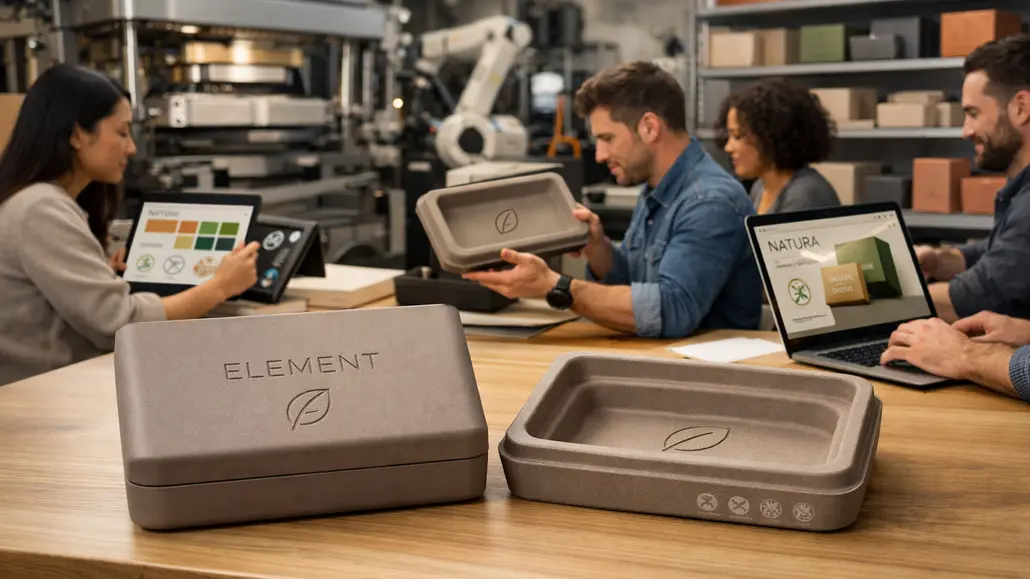
Furthermore, “moulded-in branding” is a powerful tool for sustainable branding packaging. This involves engraving logos, text, or patterns directly into the metal tool. When the pulp is formed and pressed, the brand’s identity is physically embossed or debossed into the material itself. This tactile branding cannot be removed or damaged, and it adds a premium “engraved” look that consumers associate with high-end craftsmanship. By integrating the brand directly into the structure of the package, companies can reduce the amount of ink and secondary materials used, further enhancing their eco-credentials.
Advanced Coatings and Tactile Finishes
Beyond visual graphics, the “feel” of a package is a vital part of the consumer experience. In the world of moulded fibre packaging branding, tactile finishes are used to create unique sensory experiences. Bio-based coatings can be applied to create a “soft-touch” feel, similar to high-end rubberized plastics, but without the environmental drawbacks. These coatings can also be formulated to provide functional benefits, such as grease resistance for food applications or moisture barriers for beauty products.
Innovative use of “flocking” or “sueding” can also be applied to moulded fibre. By applying a layer of short natural fibres to the surface of a moulded tray, manufacturers can create a velvet-like texture that is perfect for protecting delicate items like jewelry or high-end watches. This level of sophistication in eco packaging aesthetics is what allows moulded fibre to move from the warehouse to the boutique shelf. When a consumer runs their fingers over a smooth, elegantly finished fibre tray, it reinforces the message that the brand is both premium and responsible.
Color and Pigmentation Strategies
Color is a fundamental part of any branding strategy. While the natural “kraft” or “bleached white” looks of moulded fibre are popular for their “organic” feel, the industry can now produce a full spectrum of colors. Pigments can be added directly to the pulp slurry before the forming process. This results in “solid-core” color, meaning the package is the same color all the way through. If the package is scratched or torn, the color remains consistent, unlike a printed surface that would reveal a different color underneath.
Natural dyes and mineral-based pigments are increasingly used to ensure that the colored packaging remains 100% compostable and recyclable. Many brands are opting for “earthy” tones—deep greens, terracottas, and charcoal greys—to emphasize their natural origin. However, vibrant “retail-ready” colors are also available for brands that want to stand out on the shelf. This flexibility in fibre packaging printing and coloration is what makes moulded fibre a viable replacement for colored plastics in a wide range of industries.
Sustainable Branding and the Consumer Story
The most powerful aspect of branding and surface finishing in moulded fibre packaging is the ability to tell a story. The material itself is a message of environmental responsibility. By leaving part of the natural fibre texture visible, or by using “debossed” recycling symbols and sustainability certifications, brands can communicate their values to the consumer at a glance.
This is often referred to as “honest packaging.” Consumers are increasingly skeptical of “greenwashing” (fake sustainability). A package that looks, feels, and acts like a natural product is the most authentic way to build trust. Branding strategies that highlight the “cradle-to-cradle” nature of the material for example, printing instructions on how to compost the box directly onto the surface engage the consumer in the sustainability journey. This level of engagement turns a simple package into a powerful brand ambassador.
Future Trends in Surface Finishing
Looking ahead, the next generation of branding and surface finishing in moulded fibre packaging will involve “smart” surfaces. Researchers are developing bio-inks that change color to indicate the freshness of food, and conductive fibres that can act as simple touch-sensors for interactive packaging. There is also a push toward “digital textures” using laser-engraved tools to create complex, micro-textures that mimic wood grain, leather, or even carbon fibre.
As these technologies mature, the distinction between “industrial” and “premium” packaging will continue to blur. Moulded fibre is no longer just a sustainable choice; it is becoming the preferred choice for brands that want to lead in both innovation and ethics. By mastering the art of branding and surface finishing in moulded fibre packaging, manufacturers are proving that the future of luxury is not plastic it is fibre.