




















In an era defined by rapid digital transformation and heightened consumer awareness, the global food industry is undergoing a paradigm shift in how it manages information. The journey of a food product from its origin on a farm to its final destination on a dinner plate— is no longer a series of disconnected events. Instead, it is becoming a transparent, data-rich narrative. Digital packaging technologies strengthening food traceability are at the heart of this evolution. By embedding digital triggers and identifiers directly into the packaging, the industry is creating a bridge between the physical product and its digital “twin.” This connectivity provides a level of granular visibility that was previously unimaginable, ensuring that every stakeholder in the supply chain can verify the safety, authenticity, and sustainability of the food we consume.
Traceability has traditionally been a reactive process, often triggered by a crisis such as a foodborne illness outbreak or a product recall. In these scenarios, companies would scramble to trace a contaminated ingredient back to its source, a process that could take days or even weeks. Digital packaging technologies strengthening food traceability turn this into a proactive, real-time capability. With the ability to track individual units rather than just batches, the industry can identify and isolate issues with surgical precision. This not only protects public health but also prevents the massive financial and reputational damage associated with broad, imprecise recalls. Furthermore, in a world where consumers increasingly demand to know the “who, what, where, and how” of their food, digital packaging provides the platform for meaningful, evidence-based storytelling.
The implementation of these technologies is not just about meeting regulatory requirements; it is about building a more resilient and efficient food system. Digital packaging technologies strengthening food traceability allow for better inventory management, reduced food waste, and enhanced coordination across global supply networks. As these technologies become more affordable and standardized, they are set to become a foundational component of modern food commerce. From smart labels that update in real-time to blockchain-enabled verification systems, the digital package is transforming from a passive container into an active guardian of food integrity and consumer trust.
The Technological Architecture of Digital Traceability
To understand how digital packaging technologies strengthening food traceability function, one must look at the diverse array of technologies that enable data capture and transmission. Each of these tools ranging from simple visual codes to sophisticated electronic chips serves a specific purpose in the traceability ecosystem.
QR Codes and 2D Barcodes
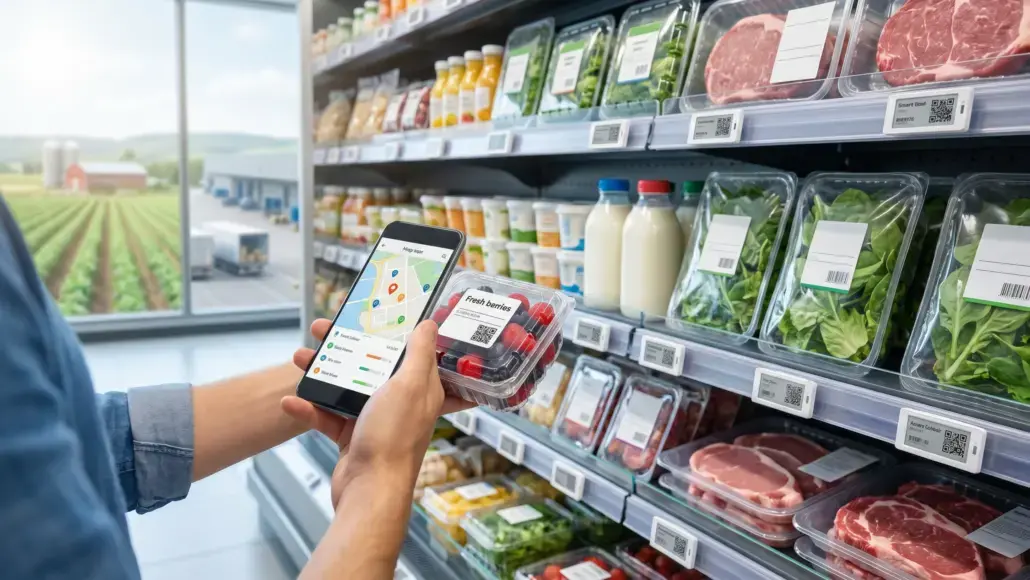
The most accessible and widely adopted form of digital packaging is the Quick Response (QR) code or the GS1 Digital Link. Unlike traditional linear barcodes, which only provide a generic product identifier, QR codes can link to a vast repository of data hosted on the cloud. For the consumer, a simple scan with a smartphone can reveal the farm where the food was grown, the date it was processed, and even the laboratory results for safety tests. For the logistics provider, these codes allow for more detailed tracking throughout the distribution network. The beauty of the QR code lies in its low cost and high compatibility, making it an ideal “entry point” for companies beginning their digital traceability journey.
RFID and NFC: The Power of Wireless Connectivity
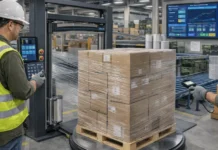
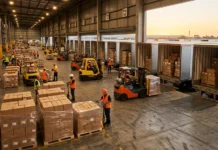
Radio Frequency Identification (RFID) and Near Field Communication (NFC) take digital packaging to a higher level of automation and interaction. RFID tags can be read from a distance without a direct line of sight, allowing for the simultaneous scanning of entire pallets of goods as they move through a warehouse. This drastically reduces the time and labor required for inventory tracking and ensures that the digital record is always up to date. NFC, while similar to RFID, is designed for close-range interaction, typically with a consumer’s smartphone. NFC-enabled packaging can provide secure, tamper-proof authentication, ensuring that the product inside has not been swapped or compromised. These technologies are particularly valuable for high-value goods, such as premium wines, spirits, and specialty meats, where authenticity is paramount.
Strengthening Safety and Compliance through Data
Food safety is the primary driver behind the adoption of digital packaging technologies strengthening food traceability. In a globalized market, ingredients often travel across multiple borders and through numerous hands before reaching the consumer. Maintaining a clear, uninterrupted record of this journey is essential for ensuring compliance with international safety standards and protecting the public.
Real-Time Monitoring and Cold Chain Verification
Many food safety issues are related to improper handling during transit, particularly for temperature-sensitive items. Digital packaging can incorporate sensors that monitor temperature, humidity, and even light exposure. This data is linked to the package’s digital identity, creating a permanent log of the environmental conditions. If a shipment of salmon, for example, is exposed to temperatures that could promote bacterial growth, the digital packaging technology will flag the issue immediately. This allows the supplier to intervene before the product reaches the retail shelf, preventing potential illness and ensuring that only the highest quality food is sold to the public.
Rapid Recall and Targeted Intervention
When a safety incident does occur, the speed of the response is critical. Digital packaging technologies strengthening food traceability enable a “track and trace” capability that can pinpoint the location of every affected unit in seconds. By linking the package to a blockchain or a centralized database, retailers can automatically identify and block the sale of specific batches at the point of purchase. This targeted approach prevents the unnecessary disposal of safe food and minimizes the disruption to the supply chain. It also provides peace of mind to the consumer, who can quickly verify if the specific item in their pantry is part of a recall.
Building Consumer Trust and Combating Food Fraud
In the modern marketplace, “trust” is a valuable commodity. Consumers are increasingly skeptical of broad marketing claims and are looking for empirical evidence to support sustainability and ethical sourcing stories. Digital packaging technologies strengthening food traceability provide the transparency needed to validate these claims and build long-term brand loyalty.
Transparency as a Competitive Advantage
Brands that embrace digital packaging can use traceability as a core part of their value proposition. By giving consumers access to the full “life story” of their product, companies demonstrate a commitment to honesty and accountability. For example, a coffee brand can use digital labels to show the exact cooperative where the beans were grown, the fair-trade price paid to the farmers, and the carbon footprint of the shipping process. This level of transparency resonates deeply with the growing segment of “conscious consumers” who want their purchases to align with their personal values. In this way, digital packaging turns a logistical necessity into a powerful marketing tool.
Preventing Food Fraud and Adulteration
Food fraud the intentional mislabeling or adulteration of food for financial gain is a multi-billion dollar problem that poses serious health risks. Digital packaging technologies strengthening food traceability are a primary defense against this threat. Secure, serialized digital identifiers make it nearly impossible for counterfeiters to replicate a product’s digital twin. Technologies like blockchain provide a “single source of truth” that cannot be altered or forged. This ensures that when a consumer buys “extra virgin olive oil” or “wild-caught salmon,” they are getting exactly what they paid for. By securing the integrity of the product, digital packaging protects both the consumer and the legitimate producers who have invested in quality.
The Future: Toward a Fully Connected Food Ecosystem
The future of digital packaging technologies strengthening food traceability lies in the integration of data across the entire global food system. We are moving toward a “circularity of information,” where data flows seamlessly between farmers, processors, logistics providers, retailers, and consumers.
AI and Predictive Traceability
As the volume of data generated by digital packaging increases, the industry will increasingly turn to artificial intelligence (AI) and machine learning to make sense of it. AI can analyze traceability data to identify patterns and predict where safety risks or inefficiencies might occur. For example, if data shows that a specific transit route consistently experiences temperature fluctuations, the AI can suggest alternative routes or improved packaging solutions. This predictive capability will make the food supply chain not just transparent, but also incredibly intelligent and self-optimizing.
Standardizing the Global Digital Link
For digital packaging to reach its full potential, global standardization is essential. Organizations like GS1 are working to create universal standards for digital links, ensuring that a digital package can be read and understood by any system, anywhere in the world. This interoperability is the key to creating a truly global traceability network. As more companies adopt these standards, the “digital package” will become the universal language of food, carrying with it all the information needed to ensure a safe, sustainable, and transparent future for all.