


















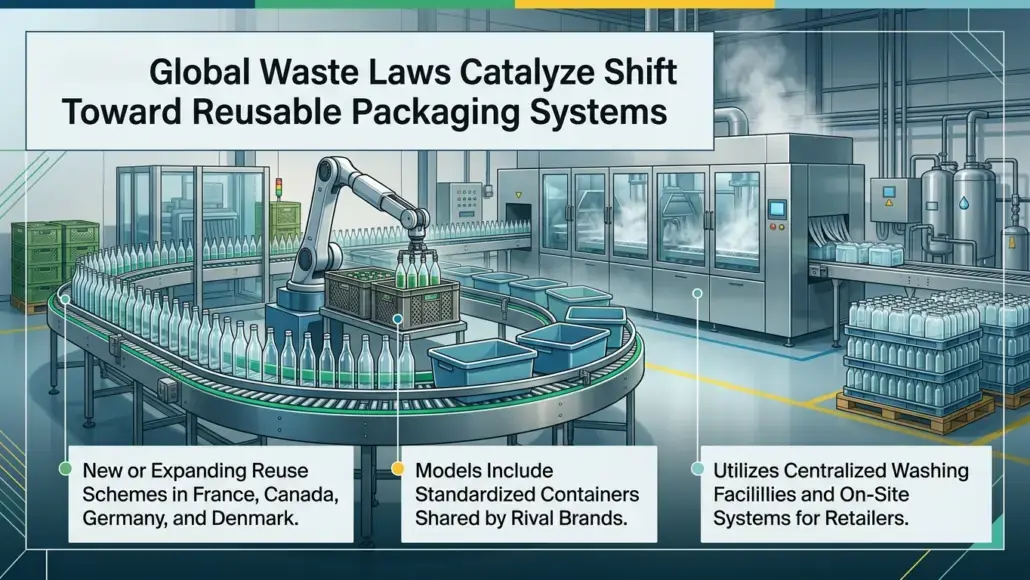

After decades of mostly failed attempts to make reusable bottles, tubs and cups work, looming waste-reduction laws are forcing companies to take a harder look at putting drinks, food and everyday groceries in containers that are repeatedly used. New or expanding reuse schemes in France, Canada, Germany and Denmark are currently testing a range of models, including standardized containers shared by rival brands, centralized washing facilities, and systems where cafes wash returned containers themselves. While previous efforts often struggled with weak consumer uptake, the implementation of reusable packaging systems is becoming a regulatory necessity. In Europe, a new law aimed at reducing the environmental impact of packaging will ban single-use plastic packaging for most fresh fruits and vegetables under 1.5kg from 2030, while also mandating that 10% of most drinks be sold in reusable formats by the same year.
Infrastructure and Consumer Habits in Europe
Germany, home to one of the world’s most established reusable packaging systems, demonstrates the critical importance of infrastructure. For decades, mandatory bottle deposits have helped build a dense deposit network of reverse vending machines. The country’s environment agency, Umweltbundesamt, estimates that about 95% of refillable glass bottles and 99% of refillable PET bottles are returned. Elena Schagg, who works on reusables at German environmental nonprofit Deutsche Umwelthilfe, notes that “What we have learned is that return has to be extremely comfortable and easy,” adding that “If people have to enter a cafe and talk to someone, that is a barrier.” Similarly, France is utilizing producer fees to fund shared infrastructure, with the organization Citeo devoting roughly 50 million euros annually to support takeaway packaging and in-store return equipment across more than 350 stores.
Standardization and the Challenge of Scaling
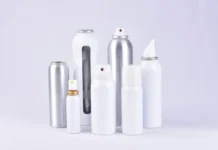
In Ottawa, Canada, a trial involving 50 products from major brands like L’Oreal, Procter & Gamble and Unilever is testing standardized containers made from recycled aluminum or durable plastic. Stuart Chidley, co-founder of reuse operator Reposit, states that “All participants in the project are sharing the same bottles.” However, many industry experts remain skeptical about widespread standardization. TerraCycle CEO Tom Szaky, who runs the Loop program, believes reuse will only scale through versions that mimic existing disposable containers to reduce costs. The environmental benefits of these shifts are also under scrutiny, as return rates must remain high for containers to “break even” against the emissions of disposables. In Aarhus, Denmark, a citywide program for takeaway packaging has seen return rates reach 92% by using reverse vending machines that provide instant deposit refunds.
Economic Incentives and Logistics
For these systems to succeed, they must often compete with the convenience of single-use options. Philipp Goos, chief executive of RECUP, which operates a large deposit network in Germany, suggests that decentralized washing facilities on-site can significantly lower costs compared to centralized logistics. Goos believes that for reuse to scale, it must be the cheaper option, noting that “The biggest driver, to be honest, is monetary incentives.” As businesses prepare for the 2028 EU mandate requiring reusable options for takeaway businesses, the focus remains on optimizing washing facilities and ensuring the return process is as seamless as possible for the modern consumer.