


























Seasonal demand isn’t what it used to be. Traditional holiday peaks have fractured into multiple, unpredictable surges driven by flash sales and shifting consumer behavior. For packaging and logistics professionals, long-term warehouse leases may no longer make financial sense. Businesses need space that expands and contracts with actual demand.
Finding a warehouse that offers flexible contracts for seasonal needs has become essential to maintaining margins and staying competitive.
How the Top Flexible Warehousing Providers Were Evaluated
Selecting the right warehousing partner requires evaluating factors beyond simple square footage. The providers featured here were chosen based on their ability to scale operations quickly, transparent pricing structures, and access to essential warehouse services. Contract flexibility was the primary criterion, whether month-to-month leases, project-based agreements, or on-demand labor solutions.
Additional factors included geographic availability, range of value-added services, and proven experience managing fluctuating demand. The goal was to identify partners that help businesses avoid unused space costs during slow periods while ensuring capacity for demand surges.
Top 4 Warehouses That Offer Flexible Contracts for Seasonal Needs
The following providers represent different approaches to flexible warehousing, from full-service 3PL partners to specialized labor platforms.
1. Keller Logistics Group: For Integrated, Full-Service Solutions
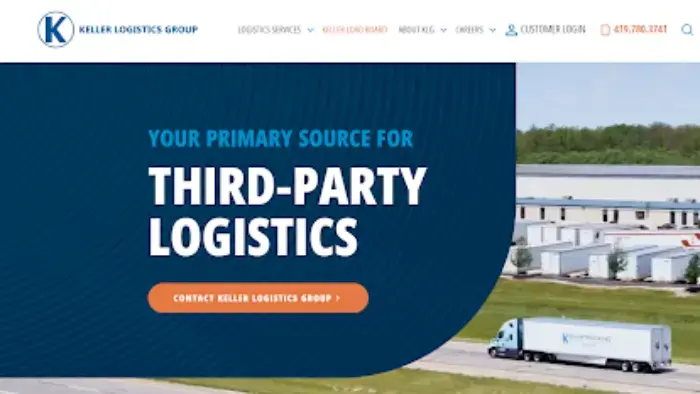
Keller Logistics Group delivers more than just warehouse space. As a full-service third-party logistics company, Keller Logistics offers an integrated approach to seasonal demand through its specialized business unit, Keller Warehousing & Co-Packing. With over 6 million square feet of warehouse space managed across multiple facilities, Keller provides the scalability needed to handle both predictable and unexpected volume increases.
The company’s turnkey warehousing services extend beyond basic space rental. Keller Warehousing & Co-Packing specializes in value-added logistics, including co-packing, kitting, labeling, cross-docking, and real-time inventory reporting. This integrated service model allows businesses to streamline seasonal operations through a single provider. Facilities are ambient and protected from freezing, making them suitable for Food & Beverage and Retail products.
Short- and long-term warehousing options provide flexibility for companies facing unpredictable seasonal patterns. The combination of physical space, transportation integration, and secondary contract packaging positions Keller Logistics as a comprehensive solution for customers managing complex seasonal logistics challenges.
Key features:
- Over 6 million square feet of warehouse space: Multiple facilities provide geographic flexibility and capacity for significant volume increases.
- Short-term and long-term warehousing options: Contract structures accommodate both seasonal surges and longer-term growth.
- Co-packing and contract packing: Secondary packaging solutions reduce the need for multiple vendor relationships.
- Real-time inventory management and reporting: Visibility into stock levels supports better decision-making during peak periods.
- Transportation and distribution integration: Seamless coordination between warehousing and freight reduces handoff delays.
2. ReadySpaces: For Small-Scale, All-Inclusive Warehouse Units
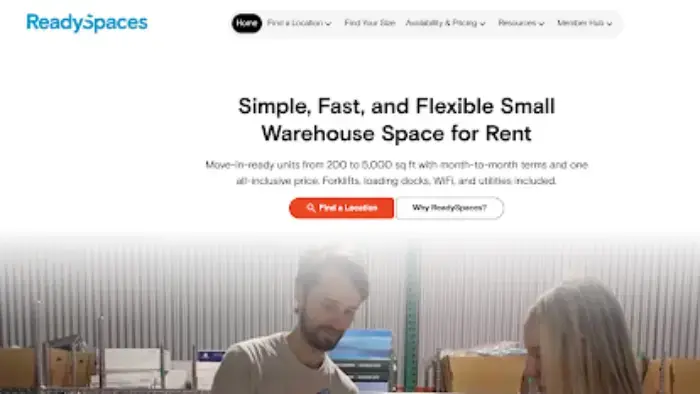
ReadySpaces targets growing businesses needing flexible warehouse leases without significant up-front investment. The company offers month-to-month warehouse rentals that are well-suited for businesses experiencing rapid growth or seasonal fluctuations that don’t justify long-term commitments.
Move-in-ready facilities include loading docks, forklifts, Wi-Fi, and utilities. This all-inclusive model allows businesses to become operational immediately without capital expenditures on equipment or facility improvements.
Units range from 200 to 5,000 square feet, providing scalable options for small and midsized businesses. E-commerce brands, contractors, and manufacturers can adjust their footprint as needs change without penalties.
Key features:
- Month-to-month rental terms: No long-term commitment required, providing maximum flexibility.
- Warehouse units from 200 to 5,000 square feet: A range of sizes accommodates different business scales.
- Loading docks and forklifts included: Essential equipment is part of the rental package.
- Utilities and Wi-Fi included: Operational costs are predictable with no surprise expenses.
- 24/7 facility access: Round-the-clock availability supports varying shift schedules during peak seasons.
3. Instawork: For On-Demand Warehousing and Labor Solutions
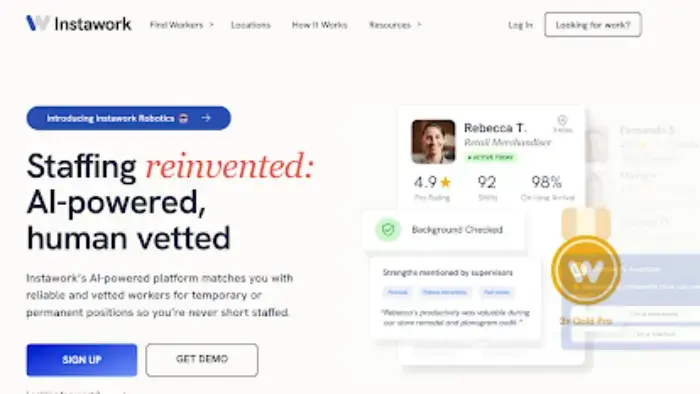
Instawork addresses the labor side of seasonal warehousing challenges through rapid workforce scaling. The platform helps warehouses quickly source pre-vetted temporary workers for seasonal peaks, reducing delays often associated with traditional staffing agencies.
An AI-powered staffing platform matches businesses with qualified warehouse workers based on skills, availability, and reliability ratings. The technology reduces no-shows and improves productivity.
The platform supports flexible warehouse operations by filling one-off shifts, seasonal positions, or temp-to-hire roles through a single interface. This makes it easier to manage workforce levels that fluctuate with demand.
Key features:
- AI-powered worker matching: Technology connects businesses with qualified candidates efficiently.
- Pre-vetted warehouse professionals: Background checks and skills verification reduce hiring risk.
- Short-term and temp-to-hire staffing: Multiple engagement models accommodate different operational needs.
- Fast shift fulfillment: Positions can be filled quickly when unexpected demand materializes.
- Background checks and skills verification: Screening processes ensure worker quality and safety compliance.
4. Bacon: For Temporary Staffing and Warehouse Labor
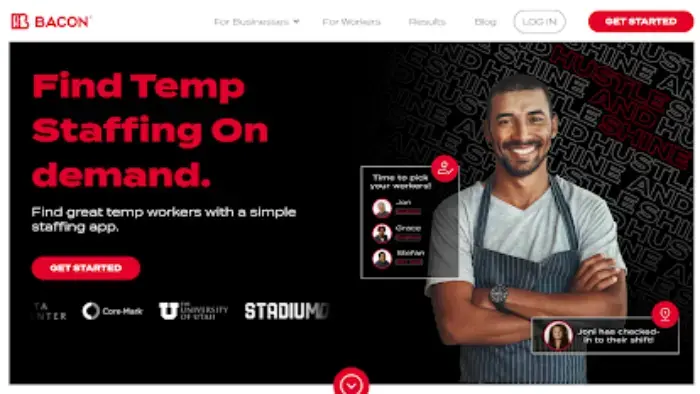
Bacon enables warehouses to fill temporary labor needs through an app-based platform designed for speed and control. The on-demand model suits seasonal demand spikes and unexpected labor shortages.
Employer-controlled hiring gives businesses more autonomy than traditional staffing agencies. Companies set pay rates, define job requirements, establish schedules, and select workers directly. This control helps ensure cultural fit and operational compatibility during high-pressure seasonal periods.
Technology-driven features include backup workers, performance ratings, and favorite-worker lists to help warehouses maintain productivity. The ability to rehire preferred workers without buyout fees creates continuity across seasonal cycles.
Key features:
- On-demand warehouse staffing platform: An app-based system streamlines the hiring process.
- Customizable shifts and pay rates: Employers maintain control over scheduling and compensation.
- Built-in backup workers: Automatic backup assignments reduce the impact of no-shows.
- Worker ratings and reviews: Performance feedback helps inform future hiring decisions.
- Ability to rehire preferred workers without buyout fees: Build a reliable seasonal workforce over time.
At a Glance: Comparing Top Flexible Warehousing Options
The table below provides a quick comparison of the four providers to help identify which best aligns with specific operational needs.
ProviderBest ForContract TypeCore ServiceProvides Physical Space?Keller Logistics GroupFull-service 3PL integrationShort-term and long-termWarehousing, co-packing, transportationYesReadySpacesSmall to midsized businessesMonth-to-monthEquipped warehouse unitsYesInstaworkRapid workforce scalingOn-demand shiftsAI-powered labor matchingNoBaconEmployer-controlled staffingOn-demand shiftsApp-based temporary staffingNo
Frequently Asked Questions About Seasonal Warehousing
The shift toward flexible warehousing models raises common questions about timing, contract structures, and service expectations.
Q: What is on-demand warehousing?
A: On-demand warehousing refers to accessing and paying for warehouse space and services as needed rather than committing to long-term leases with fixed costs. This model allows businesses to scale capacity during peak periods and down during slower months, aligning expenses with actual demand.
Q: How far in advance should I plan for seasonal needs?
A: Planning timelines vary by provider type. Labor-focused platforms like Instawork and Bacon can fulfill staffing needs within days. Physical warehouse space typically requires more lead time. Partnering with providers like Keller Logistics Group or ReadySpaces benefits from planning several weeks to months in advance, particularly for large-scale capacity needs.
Q: What is the typical contract length for flexible warehousing?
A: Contract lengths range widely, depending on the provider. Month-to-month arrangements like ReadySpaces provide maximum flexibility with no long-term commitment. Full-service 3PL providers such as Keller Logistics Group offer project-based agreements structured for short-term seasonal needs or longer partnerships. Labor platforms operate on a shift-by-shift or weekly basis with no binding contracts.
Choosing the Right Flexible Partner for Long-Term Growth
The right warehousing solution depends on whether a business needs physical space, labor resources, or a comprehensive logistics partner. The logistics landscape has shifted toward permanent volatility rather than predictable seasonal patterns. Embracing flexible solutions positions businesses to respond profitably to demand fluctuations rather than absorbing the cost of unused capacity.