



















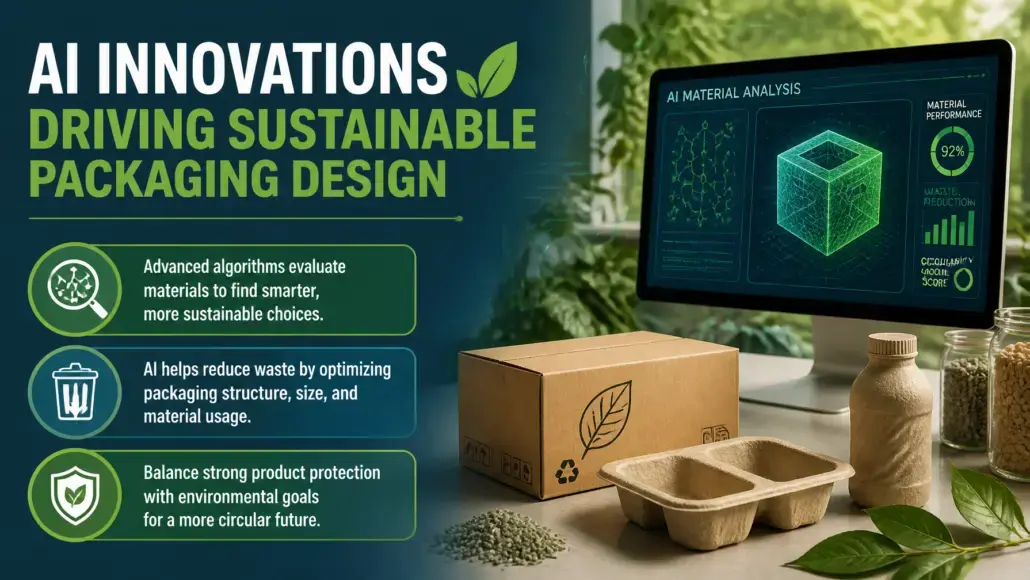
The intersection of artificial intelligence and material science is creating a new frontier in the quest for environmental responsibility. As global brands face increasing pressure to reduce waste and improve circularity, they are turning to advanced algorithms to solve complex engineering challenges. Packaging World Insights observes that AI innovations for sustainable packaging design are now helping teams evaluate materials, reduce waste, and balance product protection with ambitious environmental goals.
In 2025, the adoption of generative AI in the packaging sector has reached a tipping point, with companies moving beyond simple automation to embrace deep-learning models that can discover entirely new material combinations.
Generative Design and Molecular Discovery
Generative design is one of the most powerful applications of AI innovations in the current packaging landscape. By inputting specific performance requirements, such as moisture barrier levels, mechanical strength, and weight limits, design teams can use AI to generate thousands of potential packaging structures. The software evaluates each design against sustainability metrics and manufacturing constraints, identifying the optimal solution that uses the least amount of material.
- In July 2025, Nestlé and IBM scientists announced the development of a generative AI tool that can identify novel high-barrier packaging materials. This breakthrough allows for the discovery of new polymer blends and coatings that provide superior protection while being much easier to recycle. The ability to simulate material behavior at the molecular level significantly reduces the time and cost of traditional laboratory testing, accelerating the move toward a plastic-free future.

The integration of AI innovations extends to the lifecycle analysis of a package. Traditionally, calculating the environmental impact of a design was a manual and time-consuming process that often relied on outdated data. Today, AI-powered LCA tools can pull real-time data from across the supply chain, providing a highly accurate view of a package’s carbon footprint, water usage, and end-of-life potential.
- In early 2026, Siemens launched an AI-driven sustainability module for its product lifecycle management software, allowing designers to see the environmental impact of their choices in real time as they work. This immediate feedback loop is essential for making informed decisions early in the design process, where the majority of a product’s environmental impact is determined.
Automated Waste Analytics and Recoverability
In the waste management sector, AI-driven analytics are providing the data needed to design more recoverable packaging. Global technology leaders are using computer vision to analyze the flow of waste in recycling facilities. In 2025, these systems analyzed over 40 billion packaging items globally, identifying the specific materials and designs that are most likely to be lost to landfills or contamination. This data is being shared with brands to help them design packaging that is more easily recognized and sorted by automated systems. The launch of new granular insight software in late 2025 represents a significant milestone, as the technology provides detailed data on how individual packaging components, such as caps and labels, affect the overall recyclability of the item.
Artificial intelligence is also revolutionizing the way companies optimize their supply chains for sustainability:
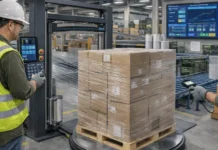
- Data-Driven Waste Reduction: Machine learning algorithms evaluate extensive shipping and inventory datasets to pinpoint specific inefficiencies and packaging waste across the supply chain.
- Optimized Box Sizing: AI calculates the precise carton dimensions required for each unique order, directly reducing unused container volume.
- Void-Fill Elimination: Right-sizing packages significantly minimizes or removes the need for plastic air pillows, foam peanuts, and other void-fill materials.
- Improved Transport Efficiency: Cutting excess package volume maximizes vehicle cargo capacity, lowering both shipping emissions and freight costs.
Smart Packaging and Connectivity
The use of smart packaging, powered by AI innovations and integrated printed electronics, is another area of rapid innovation that is gaining significant traction in late 2025. By incorporating thin-film sensors and Near Field Communication tags into the packaging design, brands can track the condition, location, and handling history of their products in real time. Advanced AI algorithms can then analyze this massive stream of data to predict shelf life with unprecedented accuracy and drastically reduce food waste throughout the supply chain.
Digital Twins for Scenario Simulation
Strategic partnerships are driving the commercialization of these AI solutions. In late 2025, Dassault Systèmes and a leading chemical producer announced a collaborative project to create a digital twin platform for sustainable packaging. This platform uses AI to simulate the behavior of new materials in different environments, allowing brands to test the durability and performance of their designs before a physical prototype is even made.
The use of digital twins is particularly valuable for complex applications like sterile medical packaging, where the cost of failure is extremely high. By virtually testing thousands of scenarios, companies can ensure that their sustainable designs meet the highest safety standards.
Self Healing Materials and Resource Efficiency
Looking ahead, the next generation of AI innovations will likely focus on the development of self-healing materials and active packaging that can respond to its environment. Researchers are investigating the use of AI to design polymers that can repair small cracks or neutralize contaminants, extending the life of the package and improving product safety. As these technologies mature, the line between the product and the package will continue to blur, leading to a more integrated and resource-efficient system.
The ability of AI to optimize material usage and barrier properties is particularly impactful in the development of fiber-based pharmaceutical packs, where generative design is helping to create paper structures that are both thinner and more protective than traditional designs. Packaging World Insights notes that by leveraging the power of artificial intelligence, the industry is not just improving existing packaging, it is fundamentally reimagining what is possible for a sustainable future.
References
- “Nestlé & IBM leverage AI for new packaging innovations” – Nestlé
- “AI in Sustainable Packaging Design Trends 2026” – Siemens Digital Industries
- “Digital Transformation in Packaging 2025” – Dassault Systèmes
- “Generative Design for Sustainability” – Autodesk
- “Artificial Intelligence in the Supply Chain” – Honeywell

