









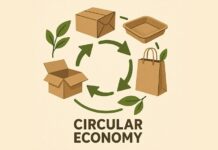




The traditional approach to packaging in the food industry has long followed a linear “take-make-dispose” model. In this system, raw materials are extracted, processed into packaging, used briefly to protect a product, and then discarded as waste. This process has led to a global environmental crisis, with millions of tons of plastic and paper packaging ending up in landfills or polluting natural ecosystems each year. However, a significant shift is underway. Circular packaging reducing food industry waste is emerging as the definitive solution to this challenge. By rethinking how packaging is designed, used, and recovered, the industry is moving toward a circular economy where materials are kept in use at their highest value for as long as possible, effectively decoupling economic growth from the consumption of finite resources.
The transition to circular packaging requires a fundamental reimagining of the entire value chain. It is not merely about increasing recycling rates; it is about designing out waste from the very beginning. In a circular model, every piece of packaging is seen as a valuable resource rather than a disposable item. This necessitates a focus on three core principles: designing for reuse and recyclability, keeping materials in the loop through robust recovery systems, and regenerating natural systems by using renewable and compostable inputs. When applied to the food industry, these principles not only reduce the environmental footprint but also enhance supply chain resilience and create new economic opportunities for innovation.
Implementing circular packaging reducing food industry waste is a complex undertaking that involves cooperation between manufacturers, retailers, consumers, and waste management providers. The challenges are significant—ranging from food safety regulations that limit the use of recycled content to the lack of infrastructure for collecting and processing specialized materials. Yet, the momentum is undeniable. Regulatory pressures, such as the European Union’s Packaging and Packaging Waste Regulation (PPWR), and shifting consumer expectations are forcing companies to adopt circular strategies. Those who embrace this shift are finding that circularity can lead to improved brand loyalty, lower material costs, and a more secure supply of high-quality packaging materials in an increasingly volatile global market.
Design Innovation: The Foundation of Circularity
The first and most critical step in creating circular packaging reducing food industry waste is design. Approximately 80% of a product’s environmental impact is determined during the design phase. For packaging to be circular, it must be designed with its “next life” in mind. This means moving away from complex, multi-material laminates that are nearly impossible to recycle and toward mono-material solutions that can be easily processed by existing infrastructure.
The Shift to Mono-Materials
One of the greatest obstacles to recycling in the food industry has been the use of multi-layer films, which combine different plastics, foils, and papers to provide specific barrier properties. While these materials are effective at protecting food, they are a nightmare for recycling facilities. The industry is now seeing a surge in mono-material packaging innovation, where a single type of plastic (such as polyethylene or polypropylene) is engineered to provide all the necessary barriers. This simplification makes the packaging infinitely more “recyclable” and ensures that the recovered material is of high enough quality to be used back in food-grade applications.
Design for Disassembly and Recovery
In addition to material selection, the physical design of the package must facilitate easy recovery. This includes using washable adhesives for labels, avoiding dark-colored plastics that confuse sorting sensors, and ensuring that components like caps and seals are easily separable from the main body of the package. By designing for the automated sorting systems used in modern material recovery facilities (MRFs), companies can ensure that their packaging actually reaches the recycling stream rather than being rejected as a contaminant. This attention to detail is what separates true circular design from superficial sustainability claims.
Building Robust Material Recovery Systems
Even the most perfectly designed package cannot contribute to circularity if it is not collected and processed. Circular packaging reducing food industry waste depends on a high-functioning infrastructure for material recovery. This involves both the physical systems for collection and the economic frameworks that make recycling viable. In many parts of the world, the current infrastructure is insufficient to handle the volume and variety of modern packaging, leading to low recovery rates and the loss of valuable resources.
The Role of Extended Producer Responsibility (EPR)
Extended Producer Responsibility is a policy approach where producers are given a significant responsibility financial and/or physical for the treatment or disposal of post-consumer products. EPR schemes are becoming a cornerstone of circular packaging models because they provide the funding needed to upgrade recycling infrastructure and incentivize companies to design more recyclable packaging. When companies are financially responsible for the end-of-life of their products, they are much more likely to invest in circularity. This creates a “polluter pays” system that shifts the burden of waste management from the public sector to the companies that generate the waste.
Advancing Chemical and Mechanical Recycling
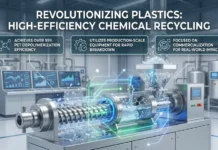
To truly close the loop, the industry must employ both mechanical and chemical recycling technologies. Mechanical recycling where plastic is washed, shredded, and melted into pellets remains the most efficient method for many materials. However, it can lead to a degradation of material quality over time. Chemical recycling (or advanced recycling) breaks plastics down into their original chemical monomers, allowing for the creation of virgin-quality plastic from waste. While still in the scaling phase, chemical recycling is essential for processing contaminated or complex materials that mechanical systems cannot handle, ensuring that even the most difficult food packaging can remain within a circular loop.
The Economic and Environmental Value of Circularity
Moving toward circular packaging reducing food industry waste offers profound benefits that extend far beyond simple waste reduction. By treating packaging as a resource rather than an expense, companies can build more stable and efficient business models. The circular economy is estimated to represent a multi-trillion dollar opportunity, driven by the decoupling of growth from resource extraction and the mitigation of environmental risks.
Reducing the Carbon Footprint of the Food System
The production of virgin packaging materials is an energy-intensive process that contributes significantly to global greenhouse gas emissions. By using recycled content and keeping materials in circulation, the food industry can drastically reduce its carbon footprint. For example, recycled aluminum requires 95% less energy to produce than virgin aluminum, and recycled plastics often have a carbon footprint that is 30% to 50% lower than their virgin counterparts. In the context of the food industry’s overall climate goals, circular packaging is one of the most effective levers for decarbonization.
Supply Chain Resilience and Resource Security
As global demand for raw materials increases and supply chains become more prone to disruption, circularity provides a degree of resource security. By creating a reliable internal supply of high-quality recycled materials, companies are less vulnerable to the price volatility and shortages associated with virgin commodity markets. This “urban mining” recovering materials from the waste stream allows for a more localized and resilient supply chain, reducing the dependence on long-distance imports and the environmental damage caused by new resource extraction.
Closing the Loop: The Consumer and Retailer Interface
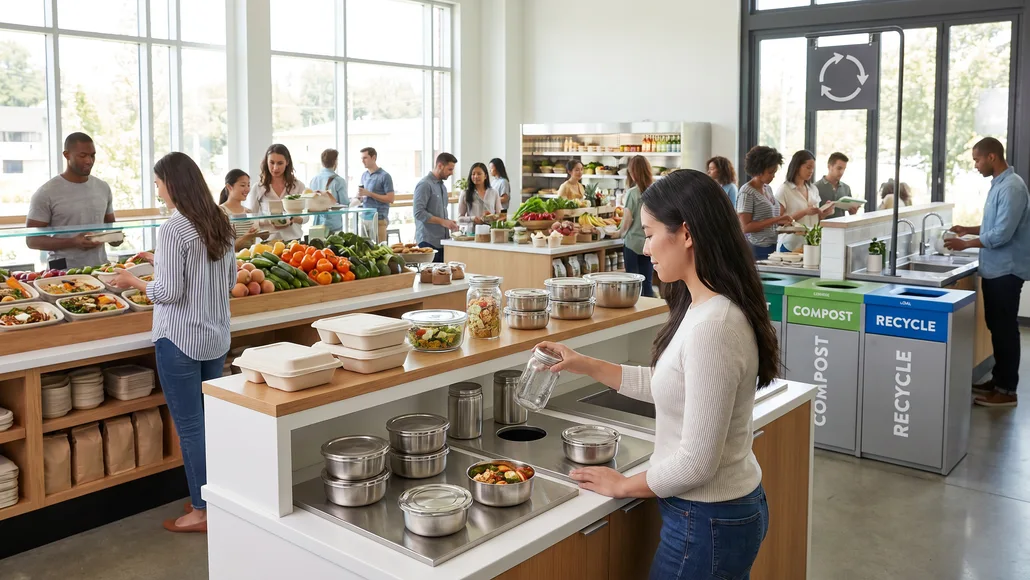
The final piece of the circular packaging reducing food industry waste puzzle is the consumer. For a circular system to work, consumers must be active participants who correctly sort and return packaging at the end of its use. This requires clear, standardized labeling and a convenient infrastructure for disposal. Retailers also play a critical role by facilitating “take-back” programs and offering products in refillable or reusable formats.
Education and Transparent Labeling
Many consumers are eager to participate in the circular economy but are confused by conflicting or vague recycling instructions. Standardized labels, such as the “How2Recycle” system, provide clear, step-by-step instructions that help reduce contamination in the recycling stream. Furthermore, brands that use their packaging to communicate the “story of the material” where it came from and where it should go next can build a deeper sense of stewardship among their customers. This educational component is essential for turning a passive consumer into a proactive participant in the circular loop.
The Rise of Refillable and Reusable Systems
While recycling is a vital part of circularity, the “inner loops” of reuse and refill are even more effective at reducing waste. We are seeing a resurgence of models where consumers purchase a product in a durable, high-quality container that can be returned and refilled dozens of times. From milk delivery systems to in-store bulk dispensers, these models eliminate the need for single-use packaging altogether. When integrated with modern logistics and cleaning technologies, reusable systems can provide the same level of convenience as single-use options but with a fraction of the environmental impact.