



















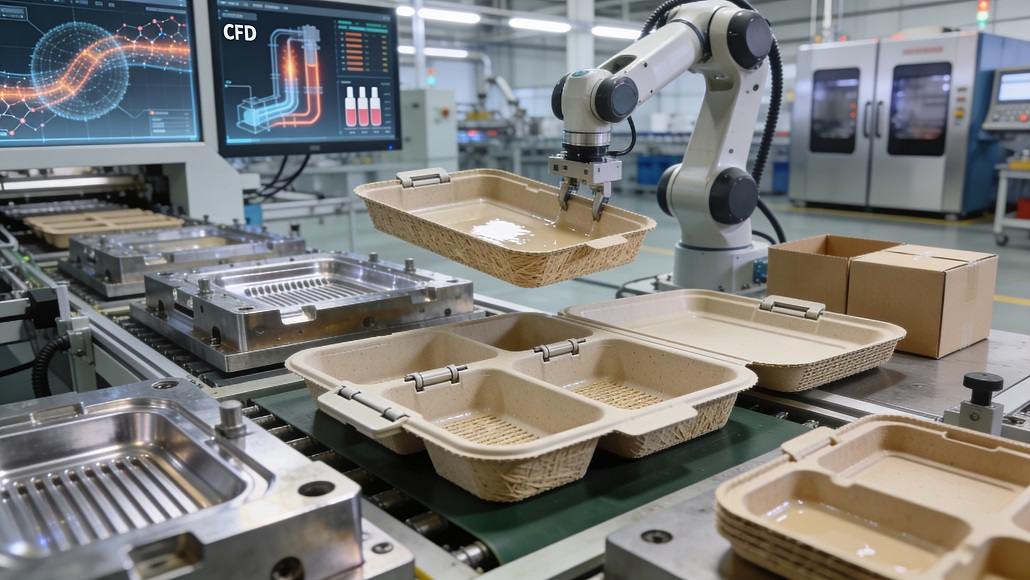

The landscape of sustainable production is undergoing a radical shift as the demand for plastic alternatives reaches unprecedented levels. At the center of this transformation is the field of moulded fibre packaging manufacturing, a sector that has evolved from basic utilitarian applications to a high-tech engineering discipline. Historically, moulded pulp was synonymous with egg cartons and industrial protective cushions items where aesthetics and precision were secondary to cost and function. Today, however, a new generation of manufacturing technologies is enabling the creation of intricate, smooth-surfaced, and high-performance packaging that caters to the premium electronics, cosmetics, and food sectors. This article examines the technological leaps that are making this possible, from the science of the slurry to the precision of the final press and the integration of digital intelligence into the factory floor.
The fundamental challenge in fibre moulding has always been the management of water. Traditional processes rely on a very dilute suspension of fibres often over 99% water to ensure even distribution across the mould. Removing this water efficiently while maintaining structural integrity is the core problem of the industry. The advances we are seeing today are direct responses to this challenge, utilizing sophisticated mechanical engineering and thermodynamics to speed up production cycles while reducing energy consumption. As we move away from “wet” processes toward “dry” and “semi-dry” technologies, the entire economic and environmental profile of moulded fibre packaging manufacturing is being rewritten, making it more competitive than ever with traditional polymer injection moulding.
From Traditional Wet Press to High-Precision Thermoforming
For decades, the standard for the industry was “Type 2” or traditional wet-press moulding. While effective for basic shapes, this process resulted in one rough side and limited dimensional accuracy, often requiring thick walls to maintain strength. The advent of “Type 3” or thermoformed (transfer) moulding has been a game-changer for moulded fibre packaging manufacturing. In this process, the product is formed in one mould and then transferred to a heated drying mould that presses the product under high pressure. This results in a smooth finish on both sides, thin walls, and precise edges that were previously impossible to achieve with fibre. This “plastic-like” finish is crucial for brands that want to maintain a premium shelf presence while still utilizing a sustainable material.
The precision of thermoforming allows for features like “click-fit” closures and intricate internal geometries that can hold delicate items securely. This level of detail is achieved by using CNC-machined metal moulds with integrated vacuum and heating channels. The ability to control the temperature and pressure during the pressing cycle ensures that the lignin and cellulose fibres are bonded together at a molecular level, creating a material that is surprisingly dense and rigid. This advance in fibre packaging technology has opened doors to sectors like cosmetics and consumer electronics, where the packaging is often considered as much a part of the product as the item itself.
The Rise of Dry-Moulding and Reduced Water Consumption
One of the most significant innovations in recent years is the development of dry-moulded fibre technology. Traditional fibre moulding is a water-intensive process, requiring large volumes of water to create the pulp slurry and then significant energy to evaporate that water. Dry-moulding, however, uses air instead of water to form the fibres into the desired shape. This process not only dramatically reduces water consumption often by more than 90% but also significantly lowers the energy required for drying. Since the material starts with a much lower moisture content, the production cycle is faster and the carbon footprint is significantly reduced.
This innovation represents a major milestone in sustainable packaging production, addressing one of the primary environmental criticisms of traditional pulp manufacturing. By eliminating the need for a liquid slurry, dry-moulding also allows for a wider variety of additives and treatments to be applied to the fibres before they are formed. This can lead to improved strength, better moisture resistance, and even unique colors and textures that are difficult to achieve in a wet environment. As this technology scales, it is expected to become the dominant method for high-volume, low-margin products where efficiency and cost-effectiveness are the primary drivers of material choice.
Engineering the Slurry: Beyond Basic Cellulose
The “secret sauce” of modern moulded fibre manufacturing often lies in the composition of the slurry itself. Manufacturers are no longer limited to just recycled paper or virgin wood pulp. Innovations in fibre packaging technology now allow for the integration of various non-wood fibres, such as bamboo, bagasse (sugarcane residue), wheat straw, and even hemp. Each of these materials brings different structural properties to the table, such as increased tensile strength, better flexibility, or a softer tactile feel. For instance, bamboo fibres are exceptionally long and strong, making them ideal for protective packaging that needs to withstand significant impacts.
Furthermore, the development of bio-based additives has allowed for the creation of internal barriers that make the final product resistant to water and oil without the need for a separate plastic lining. These chemical advancements often derived from natural waxes or plant-based resins are integrated directly into the manufacturing process, ensuring that the final product remains fully compostable. This “monomaterial” approach is a cornerstone of the circular economy, as it simplifies the end-of-life process for the consumer while providing the high-performance protection that modern supply chains demand.
Precision Engineering and the Role of 3D Modelling
The move toward more complex packaging designs has necessitated the use of advanced 3D modelling and simulation software. Before a single mould is cast, engineers can now simulate the flow of the pulp slurry and the drying process to identify potential weak points or areas of uneven density. This digital-first approach to moulded fibre packaging manufacturing allows for rapid prototyping and reduces the waste associated with trial-and-error design. High-precision CNC machining is then used to create the moulds, ensuring that every product that comes off the line meets exact tolerances.
In addition to structural simulation, manufacturers are using computational fluid dynamics (CFD) to optimize the drying process. By modeling the airflow and heat transfer within the drying oven, engineers can identify the most efficient temperature profiles and air velocities to ensure even drying without warping the product. This level of precision is essential for automated packaging lines, where even a millimeter of deviation can lead to equipment jams or product damage. The marriage of digital engineering and physical manufacturing is what has allowed fibre to move from the warehouse to the luxury retail shelf.
Energy Efficiency and Heat Recovery Systems
The drying phase of fibre moulding is traditionally the most energy-consuming part of the process. To combat this, modern facilities are implementing sophisticated heat recovery systems that capture the hot air used in drying and recirculate it back into the system or use it to pre-heat the incoming slurry. Combined with more efficient vacuum pumps and optimized heating elements, these advancements are making the entire packaging process innovation cycle much more sustainable. In some cases, manufacturers are moving toward microwave or infrared drying technologies, which offer more targeted and faster drying, further reducing the time and energy required for each unit produced.
These energy-saving measures are not just good for the environment; they are also a critical component of the economic viability of fibre packaging. As energy prices fluctuate, the ability to operate a low-energy facility provides a significant competitive advantage. Furthermore, many global brands now require their suppliers to provide detailed carbon footprints for their products. By utilizing heat recovery and renewable energy, fibre moulding plants can provide a compelling sustainability story that helps their clients meet their ESG goals. This focus on the “invisible” side of manufacturing the energy and water that go into the product is what separates modern leaders from legacy producers.
Automation and AI in the Production Line
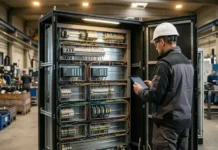
As the industry scales, the role of automation and artificial intelligence is becoming increasingly prominent. Modern fibre moulding machines are equipped with hundreds of sensors that monitor everything from the consistency of the slurry to the pressure of the press and the moisture content of the final product in real-time. AI algorithms can analyze this data to make micro-adjustments to the production parameters, ensuring consistent quality and minimizing waste. For example, if the AI detects that the slurry is becoming too thick, it can automatically adjust the water intake or the vacuum pressure to maintain the desired wall thickness of the containers.
Furthermore, robotic arms are now commonly used for the handling, denesting, and packing of finished goods, increasing the overall throughput of the facility and reducing the risk of contamination. This integration of Industry 4.0 principles is transforming moulded fibre manufacturing from a labor-intensive craft into a highly efficient, automated industrial process. The goal is a “lights-out” manufacturing environment where human intervention is minimized, and the system optimizes itself for maximum efficiency and quality. This level of automation is what will allow fibre to truly compete with the global scale and speed of the plastic industry.
The Future of Surface Treatment and Aesthetic Customization
The next frontier in moulded fibre packaging manufacturing is the enhancement of aesthetic and functional surface treatments. Traditionally, fibre packaging was limited in its branding options, often requiring labels or sleeves. Now, advancements in digital printing and in-mould labelling (IML) are allowing brands to apply high-resolution graphics directly onto the fibre surface during or immediately after the moulding process. This not only eliminates the need for extra materials but also ensures that the branding is as durable as the packaging itself.
Additionally, new “nano-coating” technologies are being developed that can provide even higher levels of moisture and gas barrier protection, potentially expanding the use of fibre into sectors like carbonated beverages or long-shelf-life dairy products. These coatings are often applied in incredibly thin layers sometimes just atoms thick ensuring that they do not interfere with the compostability of the base material. As we continue to push the boundaries of what a “simple” piece of paper can achieve, the distinction between “natural” materials and “high-performance” materials will continue to blur.