







Packaging Automation Is Becoming a Production Strategy
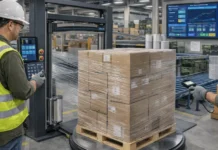
For food processors, packaging is no longer only the final step before products leave the factory. It has become part of the overall production strategy, influencing labor efficiency, food safety, shelf life, product presentation, and long-term capacity planning.
This shift is already visible in the global market. According to Grand View Research, the automated packaging solutions market was valued at USD 75.54 billion in 2024 and is projected to reach USD 140.82 billion by 2033, growing at a CAGR of 7.2% from 2025 to 2033. Fortune Business Insights also projects the global packaging automation market to grow from USD 84.27 billion in 2026 to USD 158.30 billion by 2034. In a 2025 packaging industry survey reported by Packaging World, 65% of respondents indicated they would add automation equipment, cobots, or robotics to their packaging operations in the coming year, with labor issues being one of the strongest drivers.
For many food processors, this means the question is no longer whether they need automation, but how automation should be planned. A standalone machine may solve one packaging step, but an integrated packaging line can support a smoother production flow, reduce manual handling, and prepare the business for future growth.
The Hidden Challenges of Standalone Packaging Machines
Standalone packaging machines can be effective when a processor only needs to improve one specific step. However, as production grows, the hidden challenges often appear outside the machine itself.
The first challenge is rising labor cost and stricter food safety expectations. Many standalone machines still require manual feeding, product transfer, inspection, or secondary handling before and after packaging. This increases dependence on operators and makes the process harder to control. For food processors working with fresh meat, seafood, ready meals, dairy, or poultry products, every unnecessary handling step can affect hygiene, consistency, and production stability.
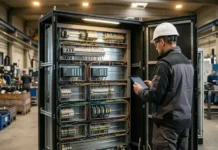
The second challenge is the time and expertise required for equipment sourcing. A complete packaging operation may involve loaders, conveyors, printers, labelers, tray denesters, inspection systems, checkweighers, metal detectors, and final sorting equipment. If the purchasing team needs to source each part from different suppliers, the project becomes more complicated. Without enough packaging line experience, it can be difficult to know whether all machines will match in speed, layout, control logic, and long-term operation.
The third challenge is maintenance responsibility and long-term cost. When equipment comes from different suppliers, troubleshooting can become unclear. One supplier may point to the upstream machine, while another may blame the downstream process. As a result, the processor spends more time coordinating between suppliers instead of solving the real problem. For production facilities, delayed production is often the biggest cost, not only the service fee.
Thermoforming Platform as the Core of Automated Packaging Lines
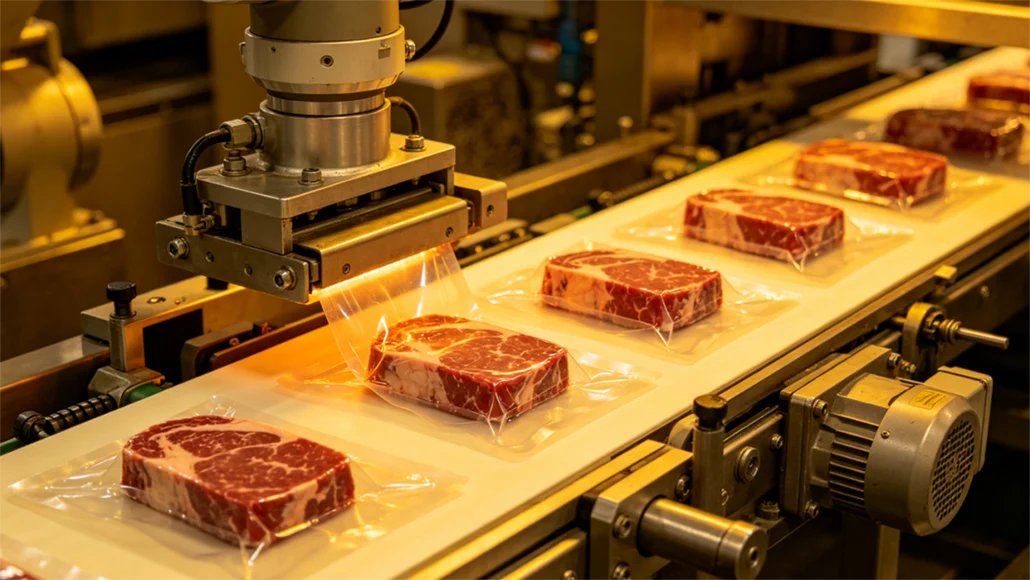
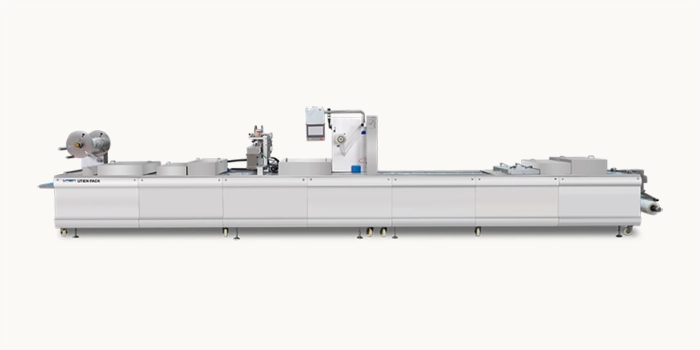
A thermoforming packaging machine can do more than form and seal packages. In many food production facilities, it can become the central part of an automated packaging line.
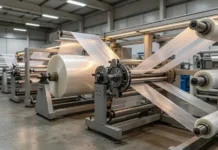
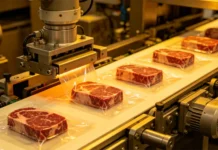
It supports a continuous process from film forming, product loading, sealing, cutting, and final output. Depending on the product and shelf-life target, it can be used for flexible film vacuum packaging, rigid film MAP packaging, vacuum skin packaging, and customized package formats.
Its value also comes from integration. Thermoforming machines can work with automatic loading systems, robotic pick-and-place, weighing equipment, printing and labeling units, vision inspection, metal detection, checkweighing, sorting, and downstream handling systems.
For processors handling different SKUs, mold change options provide flexibility in package size, cavity layout, forming depth, and sealing format. At Utien Pack, self-developed cutting stations are designed to reduce common industry pain points such as fishhook edges and cutting misalignment, helping processors achieve cleaner and more consistent package results.
Tray Sealing for Pre-Made Trays, Flexible Materials, and Line Integration
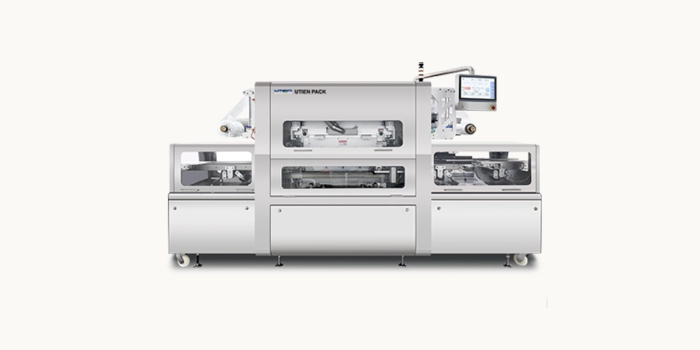
Tray sealers are widely used by food processors working with pre-made trays. They provide stable sealing, clean package appearance, and strong flexibility for different product categories.
One major advantage of tray sealing solution is material adaptability. As sustainable packaging becomes more important worldwide, tray sealers can work with plastic trays, paper-based trays, aluminum trays, and other recyclable or compostable tray options, depending on tray and film compatibility.
Tray sealers can support top seal, MAP, vacuum skin packaging, and other tray-based packaging methods. This makes them suitable for fresh meat, seafood, ready meals, salads, dairy, bakery, and convenience food products.
Like thermoforming machines, tray sealers also have strong potential for line integration. They can connect with tray denesting, product loading, weighing, sealing, printing, labeling, inspection, and discharge systems. Utien Pack’s complete servo-driven tray sealing system is designed to support fast, quiet, and consistent packaging performance in continuous production.
How Complete Line Solutions Reduce Labor, Sourcing, and Maintenance Pressure
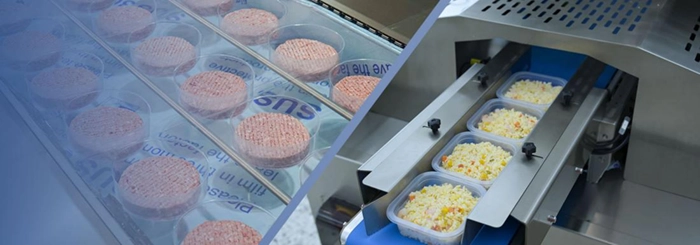
A complete packaging line solution is not simply a group of machines placed together. It is a connected system designed around product flow, capacity, packaging format, and daily operation.
For food processors facing rising labor costs and stricter food safety expectations, line integration can reduce unnecessary manual handling. Product loading, packaging, inspection, labeling, and final discharge can be connected into a smoother process. This helps improve production consistency while reducing dependence on manual transfer between separate steps.
For purchasing teams, a complete line solution can also simplify project planning. Instead of sourcing many machines from different suppliers, processors can work with one packaging partner who understands the full process. This reduces communication cost, shortens decision time, and lowers the risk of equipment mismatch.
For long-term operation, an integrated line also makes maintenance responsibility clearer. When the packaging line is designed as one system, troubleshooting can be faster and more direct. Processors do not need to spend valuable production time coordinating between different suppliers. This is especially important because production delay is often one of the highest hidden costs in food manufacturing.
In this way, a complete line solution provides value beyond automation itself. It helps food processors build a more stable, manageable, and scalable packaging operation.
A Smoother Way to Build Packaging Automation
Many food processors hesitate before starting a packaging line project because they expect the process to be complicated, expensive, and difficult to manage. In reality, the workflow can be much smoother when the project begins with the right discussion.
Instead of starting from one machine model, the conversation should begin with the processor’s real packaging challenge. The issue may be labor shortage, unstable output, leakage, short shelf life, poor package appearance, limited floor space, or difficulty handling multiple SKUs.
The next step is to understand the business objective behind the packaging upgrade. Some processors want to increase capacity. Some want to enter retail channels with better product presentation. Some want to reduce long-term labor dependency. Others want a system that can support new products and packaging formats in the next three to five years.
When these points are clear, the line solution becomes easier to design. The final system is not built around a machine alone, but around market competitiveness, capacity planning, product characteristics, and future growth. This makes packaging automation more practical, more manageable, and easier to expand over time.
Long-Term Partnership Beyond the First Machine
A complete packaging line is a long-term investment. Its value does not end when the machine is delivered or installed.
For food processors, a strong packaging partner should support the full journey: product analysis, packaging method selection, sample testing, line design, installation, operator training, spare parts, remote support, and future upgrades. As products, capacity, and market requirements change, the packaging system may also need to evolve.
This is why long-term partnership matters. The right partner should not only provide equipment, but also understand production reality and help customers make practical decisions for today and future growth.
With experience in thermoforming packaging machines, tray sealing machines, and customized packaging line solutions, Utien Pack works with food processors to build packaging systems that support stable production, consistent package quality, and long-term market competitiveness.
FAQ
1. Where should food processors start?
Food processors should start from the product and the real production challenge, not from the machine model. The first step is to understand the current problem: labor pressure, low output, leakage, short shelf life, poor package appearance, hygiene control, limited floor space, or difficulty handling multiple SKUs. Once the challenge is clear, it becomes easier to decide whether the right solution is a standalone machine, a thermoforming packaging machine, a tray sealer, or a complete packaging line.
2. How do I choose the right packaging technology?
The right packaging technology depends on product type, shelf-life target, package format, material choice, and capacity requirement. Thermoforming packaging machines are suitable for continuous automatic packaging with flexible or rigid film. Tray sealers are suitable for pre-made trays and offer strong flexibility with different tray materials. Vacuum packaging, modified atmosphere packaging, and vacuum skin packaging can be selected based on product protection, shelf life, and retail presentation needs.
3. How do I find the right packaging partner?
The right packaging partner should understand both machinery and real production conditions. A good partner can analyze the product, recommend suitable packaging technology, design line integration, support sample testing, provide installation and training, and continue supporting the processor as production grows. For a complete packaging line, long-term support is often as important as the machine itself.