















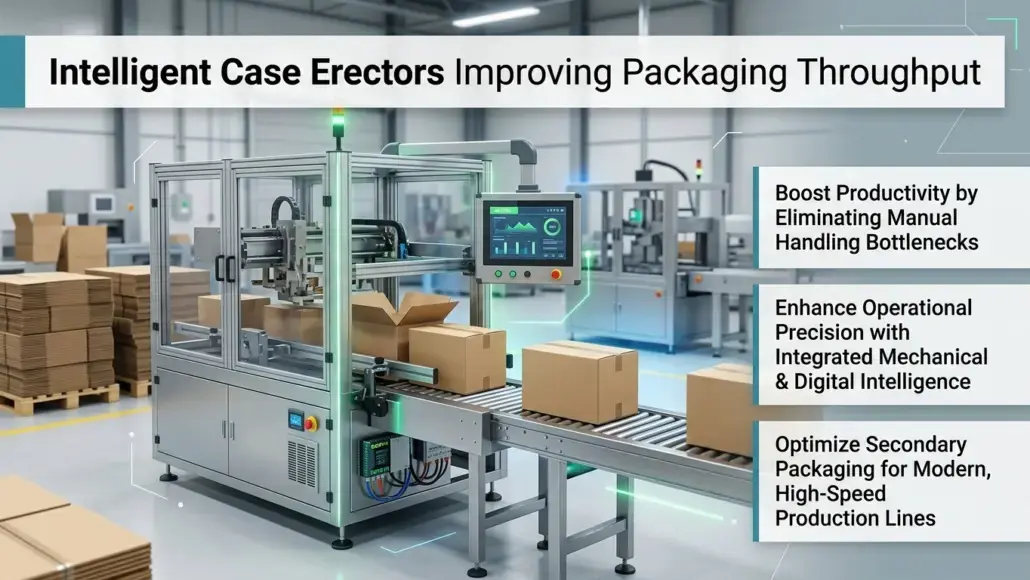

The optimization of end-of-line operations has become a primary focus for manufacturers looking to address the increasing demands of modern supply chains. As production speeds continue to rise, the traditional bottlenecks associated with manual or semi-automated case handling have become a significant barrier to overall plant productivity. The introduction of intelligent case erectors represents a fundamental shift in secondary packaging, providing the mechanical precision and digital intelligence required to maintain a consistent flow of materials. By automating the transition from flat corrugated sheets to fully formed and sealed cases, these systems allow high-speed production lines to operate at their full potential, ensuring that the packaging throughput is never compromised by downstream delays.
Mechanical reliability and adaptive control are the twin pillars upon which modern case erecting technology is built. Unlike older generations of machinery that required extensive manual adjustment for every change in case size or material quality, today’s systems utilize sophisticated sensors and servomotors to self-calibrate in real-time. This capability is essential for operations that handle a diverse range of corrugated cases and require frequent changeovers. The implementation of intelligent case erectors ensures that every case is formed with perfect squareness, which is a critical factor for the successful operation of subsequent automated case packing and palletizing stages. This focus on precision is what prevents the jams and the downtime that historically plagued high-volume packaging environments.
Enhancing Manufacturing Efficiency Through Adaptive Automation
The primary benefit of utilizing advanced erecting technology is the significant improvement in the overall equipment effectiveness of the packaging line. When a case erector fails to form a box correctly or experiences a jam, the entire production flow is interrupted, leading to wasted time and labor. Intelligent case erectors mitigate these risks by continuously monitoring the quality of the incoming corrugated materials and adjusting their internal timing and pressure settings accordingly. This level of technical sophistication allows the machine to handle variations in board thickness or humidity without a loss in case erecting speed. For the operations manager, this means a more predictable and resilient production schedule that can meet the most demanding shipping deadlines.
Furthermore, the integration of these systems into the broader plant floor network provides a wealth of data for strategic decision-making. By tracking performance metrics such as cycles per minute, air consumption, and error rates, plant directors can identify opportunities for further optimization. This data-driven approach to secondary packaging ensures that the end-of-line automation is not just a standalone mechanical solution but a vital component of a comprehensive digital manufacturing strategy. The move toward more connected and intelligent machinery is a hallmark of the modern industrial sector, where the focus is on achieving the highest possible levels of manufacturing efficiency with minimal manual intervention.
Secondary Packaging Speed and End of Line Reliability
The speed at which cases are formed and moved to the filling station is a critical determinant of the total output of a facility. In many high-volume industries, such as food and beverage or consumer packaged goods, the packaging throughput must be measured in dozens or even hundreds of cases per minute. Intelligent case erectors are designed to meet these rigorous requirements, featuring high-speed mechanical motions and advanced vacuum systems that ensure a secure grip on the corrugated board. The ability to maintain this level of performance over multiple shifts is what defines the professional quality of the equipment. The focus remains on providing a stable and reliable foundation for the entire case packing process.
End-of-line automation must also account for the physical constraints of the facility, including the need for a compact footprint and easy access for maintenance. Modern erecting systems are often designed with a modular architecture that allows them to be integrated into existing lines with minimal disruption. The use of high-quality components, such as stainless steel frames and heavy-duty drives, ensures that the machinery can withstand the vibration and the wear associated with continuous operation. This commitment to durability is a key factor in the long-term economic sustainability of the packaging line, reducing the total cost of ownership and for providing a clear return on investment for the organization.
Material Handling Precision and Corrugated Case Integrity
The quality of the final shipping container is directly linked to the precision of the erecting process. If a case is not squared correctly during forming, it will be difficult to pack and even more difficult to palletize securely. Intelligent case erectors utilize positive case opening mechanisms and precision-guided mandrels to ensure that every box meets the required dimensional specifications. This level of accuracy is essential for protecting the product during transport and for ensuring that the cases can be stacked safely in the warehouse. The move toward a more professional and standardized approach to case forming is a hallmark of the modern packaging industry.
Furthermore, the ability to handle a wide range of case styles, from standard regular slotted containers to complex shelf-ready packaging, provides the flexibility needed to respond to changing market trends. Manufacturers are increasingly moving away from bulk shipping in favor of more specialized and branded packaging that requires careful handling. The presence of intelligent case erectors that can adapt to these different formats without extensive downtime is a major competitive advantage. The focus remains on achieving the best possible balance between operational speed and the physical integrity of the corrugated materials. This commitment to technical excellence is what will define the leaders of the packaging industry in the coming years.
The Future Strategic Direction of Automated Case Packing
As the industrial sector continues to evolve toward a more autonomous model, the role of intelligent machinery at the end of the line will only grow in importance. We are already seeing the emergence of case erectors that can communicate directly with upstream filling machines and downstream palletizers to synchronize their speeds and prevent surges in the material flow. This move toward a more integrated and self-optimizing packaging line represents the next frontier in manufacturing productivity. The role of intelligent case erectors in supporting this evolution is essential, as they provide the first critical step in the secondary packaging cycle.
In the coming years, the integration of artificial intelligence and machine learning will further enhance the value of these systems. AI algorithms can analyze performance data to predict when a component is likely to fail, allowing for proactive maintenance before a breakdown occurs. This would provide a more secure and predictable environment for the entire production team. The ability to manage complex packaging requirements with the same speed and precision as a simple assembly task is a major goal for both engineers and plant managers. The ongoing commitment to technical innovation and operational excellence is what will define the success of these programs in the decades to come.
The transition toward a more connected and data-driven approach to secondary packaging is a defining characteristic of the modern industrial sector. By prioritizing the use of intelligent case erectors, manufacturers can achieve levels of packaging throughput and reliability that were once considered unattainable. The benefits of this approach extend beyond the packaging hall, contributing to a more responsive and resilient supply chain that is better equipped to handle the challenges of a global market. The commitment to technical excellence and operational efficiency is what will define the leaders of the industry in the years to come.
As the industry moves forward, the focus will remain on the refinement of mechanical properties and the continued improvement of production outcomes. The ability to handle the increasing complexity of new packaging designs and materials will remain a key challenge for engineers and operators alike. The ongoing evolution of intelligent case erectors is a testament to the power of technical innovation in the service of manufacturing productivity, ensuring that the next generation of secondary packaging is both fast and reliable for every organization that needs it.