






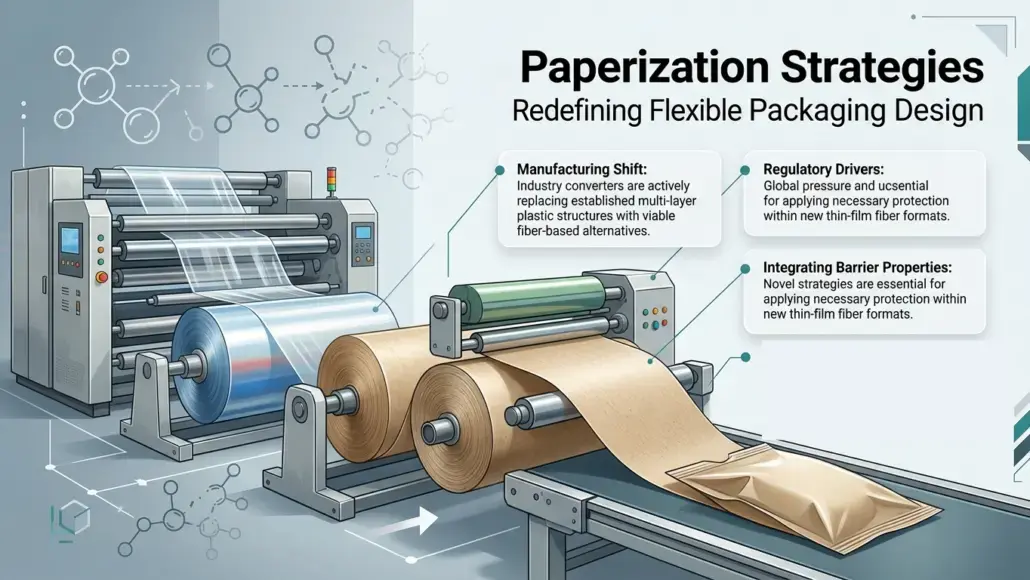
Industrial manufacturing cycles are currently undergoing a significant transition as converters attempt to replace traditional polymer structures with fiber based alternatives. The shift toward paperization strategies represents a fundamental change in how barrier properties are integrated into thin film formats. For decades, multi layer plastic laminates provided the necessary protection for sensitive goods, but the increasing pressure from global regulatory bodies and the European Packaging and Packaging Waste Regulation has forced a reevaluation of material choice. Engineering functional paper requires more than simply swapping substrates; it involves a complex reconfiguration of molecular barriers to match the shelf life performance of synthetic polymers.
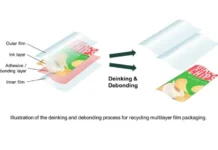
The transition is particularly challenging in the flexible packaging sector where weight and thickness are critical factors. Converting to paper necessitates the use of coatings that can provide resistance to moisture, grease, and oxygen without compromising the recyclability of the underlying fibers. Current industry data suggests that while paper has a higher recycling rate than plastic, the addition of heavy coatings or metallic layers can hinder the pulping process. Therefore, the development of these solutions must prioritize chemical compatibility with existing waste streams while maintaining the mechanical strength required for high speed filling lines.
Technical Barriers in Oxygen and Moisture Transmission Rates
The primary technical hurdle for fiber based substrates involves the inherent porosity of the material. Unlike dense polymers such as polyethylene or polyethylene terephthalate, paper fibers allow for the rapid migration of gas and water vapor. Controlling the Water Vapor Transmission Rate (WVTR) and Oxygen Transmission Rate (OTR) is essential for food preservation and pharmaceutical stability. High performance paperization strategies utilize nanocellulose or specialized polymer dispersions to seal these pores. These coatings are applied in microns yet must provide a continuous film that resists pinholes or cracks during the folding and sealing process.
Environmental conditions significantly impact the performance of fiber based barriers. In high humidity environments, the hydrogen bonding between cellulose fibers can weaken, leading to a loss of structural rigidity and a sharp increase in permeability. Engineers are focusing on cross linking agents and hydrophobic additives that can repel water without creating a permanent barrier that prevents the paper from being broken down in water. The balance between providing a functional shelf life for six to twelve months and ensuring rapid disintegration in a recycling facility remains a central focus for material scientists.
Advanced testing protocols now involve accelerated aging studies to determine how these paper based structures hold up over time. Traditional plastic barriers are relatively stable across temperature ranges, but paper exhibits variable behavior depending on the fiber source and the method of pulping. Kraft paper, for instance, offers superior strength but requires more extensive coating to achieve a smooth enough surface for high quality barrier application. Bleached versus unbleached fibers also present different chemical affinities for the aqueous coatings used to provide moisture resistance.
Mechanical Integrity and Processing Line Adaptability
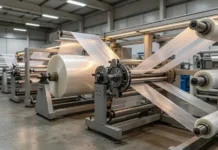
Beyond barrier performance, the mechanical behavior of paper on automated machinery differs vastly from the behavior of plastic films. Plastic has high elasticity and can withstand significant tension during the winding and unwinding process. Paper, conversely, has a low elongation at break, meaning it is prone to tearing if the tension control on the production line is not precisely calibrated. Implementing paperization strategies often requires retrofitting existing Form-Fill-Seal (FFS) machinery with specialized rollers and tension sensors to prevent structural failure.
Heat sealing represents another area of intense development. Most flexible plastic packaging relies on the melting of an internal polymer layer to create a hermetic seal. To replicate this with paper, manufacturers apply thin layers of heat seal lacquers or aqueous dispersions. These must be formulated to activate at specific temperatures that do not scorch the paper fibers or cause the material to become brittle. The dwell time and pressure settings on sealing jaws must be adjusted to account for the thermal conductivity of paper, which differs significantly from that of traditional laminates.
The stiffness of paper provides both advantages and disadvantages in the supply chain. While stiffer materials can offer better protection for the contents, they are more susceptible to creasing and cracking. These mechanical defects can create bypass points for oxygen and moisture, effectively negating the barrier properties of the coatings. Testing for “flex-crack” resistance is becoming a standard procedure for companies adopting these new formats. This involves repeatedly bending the material to simulate the stresses of shipping and handling to ensure the barrier remains intact until the point of consumption.
Chemical Coating Innovations and Functional Barrier Inks
Innovation in the chemical sector is driving the feasibility of fiber based flexible packaging. Functional barrier inks are emerging as a method to apply protection only where it is needed, reducing the overall material usage. These inks can be printed directly onto the paper surface using gravure or flexographic processes, allowing for precise control over the barrier thickness. By integrating the barrier directly into the printing stage, converters can simplify their supply chains and reduce the number of lamination steps required to produce a finished pouch.
Water based dispersions are replacing traditional solvent based systems to meet safety and environmental standards. These dispersions often contain mineral particles like Laponite or other clay derivatives that create a tortuous path for gas molecules, effectively slowing down the rate of diffusion. The orientation of these particles within the dry film is critical; if they are not aligned correctly, the barrier performance will be inconsistent. Advancements in application technology, such as curtain coating or blade coating, are helping to ensure a uniform distribution of these functional additives across the entire width of the web.
Bio based coatings derived from seaweed, starch, or proteins are also gaining traction as brands look to improve the sustainability profile of their packaging. These materials offer the advantage of being home compostable or easily recyclable in conventional systems. However, their sensitivity to moisture remains a significant drawback for many applications. Research is ongoing into hybrid systems that combine bio based polymers with small amounts of synthetic resins to provide the necessary durability while maintaining a high renewable content. These developments are essential for the long term success of paperization strategies in markets with strict shelf life requirements.
Life Cycle Assessment Realities and Scalability Constraints
Evaluating the true environmental impact of switching from plastic to paper requires a detailed Life Cycle Assessment (LCA). While paper is renewable and has high recycling rates, the energy required to produce paper can be higher than the energy required for plastic production. Additionally, the increased weight of paper packaging can lead to higher transportation emissions. A comprehensive analysis must consider the carbon footprint of the entire value chain, from forestry management to the final end of life treatment.
Scalability remains a major hurdle for the global adoption of advanced fiber based packaging. The production capacity for high barrier papers is currently limited compared to the massive infrastructure available for plastic films. Investment in new paper machines and coating facilities is necessary to meet the projected demand from large consumer goods companies. Additionally, the cost of functional papers is often higher than that of their plastic counterparts, presenting a challenge for price sensitive markets. As production volumes increase, economies of scale should eventually bring prices down, making these solutions more competitive.
The collaboration between paper mills, chemical suppliers, and packaging converters is vital for overcoming these scalability issues. Closed loop systems where production waste is immediately returned to the pulping process can help reduce costs and improve material efficiency. Brands must also be willing to accept slightly shorter shelf lives or adjust their distribution models to accommodate the limitations of current fiber based technologies. By working together, the industry can develop a new generation of flexible packaging that balances functional performance with environmental responsibility.
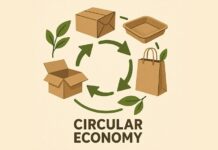
The role of the consumer in the success of these new formats cannot be overlooked. Clear labeling and education are necessary to ensure that people understand how to dispose of these materials correctly. If a functional paper pouch is placed in the plastic recycling stream, or vice versa, it can contaminate the batch and reduce the quality of the recycled output. Standardized sorting symbols and digital watermarks are being tested to help automated sorting facilities identify and separate these materials more accurately. These efforts are part of the broader effort to create a truly circular packaging economy.
Ultimately, the refinement of paperization strategies will depend on the ability of engineers to overcome the physical limitations of cellulose fibers. The integration of advanced chemistry with traditional papermaking techniques offers a promising path forward for the flexible packaging industry. As regulations continue to tighten and consumer demand for sustainable options grows, the pressure to innovate will only intensify. The transition away from fossil fuel based polymers is a complex and long term process, but the progress made in functional fiber based materials indicates that a shift is not only possible but already underway. Continuous research into barrier efficiency, mechanical durability, and supply chain logistics will ensure that the next generation of packaging meets the needs of both the planet and the global economy.

