

























We live in an age of rapid technological innovation, and it is sparking a major transformation in the logistics industry. The most trending addition of the Internet of Things (IoT) has transformed the entire game of supply chain operations, altering how organizations control inventory, warehousing, and transportation. The phenomenon of IoT in logistics is no longer about being at the forefront of trends — it is the very backbone of a modern supply chain, fueling both efficiency, transparency, and profitability.
In this article, we are going to explore the future of IoT in logistics — their applications, with a particular focus on smart warehousing and tracking systems. We’ll explore how IoT is changing the game in logistics and how the logistics industry is gearing up for the future by looking at trends in the coming years, technologies in play, real-world examples of implementation, and the benefits of the same.
Defining the Internet of Things (IoT) in Logistics
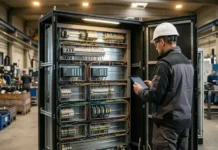
In order to realise the transformative potential IoT holds for logistics one must first comprehend the building blocks of the concept behind it. The Internet of Things (IoT) is a network of devices that are connected to one another to share data and information in real-time. IoT/POn these smart devices are sensors and actuators that collect, analyze, and transmit information across the supply chain for improved decision-making and automation.
The Internet of Things presents with a plethora of applications for logistics, from asset tracking and fleet management to inventory optimization and predictive maintenance. McKinsey & Company has predicted that IoT-enabled solutions within logistics could create an annual economic value of $1.9 trillion to $2.7 trillion by 2025. At the heart of this evolution are smart warehousing systems accompanied by IoT-enabled tracking capabilities.
What is the IoT without Smart Warehousing?
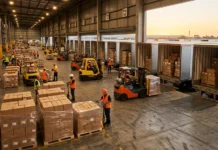
Logistics: One of the more convincing use cases for IoT in logistics is smart warehousing: When technology turns old warehouses into new hubs for efficiency and automation. Traditionally, warehouses are good for storage, but most of the processes are manual; on the other hand, Smart warehouses use IoT devices, robots, and data analytics to enhance operations.
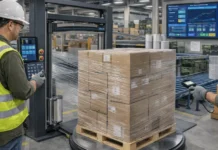
By far, one pertinent development in smart warehousing is the use of IoT-enabled sensors for real-time inventory management. These sensors will provide real-time visibility into stock levels, conditions in storage, and order statuses. In cold storage warehouses, for example, temperature and humidity sensors guarantee that perishable products, such as pharmaceuticals and fresh produce, are kept in ideal conditions. Should they deviate, it triggers alerts which leads to immediate rectification to reduce spoilage and losses.
IoT-based automated guided vehicles (AGVs) and drones are also critical for improving operational efficiency. Automated Guided Vehicles (AGVs) move around the warehouse, picking and placing items, and drones perform inventory audits using RFID tags or barcodes. It not only minimizes human error but also accelerates speed and productivity.
Logistics innovator Amazon has more than 200,000 robots working alongside human employees in its warehouses. According to the company, this mixed-mode has cut order processing time by as much as 70% and is a prime example of what an IoT-driven warehousing business can do.
IoT-Enabled Tracking: Full Control
Well, that’s also where IoT in logistics has transformed how products are tracked through the supply chain, in addition to revolutionizing warehousing. Static tracking updates? Not anymore. With the worldwide work environment becoming ever more interconnected, IoT sensors provide end-to-end visibility for shipments and also help with all the important insights as to where, the condition during transit, and the status of the shipments.
During this transformation, GPS-enabled IoT devices leading the way. Such devices enable companies to track the exact location of cargo as it moves from country to country or continent to continent. As an instance, UPS uses IoT based telematics systems to monitor its fleet so that it could optimize delivery routes and reduce delays. Through using this technology UPS has been able to decrease its annual fuel consumption by 10 million gallons, an example of where economic efficiency meets environmental sustainability.
In addition to tracking location, IoT sensors can keep track of the conditions in which goods are transported. Maintaining narrow temperature ranges is particularly important for industries such as pharmaceuticals and food. Embedded IoT temperature sensors in containers provide constant data, so that goods are kept within acceptable limits during transportation. When an anomaly is detected, corrective actions can be performed instantly in order to protect product integrity.
The advantages of IoT-based tracking go beyond operational efficiency, driving customer satisfaction as well. Businesses are able to offer more accurate delivery timelines and instant updates with real-time tracking data, contributing to a seamless customer experience. A Deloitte study shows that 74% of consumers view real-time tracking as a must-have feature, emphasizing the need for real-time visibility across the chain.
How is IoT Beneficial for the Logistics Industry?
Incorporating IoT into logistics, there are several benefits that have profound implications for both businesses and consumers. Whether humans are working away in the background or machines are making decisions on their behalf, IoT fundamentally makes them more efficient by automating at every step, minimizing human error and optimizing resource allocation. For businesses, this means lower operational costs, faster delivery times, and improved profit margins.
Predictive analytics is one of the main advantages and it needs real-time data inflow generated by IoT devices. Analyzing this data allows companies to predict demand, foresee disruptions, and take proactive measures. For example, predictive maintenance of IoT-enabled fleets reduces unwanted breakdowns so that deliveries continue without disruption.
And sustainability is a also a major factor to consider with IoT-based logistics. Through route optimization, idle time reduction, and increasing energy efficiency, IoT helps to reduce carbon emissions. For instance, DHL’s IoT-driven projects have decreased the company’s carbon footprint by 30%, helping it contribute to global sustainability targets.
In addition, IoT encourages collaboration along the supply chain. Sharing data with partners, suppliers, and customers enables firms to build an integrated ecosystem that improves both coordination and visibility. Such levels of collaboration are especially critical in addressing challenges of raw material shortages or unexpected spikes in demand for example.
Challenges and the Road Ahead
Despite of the promise of IoT in logistics, there remain challenges. One major hindrance to adoption is the upfront cost of deploying IoT infrastructure. Internet of things (IoT) IoT-enabled software, hardware, and training can be expensive; small and medium enterprises (SMEs) may struggle to invest in these technologies. But as tech becomes more ubiquitous and affordable, those barriers are likely to erode.
Data security and privacy is another concern. As IoT devices create more and more data, the threat of cyberattacks and unauthorized access becomes a more significant concern. Cybersecurity Requirements for Organizations
According to looking ahead, the future of IoT in logistics is certainly limitless. IoT data will be bolstered by emerging technologies like 5G connectivity, blockchain, and artificial intelligence. This includes, for example, 5G networks to facilitate faster and more reliable data transmission and blockchain to provide data integrity and transparency throughout the supply chain.
Conclusion
There are many special technologies in logistics, but IoT is something that seems to do wonders in keeping the logistics sector updated. The adoption of smart warehousing and IoT-enabled tracking is helping businesses attain unparalleled efficiency, transparency, and sustainability. When decision-making occurs based on live data, companies can optimize their operations, improve customer satisfaction and respond to an increasingly dynamic global marketplace.
IoT is not just an improvement in technology integration, but a necessity for anyone who wants to succeed in the current market. With IoT innovations, the logistics sector is likely to provide quicker, smarter, and more eco-friendly solutions to shape the supply chain for a lifetime.