

















Unplanned downtime represents one of the most significant operational challenges facing packaging manufacturers. When adhesive dispensing equipment fails, production lines halt, workers stand idle, and scheduled deliveries face delay. The financial impact extends beyond immediate lost production—emergency repairs cost more than planned maintenance, rushed troubleshooting often misdiagnoses root causes, and downstream effects ripple through supply chains dependent on predictable delivery schedules. Understanding how to effectively minimize downtime in hot-melt systems requires examining the specific failure mechanisms these systems experience and implementing targeted countermeasures that address underlying causes rather than symptoms.
The Dominant Role of Adhesive Char in System Failures
Adhesive char formation stands as the primary cause of hot-melt equipment failure and unplanned downtime across packaging operations. Char develops when adhesive breaks down under excessive heat exposure, forming gels that stick to tank walls and hose interiors. These anchored adhesive deposits experience continued heating, eventually carbonizing into the blackened material known as char. Once formed, char breaks free in fragments that travel through the system, plugging filters, blocking nozzles, and creating equipment malfunctions that bring production to a halt.
Three fundamental mechanisms drive char formation—overheating, contamination, and oxidation. Traditional tank-based melting systems inherently create conditions that promote all three. The adhesive around the tank perimeter experiences higher temperatures than material in the center, much as food in a slow cooker burns along the edges while remaining undercooked in the middle. This temperature gradient causes faster degradation in the boundary layer, forming the initial gels that eventually become char.
Operational practices often exacerbate this inherent design limitation. Leaving hot-melt systems powered continuously, including during plant shutdowns, keeps adhesive at elevated temperature for unnecessarily long periods. Increasing system temperature settings to compensate for viscosity changes or to speed startup actually accelerates adhesive degradation. Using disproportionately large melting tanks relative to adhesive throughput means significant adhesive volume sits idle at temperature, degrading over time. These common practices transform the equipment design limitation into an operational crisis.
Contamination provides another pathway to char formation, though one more directly within operator control. Particulates entering the adhesive system—dust, paper fragments, packaging material debris—create nucleation sites where thermal degradation accelerates. These contaminants adhere to heated surfaces within the system, collecting additional adhesive that then burns and forms char. Maintaining closed adhesive containers, never sweeping spilled adhesive back into supply bins, keeping tank lids closed, and implementing automated adhesive feeding systems all help prevent contamination-driven char formation.
Implementing Effective Preventive Maintenance Programs
The distinction between reactive and preventive maintenance approaches fundamentally shapes adhesive system reliability. Reactive maintenance waits for equipment failure, then responds with emergency repairs that temporarily restore function without addressing underlying causes. Preventive maintenance anticipates failure mechanisms and intervenes before problems develop, using scheduled activities to maintain equipment in optimal condition. The contrast in outcomes between these approaches becomes stark in hot-melt adhesive applications.
Establishing appropriate maintenance schedules requires understanding adhesive chemistry and equipment design. Most manufacturers recommend complete system cleaning every three months or whenever adhesive formulations change. This interval balances the labor investment required for thorough cleaning against the operational risk that accumulated contamination poses. Operations using adhesives with shorter tank life or running equipment in particularly demanding environments may require more frequent cleaning cycles.
Tank draining and purging procedures remove degraded adhesive before it carbonizes into char. Using manufacturer-approved purging compounds ensures effective cleaning without damaging system components. These specialized materials flow through the entire adhesive path—tank, pump, hoses, and applicators—loosening and removing adhesive deposits that regular operation leaves behind. Following purging with fresh adhesive flushes any remaining cleaner from the system, preventing contamination of production adhesive.
Filter maintenance deserves particular attention because filters represent the primary defense against contamination entering dispensing equipment. Clogged filters create pressure variations that damage pumps and cause inconsistent adhesive flow. Establishing filter replacement schedules based on operating hours provides more reliable maintenance intervals than calendar-based schedules, which fail to account for variations in equipment utilization. Monitoring pressure drop across filters offers real-time indication of filter condition, enabling replacement before contamination affects system performance.
Nozzle and dispensing head maintenance prevents the gradual accumulation of adhesive residue that eventually causes blockages. Regular inspection identifies early-stage buildup while it remains easy to remove. Establishing cleaning procedures that operators perform during scheduled downtime—shift changes, planned breaks, equipment changeovers—incorporates maintenance into routine workflow rather than treating it as an exceptional activity requiring special scheduling. Maintaining adequate spare nozzle inventory allows immediate replacement when wear becomes evident, avoiding the temptation to continue operating with degraded components that compromise packaging quality.
Technology Solutions for Reducing Downtime Hot Melt Gluing Systems
Melt-on-demand technology directly addresses several root causes of adhesive system failures. By melting adhesive only as needed rather than maintaining large volumes at elevated temperature, these systems eliminate the prolonged heat exposure that drives char formation. First-in, first-out processing means fresh adhesive continuously replaces used material, preventing the stagnant conditions where degradation occurs. Operator-free operation eliminates the manual adhesive handling that introduces contamination while reducing labor requirements and improving safety.
The downtime prevention benefits that melt-on-demand systems deliver extend beyond char elimination. Rapid startup capability—ten minutes versus forty-five minutes or more for tank-based systems—reduces the production time lost when equipment must be restarted. Lower maintenance requirements mean fewer scheduled outages for system cleaning and component replacement. Improved adhesive quality consistency reduces packaging defects that can force line stoppages for quality investigations or rework activities.
Electric valve technology offers significant reliability advantages over pneumatic systems in appropriate applications. Pneumatic valves depend on compressed air quality and require regular replacement of seals, gaskets, and modules subject to wear from compressed air contamination and dynamic seal degradation. Electric valves eliminate compressed air dependencies and the dynamic seals that represent primary failure points in pneumatic systems. Advanced electric valves achieve operational lifespans exceeding two billion cycles under optimized conditions while supporting dispensing speeds reaching fifteen thousand cycles per minute during peak demand periods.
However, pneumatic systems remain excellent solutions for many applications when supported by robust service networks and proper maintenance planning. The reliability of pneumatic valve operations depends critically on maintaining strategic spare parts inventory including commonly replaced components and ensuring rapid access to technical support. When pneumatic systems receive appropriate maintenance support, they provide reliable, cost-effective performance with proven capability across diverse manufacturing environments.
Monitoring Systems and Predictive Maintenance Approaches
Implementing comprehensive monitoring systems transforms maintenance from reactive to predictive by providing early warning of developing problems. Real-time data on equipment performance, operating parameters, and system health allows identification of issues before they cause failures. Temperature monitoring detects hot spots that indicate developing hose problems or heater element degradation. Flow rate tracking identifies pump wear or blockage formation. Pressure monitoring across filters signals contamination accumulation requiring attention.
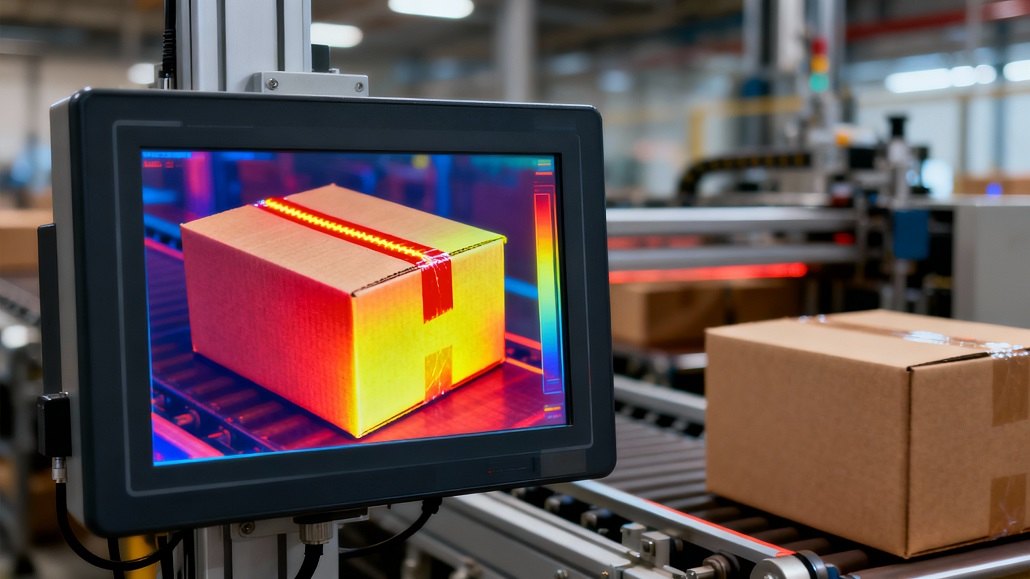
Thermal imaging technology has emerged as a powerful diagnostic tool for adhesive application systems. After packages receive sealing, visual inspection cannot determine whether adhesive was applied correctly—the closed package conceals the bond line from view. Thermal imaging systems inspect every package in real time, identifying missing adhesive beads, weak application, misaligned patterns, and incomplete coverage. This immediate feedback allows line operators to address dispensing problems as they develop rather than discovering issues only when packaging failures occur downstream.
Vision inspection systems complement thermal monitoring by detecting mechanical packaging defects that may not involve adhesive problems but still require attention. Torn flaps, missing panels, dimensional variations, and structural damage all appear clearly in high-resolution imaging. Integrated inspection systems combining thermal and visual analysis provide comprehensive quality assurance that catches both adhesive-related and mechanical defects, reducing the risk of defective packaging escaping detection.
Data analytics platforms aggregate information from multiple sensors and inspection systems, identifying patterns that indicate developing reliability issues. Gradual increases in adhesive consumption may signal nozzle wear causing excessive material usage. Progressive reductions in line speed capability could indicate pump degradation reducing flow capacity. Increasing frequency of filter replacement points toward contamination sources requiring investigation. These analytical capabilities enable maintenance planning based on actual equipment condition rather than arbitrary schedules.
Organizational Approaches to Downtime Reduction
Technical solutions provide tools for reducing downtime hot melt gluing systems, but organizational approaches determine how effectively these tools get applied. Establishing clear ownership for adhesive system reliability ensures someone bears responsibility for tracking performance, scheduling maintenance, and driving continuous improvement. Without defined accountability, preventive maintenance activities often receive inadequate attention as urgent production demands consume available time and resources.
Training programs that develop operator and technician capabilities deliver substantial returns through improved troubleshooting effectiveness and reduced mean time to repair. Understanding basic adhesive chemistry helps operators recognize early signs of degradation and take corrective action before problems escalate. Familiarity with common failure modes enables faster diagnosis when issues occur. Knowledge of proper maintenance procedures ensures scheduled activities accomplish their intended purposes rather than simply following motions without understanding.
Documentation systems that capture failure histories, maintenance activities, and equipment performance create institutional knowledge that survives personnel changes and supports continuous improvement initiatives. Recording which components fail, under what circumstances, and how often they require replacement identifies opportunities for design improvements, operational adjustments, or preventive maintenance enhancements. Analyzing downtime patterns reveals whether failures concentrate in particular shifts, on specific equipment, or during certain production runs—insights that guide targeted improvement efforts.
Partnerships with adhesive suppliers and equipment manufacturers provide access to technical expertise that internal staff may lack. These specialists understand failure mechanisms across many operations, bringing perspective that helps identify unusual problems or non-obvious solutions. They track industry developments that may offer new approaches to persistent challenges. Maintaining these relationships ensures access to support when complex problems arise while providing opportunities to learn about emerging technologies that may enhance reliability.
Economic Impact of Effective Downtime Prevention
The financial justification for investing in downtime reduction initiatives becomes clear when examining the full cost of adhesive system failures. Direct costs include lost production during outages, emergency repair labor premiums, expedited parts procurement, and material waste from defective packaging produced during equipment malfunctions. Indirect costs encompass schedule disruptions affecting downstream operations, overtime required to recover lost production, customer dissatisfaction from delayed deliveries, and the opportunity cost of sales lost when production capacity proves insufficient.
Industry data suggests that unplanned downtime costs packaging operations thousands of dollars per hour when accounting for both direct and indirect impacts. A single extended outage can eliminate the profit from days of production. Frequent short stoppages prove nearly as damaging as occasional long ones because they disrupt workflow rhythm and prevent lines from achieving sustained peak efficiency. Reducing downtime hot melt gluing systems delivers measurable financial benefits that often exceed the investment required for improved equipment and enhanced maintenance programs.
Preventive maintenance programs demonstrate favorable economic returns by avoiding the costs that equipment failures impose. The labor required for scheduled cleaning and component replacement costs substantially less than emergency repairs. Planned parts procurement allows competitive pricing rather than emergency surcharges. Scheduled maintenance occurs during planned downtime, avoiding production disruption. Equipment properly maintained lasts longer, deferring capital replacement expenses. These economic advantages make comprehensive preventive maintenance programs self-funding in most packaging operations.
Energy efficiency improvements that accompany modern adhesive systems contribute additional economic benefits. Reduced energy consumption lowers utility costs while supporting corporate sustainability objectives. Decreased adhesive usage from improved system efficiency reduces material expenses. Lower maintenance requirements free technical personnel for value-adding activities rather than emergency repairs. These operating cost reductions accumulate over equipment lifespans, substantially improving total cost of ownership relative to older technology.
The path toward minimizing downtime in hot-melt adhesive systems combines technological advancement with operational discipline. Modern equipment designs eliminate failure mechanisms that plagued earlier generations. Comprehensive maintenance programs prevent problems before they cause outages. Monitoring systems provide early warning of developing issues. Training ensures personnel possess skills needed for effective operation and troubleshooting. Together, these elements create packaging operations where adhesive system reliability becomes routine rather than exceptional—where production flows uninterrupted and downtime becomes increasingly rare.