















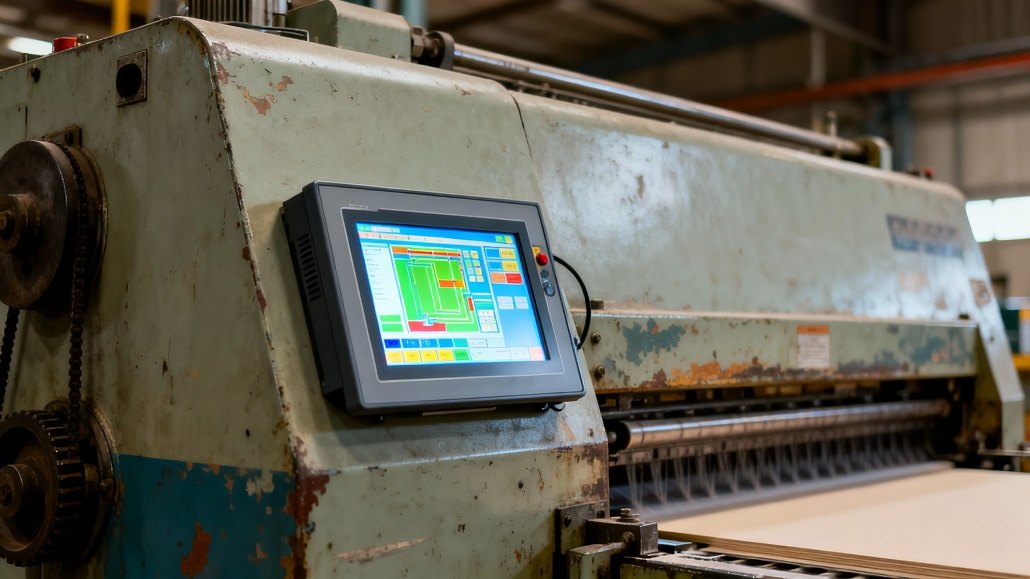

Retrofitting Older Gluing Equipment for Modern Standards
Industrial equipment lifecycles often extend far beyond original design expectations. Packaging machinery installed decades ago continues operating in facilities worldwide, delivering functional performance that makes replacement difficult to justify on purely operational grounds. However, these legacy systems increasingly struggle to meet modern requirements for production speed, energy efficiency, safety standards, and maintenance costs. Retrofitting gluing equipment packaging represents a strategic middle path between continuing with outdated technology and investing in complete system replacement—an approach that enhances performance, addresses contemporary standards, and extends useful equipment life while managing capital expenditure.
Evaluating Legacy Equipment for Retrofit Potential
The decision to retrofit rather than replace requires careful assessment of equipment condition and upgrade feasibility. Structural integrity represents the foundation—equipment with sound mechanical frames, undamaged mounting structures, and adequate physical space for component additions generally proves suitable for retrofit consideration. Conversely, equipment exhibiting significant wear in structural elements, corrosion affecting load-bearing components, or dimensional constraints preventing modern component installation may require replacement rather than upgrade attempts.
Control system architecture fundamentally influences retrofit complexity and cost. Older equipment employing discrete relay logic and pneumatic controls presents more challenging upgrade paths than systems with early programmable logic controllers that can accept software updates and interface with modern components. Some legacy equipment uses proprietary control protocols that limit integration options with contemporary technology. Understanding these constraints helps establish realistic expectations for retrofit outcomes and associated investment requirements.
Production volume and operational criticality factor into retrofit versus replacement decisions. Equipment supporting high-value product lines or operating as capacity bottlenecks justifies more substantial retrofit investment than machinery handling lower-volume products with available backup capacity. Operations planning equipment replacement within defined timeframes may defer retrofit expenditures, whereas situations requiring extended service life favor more comprehensive upgrades. These strategic considerations shape appropriate retrofit scope and investment levels.
The availability of technical support for legacy equipment affects long-term viability regardless of retrofit decisions. Manufacturers discontinuing product lines may cease providing replacement parts, technical documentation, and service expertise essential for sustained operation. Equipment built by companies no longer in business presents particular challenges. Assessing parts availability and technical support prospects helps determine whether retrofit investments make sense or whether replacement provides more sustainable long-term solutions.
Hot-Melt System Upgrades Delivering Immediate Benefits
Adhesive melting and delivery systems represent prime retrofit targets because these components directly affect packaging quality, energy consumption, and maintenance requirements while offering relatively straightforward upgrade paths. Replacing tank-based melters with modern melt-on-demand systems eliminates char formation that causes downstream problems throughout adhesive application equipment. These upgrades deliver rapid startup times, reduced energy consumption, and substantially decreased maintenance needs—benefits that directly translate into improved operational economics.
Case sealing equipment retrofits demonstrate particularly compelling returns. One packaging operation documented forty-five percent reductions in adhesive consumption and forty percent decreases in energy usage after retrofitting gluing equipment packaging with advanced melting systems. These improvements exceeded initial projections while requiring minimal integration complexity because adhesive supply systems connect to application equipment through standardized interfaces that facilitate component substitution. The rapid payback periods these projects achieve—often measured in months rather than years—make them attractive even in capital-constrained environments.
Heated hose upgrades address performance limitations that legacy systems exhibit while improving energy efficiency and adhesive quality. Modern hoses incorporating advanced insulation and thermal distribution technologies maintain temperature uniformity that prevents hot spots causing adhesive degradation. Improved flexibility facilitates installation in constrained spaces while reducing stress on connection points that often fail in aging equipment. Quick-disconnect fittings enable rapid hose replacement during maintenance activities, minimizing downtime previously required for tedious threaded connection procedures.
Applicator head retrofits incorporating contemporary valve technology deliver precision that older pneumatic systems struggle to match. Electric valve designs eliminate compressed air dependencies while achieving cycle lives exceeding two billion operations under optimal conditions. Precision nozzle designs produce consistent bead patterns that reduce adhesive consumption while improving seal quality. Modular construction simplifies maintenance by enabling component-level replacement rather than entire applicator changeouts. These upgrades directly improve packaging quality while reducing operating costs.
Control System Modernization Enabling Advanced Capabilities
Legacy control systems limit operational capabilities through constraints that modern programmable logic controllers overcome. Older discrete logic implementations lack flexibility for responding to changing production requirements—adding new functionality requires extensive rewiring and component additions rather than software modifications. Limited data collection capabilities prevent operations from understanding equipment performance patterns that guide optimization efforts. Inflexible integration with other line equipment creates coordination challenges that reduce overall line efficiency.
Modern control platforms transform these limitations into capabilities. Programmable controllers enable rapid response to changing requirements through software modifications rather than hardware changes. Communications protocols support integration with upstream and downstream equipment, enabling coordinated operation that optimizes overall line performance. Human-machine interfaces provide operators with clear visibility into equipment status, alarm conditions, and performance metrics previously unavailable. Data logging creates historical records supporting troubleshooting, predictive maintenance, and continuous improvement initiatives.
Integration with line-level control systems enables adhesive application equipment to respond intelligently to production conditions. When line speed changes, adhesive flow rates adjust automatically to maintain consistent bead patterns. During product changeovers, equipment transitions to appropriate parameter sets without manual intervention. Temperature profiles optimize for different adhesive formulations or substrate types based on product codes. This coordination reduces operator workload while improving consistency and reducing defects from manual setting errors.
Advanced monitoring capabilities detect developing problems before they cause failures. Temperature sensors throughout adhesive flow paths identify hot spots or heating element degradation. Flow meters confirm proper adhesive delivery rates and detect blockages or pump wear. Pressure monitoring across filters signals contamination requiring attention. These diagnostic capabilities transform maintenance from reactive troubleshooting to proactive intervention—addressing problems while they remain minor rather than waiting for catastrophic failures demanding emergency repairs.
Safety Enhancement Through Targeted Upgrades
Modern safety standards substantially exceed requirements that governed equipment design decades ago. Legacy gluing systems often lack guarding that contemporary regulations mandate, creating compliance issues and exposing operators to unnecessary risks. Updating equipment to meet current safety codes addresses regulatory requirements while reducing injury risks that impose human and financial costs on operations. These upgrades demonstrate organizational commitment to worker protection while avoiding citations and penalties that enforcement actions impose.
Emergency stop systems represent critical safety features that older equipment may lack or implement inadequately. Current standards require that emergency stops immediately cut power to hazardous motion and provide positive indication of activation state. Retrofitting modern emergency stop circuitry ensures that operators can quickly halt equipment during emergency situations while meeting regulatory requirements. Proper emergency stop implementation also facilitates maintenance activities by providing assured equipment isolation during service procedures.
Burn prevention measures gain particular importance in hot-melt adhesive applications where equipment operates at temperatures causing severe injuries on contact. Insulating guards around heated components prevent accidental contact. Interlocked access panels prevent equipment operation when protective covers are removed for maintenance. Temperature indicator displays warn operators of thermal hazards. These retrofits reduce injury risks that legacy equipment designs inadequately address.
Automated adhesive feeding systems eliminate manual handling that exposes operators to burn risks and ergonomic stress. Rather than manually adding adhesive to heated reservoirs, operators load ambient-temperature material into sealed containers that pneumatic or vacuum systems transfer automatically to melting units. This automation removes personnel from proximity to heated equipment while reducing spillage that creates slip hazards and material waste. The safety benefits complement operational improvements from more consistent adhesive supply.
Maintenance Accessibility Improvements
Equipment designed decades ago often neglects maintenance accessibility, reflecting design priorities that emphasized initial cost over lifecycle considerations. Components requiring regular service may require extensive disassembly to access. Filters located in cramped spaces prove difficult to replace efficiently. Adjustment points lack accessibility for instruments needed to verify proper settings. These design shortcomings extend maintenance task durations while increasing injury risks from awkward working positions.
Targeted retrofits addressing these limitations substantially reduce maintenance labor requirements. Relocating frequently serviced components to accessible positions enables rapid service without extensive equipment disassembly. Adding quick-disconnect fittings at strategic locations simplifies component removal for service or replacement. Providing adequate clearance around adjustment points allows efficient setting verification and calibration. These changes reduce maintenance task durations while improving technician safety and job satisfaction.
Standardizing components across multiple equipment pieces simplifies spare parts inventory and technician training requirements. Operations with diverse legacy equipment accumulate extensive parts inventories because different equipment generations employ non-interchangeable components. Training technicians to service multiple equipment types with unique designs proves inefficient and error-prone. Retrofitting standardized components wherever practical reduces inventory carrying costs while improving maintenance efficiency through technician familiarity with common parts.
Predictive maintenance capabilities enabled by modern sensors and controls reduce unplanned downtime while optimizing maintenance resource allocation. Rather than performing calendar-based maintenance regardless of actual equipment condition, operations can schedule activities based on monitored parameters indicating developing problems. This condition-based approach concentrates maintenance effort where needed while avoiding unnecessary service on equipment operating satisfactorily. The resulting efficiency improvements reduce maintenance costs while improving equipment reliability.
Integration Challenges and Solutions
Combining modern components with legacy equipment creates integration challenges that successful retrofit projects must address. Physical interfaces between new and old components may require custom adapter plates, modified mounting arrangements, or fabricated transition pieces. Electrical interfaces connecting modern controllers to existing actuators and sensors may need voltage conversion, signal conditioning, or protocol translation. Fluid interfaces joining updated adhesive systems to legacy applicators may require custom fittings or adapter assemblies.
Dimensional constraints within existing equipment often limit component selection for retrofit applications. Modern adhesive melting units may offer superior performance but require more installation space than legacy components occupy. Replacement control panels with expanded functionality may not fit original mounting locations. These physical limitations sometimes necessitate creative solutions—mounting components externally to equipment frames, fabricating custom enclosures, or selecting compact component alternatives that sacrifice some capability for installation feasibility.
Communications protocol compatibility between modern and legacy equipment requires careful attention during retrofit planning. Contemporary controllers communicate via industrial Ethernet protocols enabling high-speed data transfer and sophisticated network integration. Legacy equipment may employ older communications standards with limited capability and incompatibility with modern networks. Protocol gateways that translate between old and new standards enable integration but add complexity and cost. Selecting upgrade components with flexible communications options simplifies integration while maintaining future upgrade paths.
Testing protocols validating retrofit performance before returning equipment to production prevent problems from disrupting operations. Comprehensive testing verifies that all functions operate correctly, safety systems respond appropriately, and integration with related equipment performs as intended. Systematic testing procedures identify problems in controlled conditions where they can be addressed methodically rather than discovering issues during production runs where time pressure and production losses create stress that hinders effective troubleshooting.
Economic Evaluation and Decision Making
Quantifying retrofit economics requires comparing upgrade costs against baseline performance and projected improvements. Capital costs include component procurement, installation labor, engineering for custom interfaces, and testing activities validating proper operation. Operational benefits encompass reduced energy consumption, decreased maintenance requirements, lower adhesive usage, improved packaging quality, and enhanced productivity from increased reliability. Comprehensive analysis accounts for all cost and benefit categories to support informed decisions.
Payback period calculations reveal how quickly retrofit investments recover through operational savings. Projects achieving payback within twelve to eighteen months generally proceed readily because returns clearly exceed financing costs while risk remains manageable. Longer payback periods require more careful evaluation, considering factors like planned equipment service life, availability of capital for competing projects, and strategic importance of performance improvements the retrofit delivers. Some upgrades justify longer paybacks through benefits like safety improvements or regulatory compliance that carry value beyond measurable cost reductions.
Alternative analysis comparing retrofit economics against replacement costs provides context for decision-making. New equipment offers advantages including warranty coverage, latest technology, and absence of legacy limitations that retrofits may not fully overcome. However, replacement typically requires substantially higher capital investment than retrofitting gluing equipment packaging. When existing equipment remains structurally sound and production requirements align with retrofit capability, upgrade approaches often deliver superior return on investment compared to replacement alternatives.
Financing options influence project feasibility and timing. Operations with available capital can proceed with retrofits immediately, capturing benefits sooner. Capital-constrained organizations might pursue incremental upgrades addressing highest-priority improvements first, then expanding scope as operational savings from initial phases provide funding for subsequent work. Equipment suppliers sometimes offer financing arrangements that enable retrofits while spreading payment obligations over time. Exploring creative financing approaches expands the range of viable projects.
The strategic value of extending useful equipment life through retrofitting gluing equipment packaging extends beyond immediate economic returns. Deferring major capital expenditures provides financial flexibility for other investments. Maintaining production capability during periods when replacement equipment lead times are extended or pricing unfavorable proves operationally valuable. Building organizational capability in equipment modernization creates competency applicable to future projects. These considerations complement direct economic analysis in shaping retrofit decisions that position operations advantageously for sustained competitiveness.