


























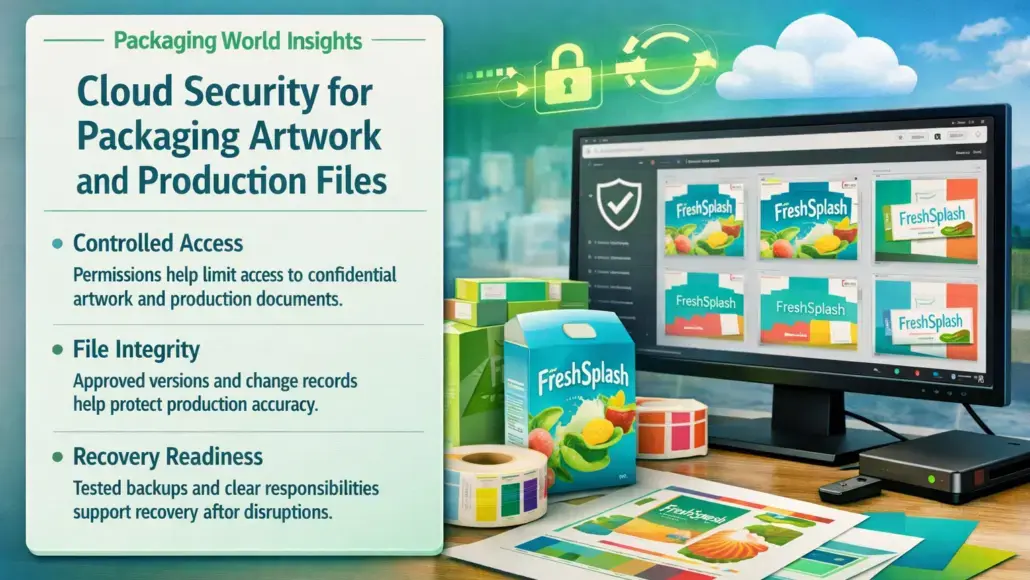

Cloud based workflows allow packaging businesses to share artwork, production files and approval records across brand owners, designers, prepress teams and external converters. However, wider digital collaboration also creates a need to control who can access these assets, how changes are recorded and whether critical files remain available during disruptions. Cloud security is therefore a shared responsibility rather than a feature that can be delegated entirely to a service provider. Protecting packaging information requires businesses to understand their own responsibilities alongside the safeguards offered by the platforms they use.
Protecting Packaging Files Beyond Storage
Packaging files carry different levels of commercial and operational importance. An unreleased product design may contain confidential brand information, while an approved production file must remain accurate and identifiable throughout manufacturing. A security failure can expose proprietary information, allow unauthorised changes or leave teams unable to retrieve essential documents. The National Institute of Standards and Technology’s Cybersecurity Framework 2.0 provides a risk management approach covering governance, protection, detection, response and recovery. The Australian Cyber Security Centre’s cloud shared responsibility guidance also explains why customers retain responsibilities for managing access, configuring services and preparing for incidents. These principles make cloud security relevant to both information protection and production continuity.
Core Packaging Asset Risks
- Confidentiality: Packaging artwork, original illustrations, product specifications and unreleased designs may contain commercially sensitive information. Access should be restricted according to business need.
- Access control: Designers, brand owners and converters require different permissions. A person authorised to review artwork may not need permission to modify an approved production master or access unrelated product files.
- File integrity: Unauthorised modifications, accidental overwrites and confusion between working drafts and approved versions can disrupt production. Version histories, controlled approvals and change records help teams identify the correct files.
- Availability: Account compromise, ransomware or service disruption may prevent access to production documents. Recovery arrangements should identify critical assets, establish responsibilities and provide a tested way to restore files.
These risks are interconnected, but they require different controls. Restricting access does not guarantee that an authorised user will select the correct version, while maintaining file history does not replace a protected backup. Effective cloud security must therefore account for confidentiality, integrity and availability across the packaging workflow, with safeguards proportionate to the sensitivity and operational importance of each asset.
Access Controls and Version Management Protect Production Assets
Packaging businesses need cloud security controls that reflect the sensitivity of their digital assets and the responsibilities of each user. Least privilege access, multifactor authentication and role based permissions can limit unnecessary access, while controlled sharing helps manage files exchanged with external designers, brand owners and converters. Version histories and audit logs provide additional visibility into changes, helping teams identify which files have been modified and who performed an action. These controls should complement, rather than replace, formal approval procedures for production ready artwork.
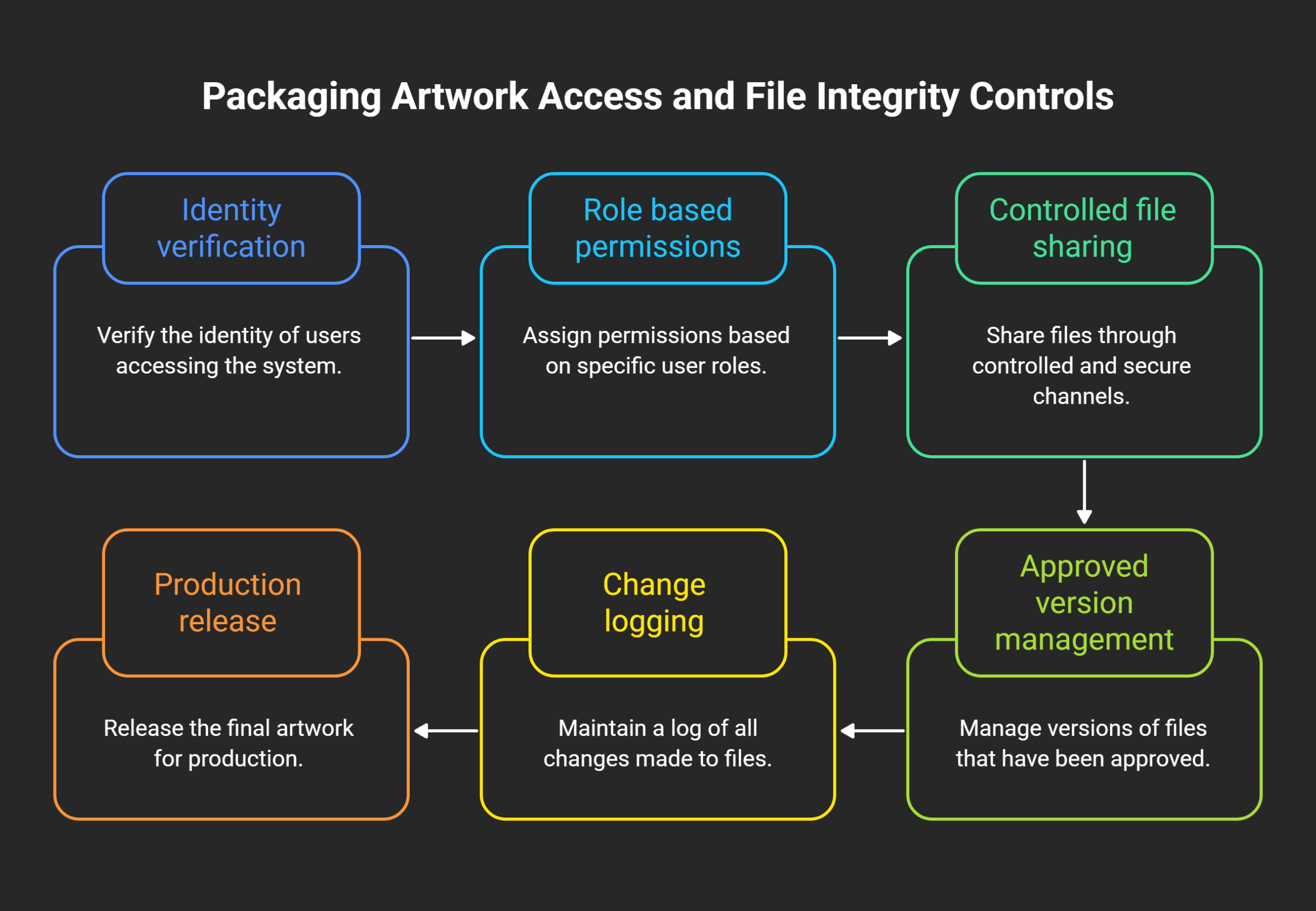
The diagram shows how access management and version control work together to protect packaging assets throughout the digital workflow.
Controls for Everyday File Management
-
Restricted permissions: Grant users access according to their responsibilities and remove unnecessary permissions when projects end.
-
Version integrity: Maintain identifiable approved files and records of significant changes before production release.
-
Controlled sharing: Review external access, shared links and authentication requirements to reduce unnecessary exposure.
Recovery Planning Connects Security with Production Continuity
Effective cloud security also requires businesses to prepare for data loss, account compromise and service disruption. The Cybersecurity and Infrastructure Security Agency recommends maintaining protected backups of critical information and regularly testing restoration. For packaging operations, recovery planning should identify essential artwork, technical specifications and approval records, alongside the people responsible for restoring and verifying them. As workflows incorporate automated actions, permissions for automated workflow actions becomes another governance consideration, especially when software can modify files or initiate approvals.
Recovery and Operational Readiness
-
Protected backups: Maintain recoverable copies of critical production assets, with suitable protection against unauthorised modification or deletion.
-
Tested restoration: Verify that files can be restored and checked before they are released back into production.
-
Clear responsibilities: Establish who coordinates incident response, communicates with service providers and authorises the resumption of operations.
Together, these practices make cloud security an operational responsibility that extends beyond the storage platform to the people, permissions and recovery processes supporting packaging production.
Security Across the Artwork Lifecycle
Effective Cloud Security requires packaging businesses to protect confidentiality, preserve approved file versions and maintain access to critical production information. These responsibilities extend beyond the service provider to internal users, external partners and the processes governing how files are changed, shared and restored. A reliable approach connects security controls with the operational importance of each asset.
Essential Security Priorities
-
Restricted access: Align permissions with each user’s responsibilities and remove unnecessary access.
-
Controlled versions: Maintain identifiable production masters and records of significant changes.
-
Clear responsibilities: Define incident response and recovery obligations across providers and business teams.
-
Tested recovery: Verify that restored artwork and production documents are accurate before reuse.
Cloud based workflows can support collaboration across packaging operations, but their reliability depends on how services are configured and managed. Combining access controls, file integrity checks and tested recovery arrangements helps businesses protect digital assets while preparing for disruptions. Security and production continuity must therefore be managed together.
References
- National Institute of Standards and Technology – The NIST Cybersecurity Framework (CSF) 2.0 – 2024.
- National Institute of Standards and Technology – General Access Control Guidance for Cloud Systems – 2020.
- Australian Cyber Security Centre – Cloud shared responsibility model: Guidance for individuals and small and medium businesses – 2025.
- Cybersecurity and Infrastructure Security Agency – #StopRansomware Guide – 2023.