










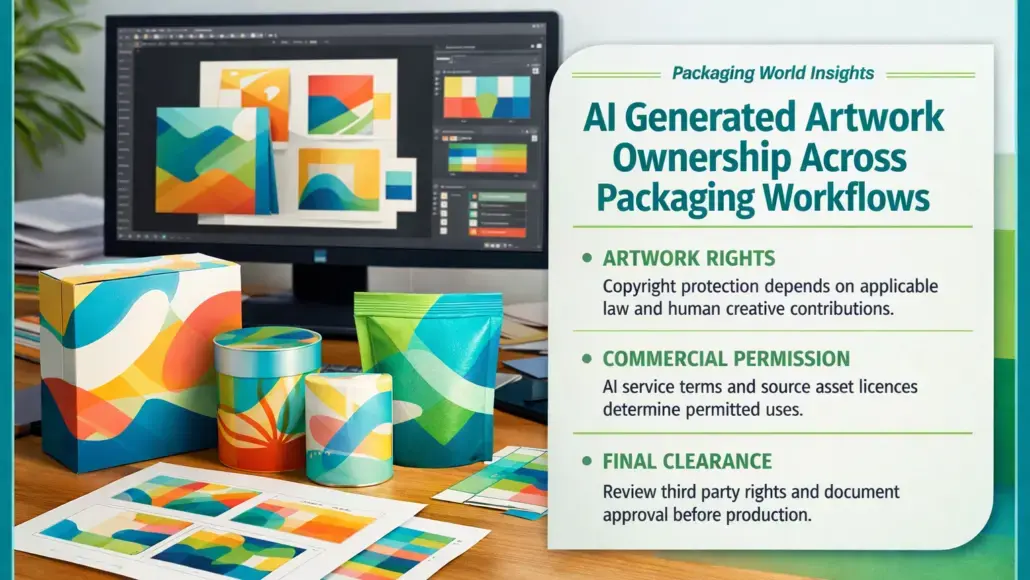

Generative artificial intelligence (AI) tools can help packaging teams develop illustrations, concepts and design variations. Yet AI generated artwork does not automatically carry exclusive copyright ownership or unrestricted commercial permission. Before an image moves into a label, carton or flexible pack, businesses need to establish what rights they hold, which terms apply and whether the asset is cleared for its intended use. The distinction matters when creative assets are adapted across products, packaging formats or markets. Once rights are assessed, controlled artwork access helps protect approved files from unauthorised access or alteration.
Copyright and Commercial Permission are Not the Same
Legal treatment depends on jurisdiction and the creative contribution. The U.S. Copyright Office’s 2025 analysis says purely AI generated material is not protected by copyright under its approach, while qualifying human expression, selection, arrangement or modification may be protectable. The UK’s 2026 government report proposed removing a specific provision for certain computer generated works; that proposal should not be described as enacted law. AI generated artwork therefore requires separate review of copyrightability, contractual permissions and possible third party rights. Entering a prompt does not automatically establish ownership.
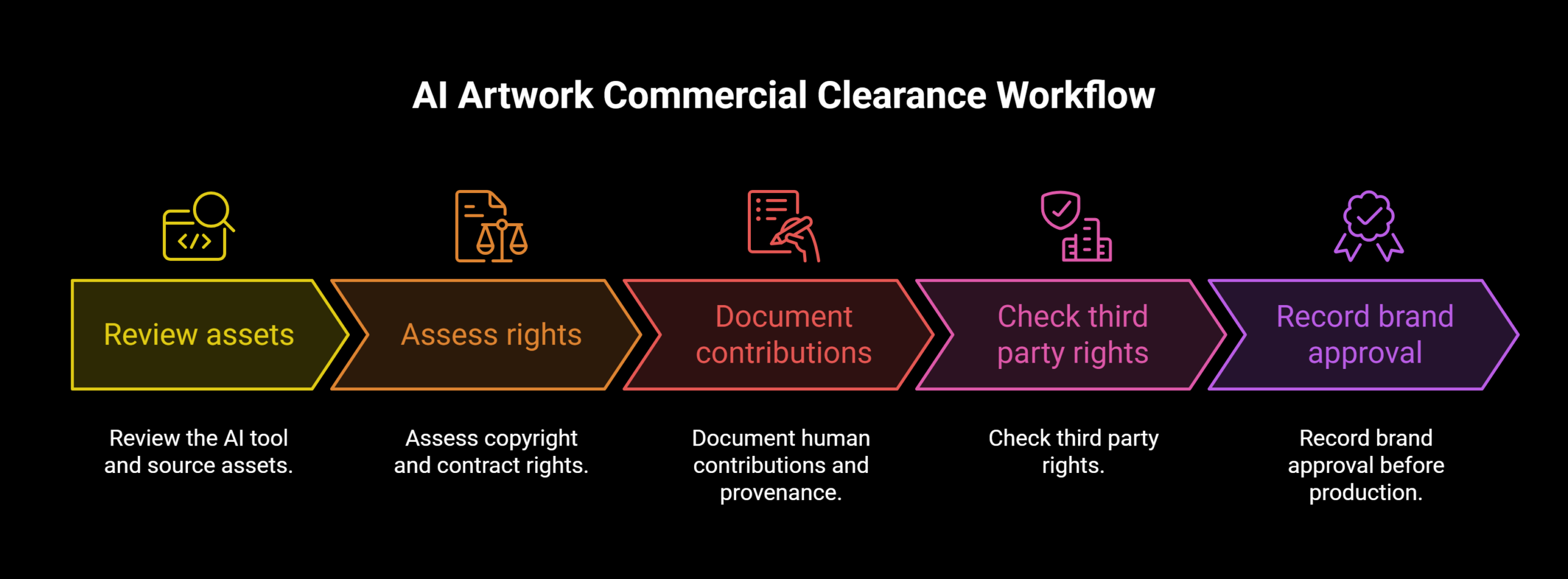
The workflow separates rights assessment from final commercial approval before packaging artwork enters production.
Commercial Clearance Checks
- Copyrightability: Assess what may qualify for protection and the human contribution. Prompting alone is not sufficient under the U.S. Copyright Office’s analysis.
- Terms and licences: Verify permitted use of outputs, AI service conditions and permissions for uploaded images, fonts or other supplied assets.
- Provenance and approval: Retain relevant source, modification and approval records for AI generated artwork, including intended markets and uses.
- Third party rights: Check potential conflicts involving creative works, trademarks and other protected assets before the design is released for production.
Contracts and Tool Terms Define Commercial Permission
The legal position surrounding AI generated artwork depends partly on the agreements governing how the asset was created and how it may be used. AI service terms can specify rights to outputs, restrictions on inputs and conditions for commercial exploitation. Separate agreements between designers, agencies, brand owners and packaging converters may determine how deliverables can be used, modified or transferred. These contractual permissions do not automatically establish exclusive copyright protection or eliminate possible third party claims. Businesses therefore need to examine the relevant terms rather than assume that a paid subscription or commercial use permission guarantees unrestricted rights.
Contractual and Licensing Checks
-
Output permissions: Review whether the applicable service terms permit commercial use, modification and redistribution of generated assets.
-
Input licensing: Confirm that reference images, fonts, illustrations and other uploaded materials are authorised for the intended purpose.
-
Contractual ownership: Check how design agreements address ownership, licensing, transfer of deliverables and the use of AI assisted material.
-
Usage restrictions: Identify limitations involving confidentiality, permitted applications, attribution or other contractual conditions.
Human Contribution and Rights Clearance Shape the Final Asset
Packaging artwork frequently combines generated imagery with human designed layouts, brand elements, typography and licensed creative materials. The rights associated with each component may differ, making it important to assess the finished composition rather than treat it as one automatically owned asset. A designer’s original modifications or creative arrangement may contribute protectable expression, depending on the applicable legal framework and the facts. However, editing or refining AI generated artwork does not guarantee copyright protection for every element. Commercial clearance must also consider potential similarities to existing works, trademark conflicts and the intended markets in which the package will be used.
Evidence Supporting Commercial Use
-
Documented creative decisions: Retain relevant records of human authored elements, modifications, selection and arrangement.
-
Rights verification: Establish the permissions and restrictions associated with source materials and generated outputs.
-
Market specific review: Assess applicable legal requirements and potential third party rights risks in the intended territories.
-
Release approval: Record who reviewed and approved the final design, which product or packaging version it applies to, and whether any restrictions remain.
These controls help businesses make informed decisions about commercial use, but documentation alone cannot create rights that do not otherwise exist. The objective is to establish a defensible basis for using the finished artwork while recognising that copyright law, contractual terms and third party rights remain distinct considerations.
Bringing Rights Management into the Artwork Workflow
Commercial use of AI generated artwork requires businesses to assess copyright protection, contractual permissions and third party rights together. These considerations should be addressed during artwork development rather than left until production approval. A clear process can help brand owners, designers and packaging converters understand the basis on which an asset may be used, modified and reproduced across products and markets.
Core Governance Priorities
-
Clear contractual terms: Establish permitted uses and responsibilities before artwork enters commercial production.
-
Documented creative contributions: Retain relevant records of human modifications, creative decisions and asset provenance.
-
Verified permissions: Review source material licences and potential third party rights conflicts.
-
Recorded approvals: Maintain evidence of the final artwork version, intended uses and commercial release decision.
The challenge is not simply determining who created an image. It is establishing which rights exist, what permissions apply and whether the finished design is suitable for its intended commercial use. As AI becomes part of packaging workflows, disciplined rights assessment will remain important to protecting creative assets and reducing avoidable legal uncertainty.
References
- World Intellectual Property Organization – Generative AI: Navigating Intellectual Property – 2024.
- U.S. Copyright Office – Copyright and Artificial Intelligence, Part 2: Copyrightability – 2025.
- UK Government – Report on Copyright and Artificial Intelligence – 2026.