




















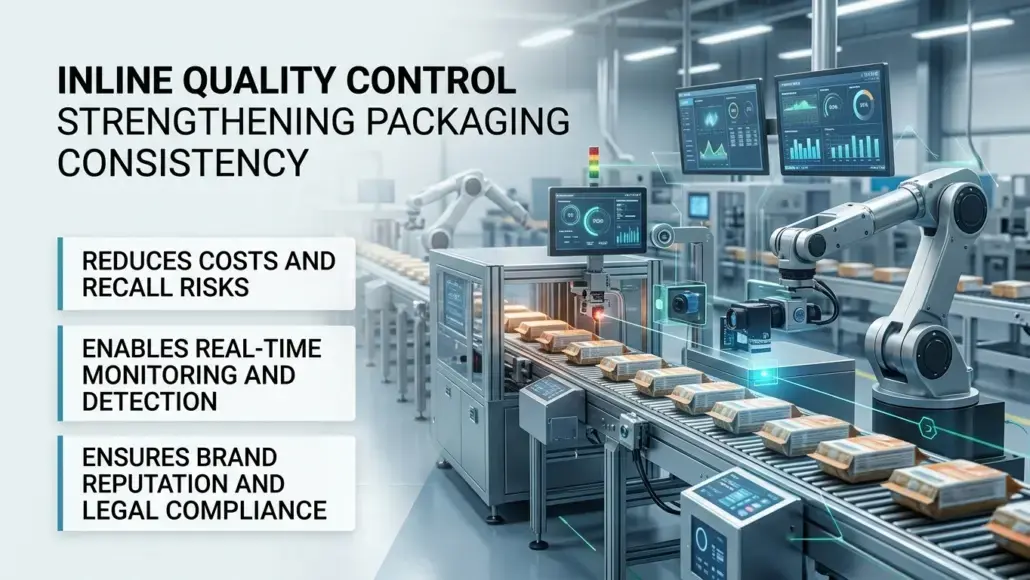
The maintenance of high quality standards in a high speed production environment is a challenge that requires more than occasional manual checks or end of line sampling. For many manufacturing facilities, the cost of a single defective unit reaching the customer can be immense, leading to product recalls, brand damage, and potential legal liabilities. To mitigate these risks, the industry is increasingly integrating sophisticated monitoring tools directly into the production line. The implementation of inline quality control represents a significant shift in how manufacturing quality is managed, providing a continuous and automated oversight that ensures every package meets the required specifications.
Inline quality control involves the use of advanced sensors, high resolution vision systems, and analytical software to inspect every unit as it moves through the packaging process. Unlike traditional methods that rely on human inspectors to spot defects, these systems can identify minute variations in seal integrity, label placement, and fill levels at speeds that exceed the capability of the naked eye. This real-time oversight allows for the immediate rejection of defective units before they can proceed to the next stage of production. By ensuring that only perfect units are shipped, firms can significantly improve their packaging consistency and strengthen their market position.
Vision Systems and Inspection Technology
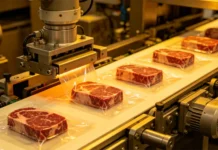
The core of modern inline quality control is the use of sophisticated vision systems that can capture and analyze detailed images of every package. These systems can be programmed to identify a wide range of common defects, such as crooked labels, missing caps, or damaged containers. By comparing each unit against a pre-defined “golden image” of a perfect product, the software can detect even the smallest deviations from the standard. This level of precision is essential for maintaining the visual identity of the brand and ensuring that the customer receives a product that looks and performs exactly as intended.
The evolution of inspection technology has also led to the development of non-visual sensors that can detect internal defects. For example, ultrasonic sensors can be used to check the integrity of a seal without opening the package, while X-ray systems can identify the presence of foreign contaminants such as metal or glass. These advanced tools provide a multi-layered approach to quality control that addresses both the appearance and the safety of the product. The integration of these sensors into a single, unified inspection station allows for a comprehensive assessment of every unit, ensuring that nothing is left to chance.
Improving Defect Detection and Reducing Waste
The primary benefit of a proactive approach to quality management is the significant improvement in defect detection rates. When quality checks are performed manually, the risk of human error is high, especially during long shifts or when the line is running at peak capacity. Inline quality control systems do not suffer from fatigue or distraction, providing a constant and reliable level of oversight 24 hours a day. This consistency is a fundamental requirement for meeting the increasingly rigorous industrial standards of sectors such as food processing, pharmaceuticals, and consumer electronics.
By identifying defective units early in the process, firms can also significantly reduce the amount of waste generated by their operation. When a defect is caught immediately, the system can provide data that helps to identify the root cause of the problem, allowing the maintenance team to intervene before thousands of additional units are affected. This not only saves raw materials and packaging but also reduces the energy and labor costs associated with rework. The way that inline quality control strengthens the overall efficiency of the manufacturing process is a key part of its strategic value to the organization.
Enhancing Production Uptime and Operational Precision
Many production managers are concerned that the introduction of additional inspection steps will slow down the line or lead to excessive false rejections. However, modern inline quality control systems are designed to operate at high speeds without impacting the overall flow of production. In fact, by identifying and addressing equipment issues early, these systems can actually improve production uptime by preventing the catastrophic failures that can occur when a small problem is allowed to escalate. The continuous stream of data provided by the system allows for a more proactive approach to equipment maintenance and process optimization.
The role of data analytics in supporting operational precision cannot be overstated. Every inspection provides a data point that can be used to track the performance of individual machines or the entire line over time. If a particular sealer is consistently producing units that are near the limit of the acceptable range, the system can flag this trend, allowing the team to adjust the equipment before it starts producing actual defects. this move from reactive to predictive quality management is a hallmark of a modern, data-driven manufacturing facility. The ability to maintain high levels of packaging consistency is therefore a direct result of this sophisticated technical oversight.
Meeting Industrial Standards and Regulatory Requirements
The regulatory environment for many industries is becoming increasingly complex, with agencies requiring detailed documentation of every quality check. Inline quality control systems excel at this level of record keeping, providing a digital audit trail that tracks every unit through the inspection process. This level of transparency is essential for proving compliance with industrial standards and for providing the evidence necessary to defend against claims of product defects. The use of automated inspection simplifies the complex task of regulatory documentation, allowing firms to focus their efforts on their core production goals.
The implementation of these systems also provides a powerful tool for maintaining global quality standards across multiple production sites. A company can define a single set of inspection criteria that is then pushed out to every inline quality control system in their network, ensuring that the product is identical regardless of where it is manufactured. This consistency is vital for maintaining brand integrity in a global market and for meeting the expectations of international customers. The role of inspection technology in driving this global uniformity is a key characteristic of the modern manufacturing sector.
Conclusion
The transition toward automated, real-time quality management is a defining trend in the modern industrial landscape. By replacing episodic manual checks with continuous technical oversight, firms can achieve a level of operational precision that was previously impossible. The benefits of inline quality control extend across every aspect of the manufacturing process, from improved safety and quality to enhanced efficiency and reduced waste.
As the technology continues to evolve, we can expect to see even more sophisticated applications, such as the use of artificial intelligence to predict defects before they occur and the integration of more advanced sensors for specialized products. The focus will remain on creating a manufacturing environment where quality is not just a goal but a built-in characteristic of every unit produced. The ongoing commitment to inline quality control will remain a critical factor in the success of the global packaging sector for years to come.

