






















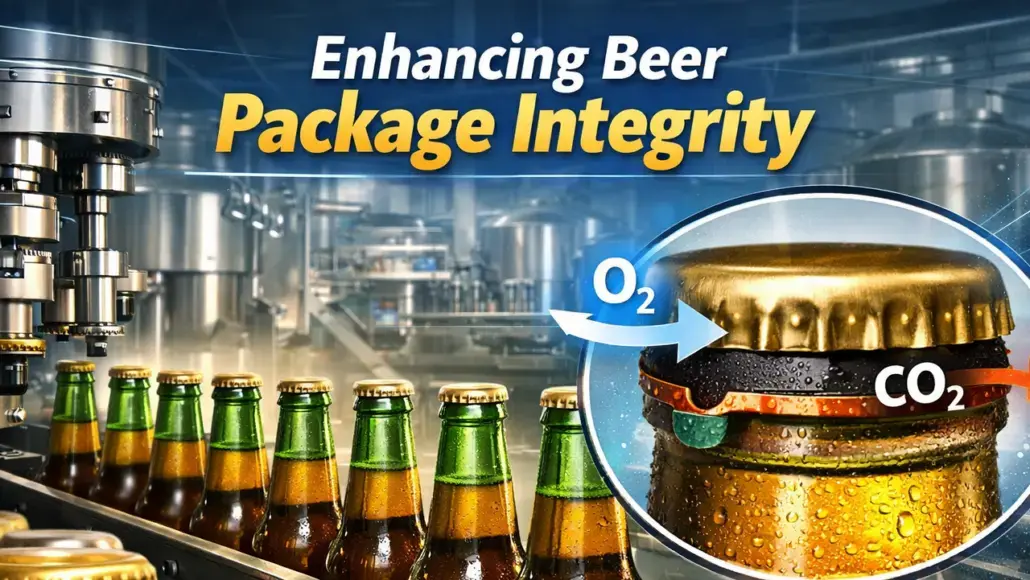

The implementation of Advanced Closure Systems Improving Beer Package Integrity represents a critical intersection of material science and mechanical engineering, ensuring that the freshness and carbonation of the beverage are preserved from the filling line to the moment of consumption. The closure is the primary barrier against the external environment, and its performance is paramount in preventing oxygen ingress and CO2 leakage, both of which can lead to rapid product spoilage. In the high-pressure environment of a beer bottle or can, the closure must maintain a perfect seal under varying temperatures and handling conditions. The evolution of closure technology has led to the development of sophisticated liners, specialized metal alloys, and high-precision application machinery that collectively enhance the shelf life and safety of the product.
For glass bottles, the crown cork remains the industry standard, but the materials used in its construction have evolved significantly. Modern crowns are manufactured from high-grade steel or aluminum with specialized coatings that resist corrosion and provide a stable surface for the liner. The liner itself is the most critical component, as it forms the physical seal against the glass rim. Advanced Closure Systems Improving Beer Package Integrity utilize liners made from PVC-free materials and incorporate oxygen-scavenging technologies that actively remove residual oxygen from the headspace. This active barrier is essential for maintaining the delicate flavor profiles of hop-forward beers, which are particularly susceptible to oxidation. The precision of the crown’s dimensions and the uniformity of the crimping process ensure that the seal remains airtight even when the bottle is subjected to the high internal pressures generated during pasteurization.
Mechanical Precision in Capping and Seaming Operations
The application of the closure is a high-speed mechanical process that requires extreme precision to avoid damaging the container or the seal. For bottles, the capper must apply a specific amount of downward pressure and a consistent crimping force to ensure that the crown is securely seated. Too much pressure can lead to glass fractures, while too little can result in a loose seal and carbonation loss. Modern capping systems utilize electronic torque control and magnetic clutches to maintain a highly consistent application force across millions of units. Advanced Closure Systems Improving Beer Package Integrity also include real-time monitoring of the capping process, with sensors that can detect a missing crown or a misaligned bottle, allowing the system to reject the faulty unit immediately.
In the case of aluminum cans, the “closure” is the can end, which is joined to the body through a double-seaming process. This process is one of the most critical mechanical operations in the brewery, as the integrity of the seam determines the shelf stability of the product. The double seam consists of five layers of metal that are interlocked and compressed to form a hermetic seal. Specialized seaming rollers, often coated with wear-resistant materials like titanium nitride, are used to form the seam with micrometer-level precision. The use of nitrogen-dosing systems just before seaming ensures that the internal pressure of the can is maintained, which provides structural rigidity and further protects the beer from oxidation. The integration of automated seam inspection systems allows for the continuous monitoring of seam dimensions, providing early warning of mechanical wear in the seaming machinery.
Barrier Materials and Oxygen Scavenging Technologies
The development of advanced barrier materials has significantly improved the performance of closures in both glass and plastic containers. For PET bottles, which are increasingly used for certain events and markets, the challenge of gas permeability is even more acute. Advanced Closure Systems Improving Beer Package Integrity in the PET sector utilize multi-layer closures with integrated gas-barrier films that prevent CO2 from escaping through the plastic. These closures often incorporate active oxygen scavengers that are triggered by moisture, ensuring that they only become active once the bottle has been filled. This technology allows beer in PET containers to achieve a shelf life comparable to glass, expanding the distribution possibilities for breweries.
In the glass sector, the focus has been on reducing the thickness of the metal used in crowns without compromising their strength. Lightweight crowns require less material and are more energy-efficient to transport, but they must still be able to withstand the internal pressure of the beer. This is achieved through the use of high-strength steel alloys and optimized crown geometries that distribute the stress more evenly. The liners have also been improved to provide better resealing capabilities for screw-cap bottles, which are popular in certain regional markets. These ROPP (Roll-On Pilfer-Proof) caps utilize specialized thread-forming rollers to create a custom fit for every bottle, ensuring a secure and tamper-evident seal. The use of advanced liner materials that maintain their elasticity over time is essential for the success of these closure systems. Additionally, the development of specialized lubricant coatings on the threads of ROPP caps has improved the consistency of the opening force, ensuring that consumers can easily access the product without the need for excessive physical exertion. These coatings must be food-safe and resistant to the cleaning chemicals used in the brewery, requiring a high level of material compatibility testing. The integration of digital torque monitoring allows breweries to track the exact removal force for every batch, providing a quantifiable metric for closure performance that can be shared with retail partners and quality auditors. This data-driven approach to seal integrity ensures that the brewery can maintain a high level of consumer satisfaction while minimizing the risk of package failure in the field.
Quality Control and Pressure Retention Testing
To ensure the long-term integrity of the package, breweries employ a range of testing protocols to verify the performance of their closure systems. This includes internal pressure testing, where containers are subjected to extreme temperatures and pressures to simulate the conditions of pasteurization and transport. Advanced Closure Systems Improving Beer Package Integrity are also evaluated using secure-seal testers that measure the amount of force required to remove the closure and the pressure at which the seal fails. These tests provide valuable data for optimizing the capping and seaming parameters, ensuring that the closures are applied with the maximum possible reliability.
Leak detection is another vital component of quality control. High-speed lines often incorporate automated leak detectors that use acoustic or vacuum technology to identify containers with faulty seals. Acoustic testing involves striking the closure with a burst of electromagnetic energy and analyzing the resulting sound frequency; a container with low pressure will produce a distinct sound that can be detected by the system. Vacuum-based systems measure the deflection of the closure under a vacuum, providing a precise indication of the internal pressure. By integrating these testing technologies directly into the production line, breweries can maintain a 100 percent inspection rate, ensuring that every container that leaves the facility meets the highest standards of package integrity. The digital records created by these tests are essential for regulatory compliance and for troubleshooting any process deviations that may occur.
Future Trends in Smart Closures and Sustainability
The future of closure technology lies in the integration of smart features and the continued pursuit of sustainability. Smart closures, featuring embedded QR codes or NFC tags on the liner or the outer surface, provide a new way for breweries to connect with consumers and provide information about the product’s origin and freshness. These digital features can also be used for anti-counterfeiting and for tracking the container through the supply chain. From a sustainability perspective, the industry is moving toward closures that are easier to recycle and that use more sustainable materials. This includes the development of bio-based liner materials and the reduction of the overall weight of the metal and plastic used in closures.
Advanced Closure Systems Improving Beer Package Integrity will continue to evolve as new materials and manufacturing techniques emerge. The shift toward higher-speed production lines will require even more precise and reliable closure application systems, while the increasing demand for sustainable packaging will drive the development of more environmentally friendly materials. The focus on oxygen management and carbonation retention will remain a top priority, ensuring that the quality of the beer is maintained for as long as possible. By investing in these advanced closure technologies, breweries can protect their products and their brands, providing a consistent and high-quality experience for consumers around the world. The ongoing research into nano-composite barriers and active scavenging systems promises to further enhance the performance of beer packaging, setting new standards for the industry. Additionally, the integration of tamper-evident features into the closure design provides an extra layer of security for the consumer, ensuring that the product has not been compromised after leaving the production facility. For aluminum cans, this is achieved through the design of the stay-on-tab mechanism, while for bottles, the use of break-away rings or specialized security labels is common.
Advanced Closure Systems prioritize these safety features as they are essential for maintaining consumer trust in the global marketplace. The mechanical design of these tamper-evident components must be durable enough to withstand the stresses of the packaging line while remaining easy for the consumer to break during the opening process. This delicate balance is achieved through the use of high-precision injection molding and metal forming techniques, ensuring that every closure performs its function with absolute reliability. As breweries continue to expand into new markets and distribution channels, the role of advanced closure systems will become even more critical, providing the final and most important layer of protection for the quality and integrity of the beer. By adopting a holistic view of closure performance, from material selection to high-speed application, the packaging sector can ensure the long-term success and sustainability of the beverage industry.